• About
  • Contact Me
  • Disclosure

accentBritain

~ a romance with art and all things British

accentBritain

Category Archives: London

What to pack for a vacation in Great Britain?

01 Thursday Aug 2013

Posted by pat in Cornwall, England, London, Peak District, Scotland, Travel, Uncategorized, United Kingdom

≈ Leave a Comment

Tags

launderette, packing

What should you pack for a vacation in Great Britain? Layers. And more layers.
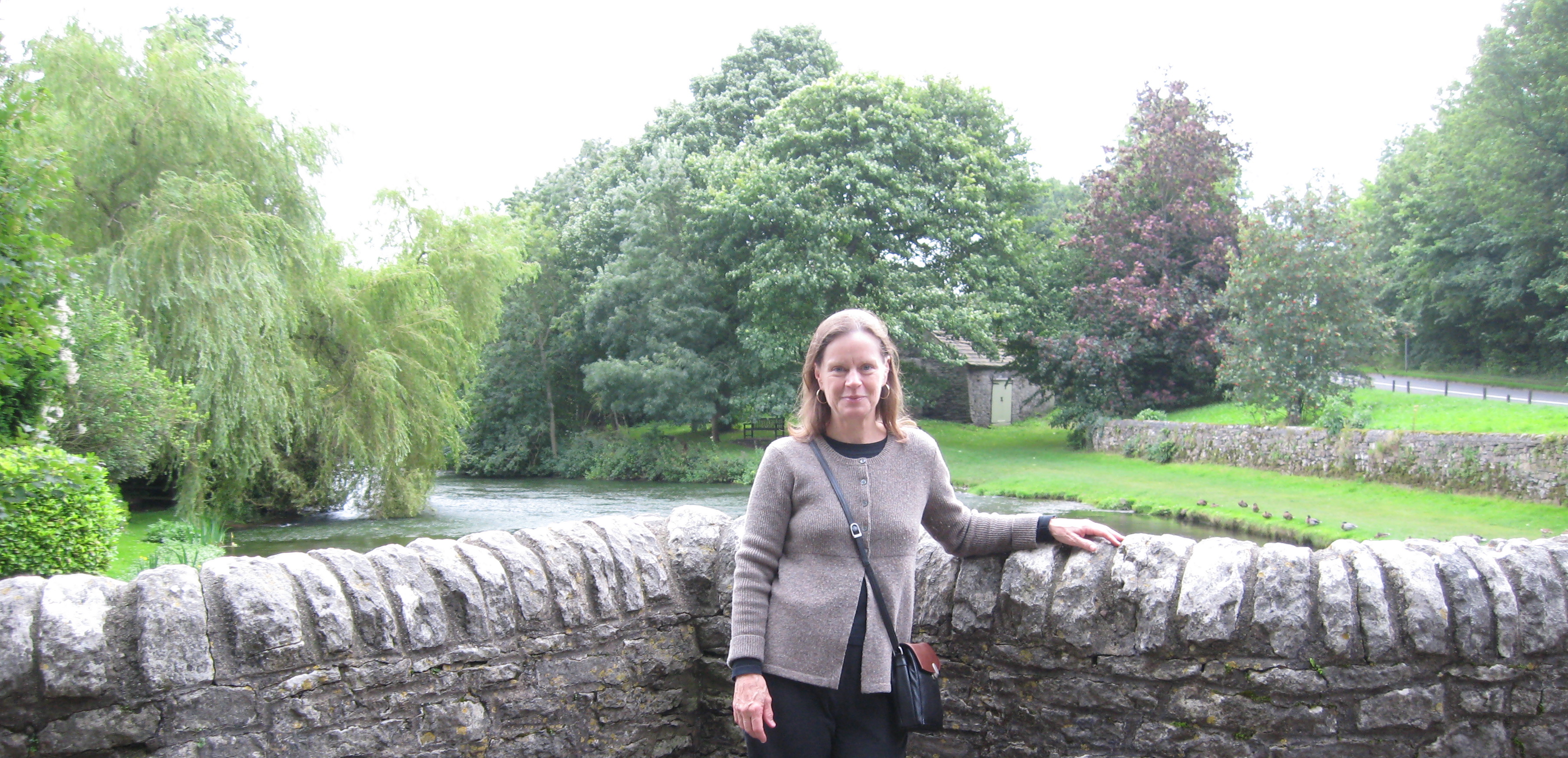
Down to the sweater layer in Asford in the Water in the Peak District. Photo by My Beloved Brit.

Down to the sweater layer in Ashford-in-the-Water in the Peak District on a summer morning going for a walk. Photo by My Beloved Brit.

It is positively the only way to go. The thing about England is, no matter what the weather is at the moment, it is sure to change shortly. And it is almost impossible to predict the temperatures for any given season. When we were in Scotland last summer, everyone assured us it would be damp and chilly.  It was sunny, bright and in the 80s–for days!
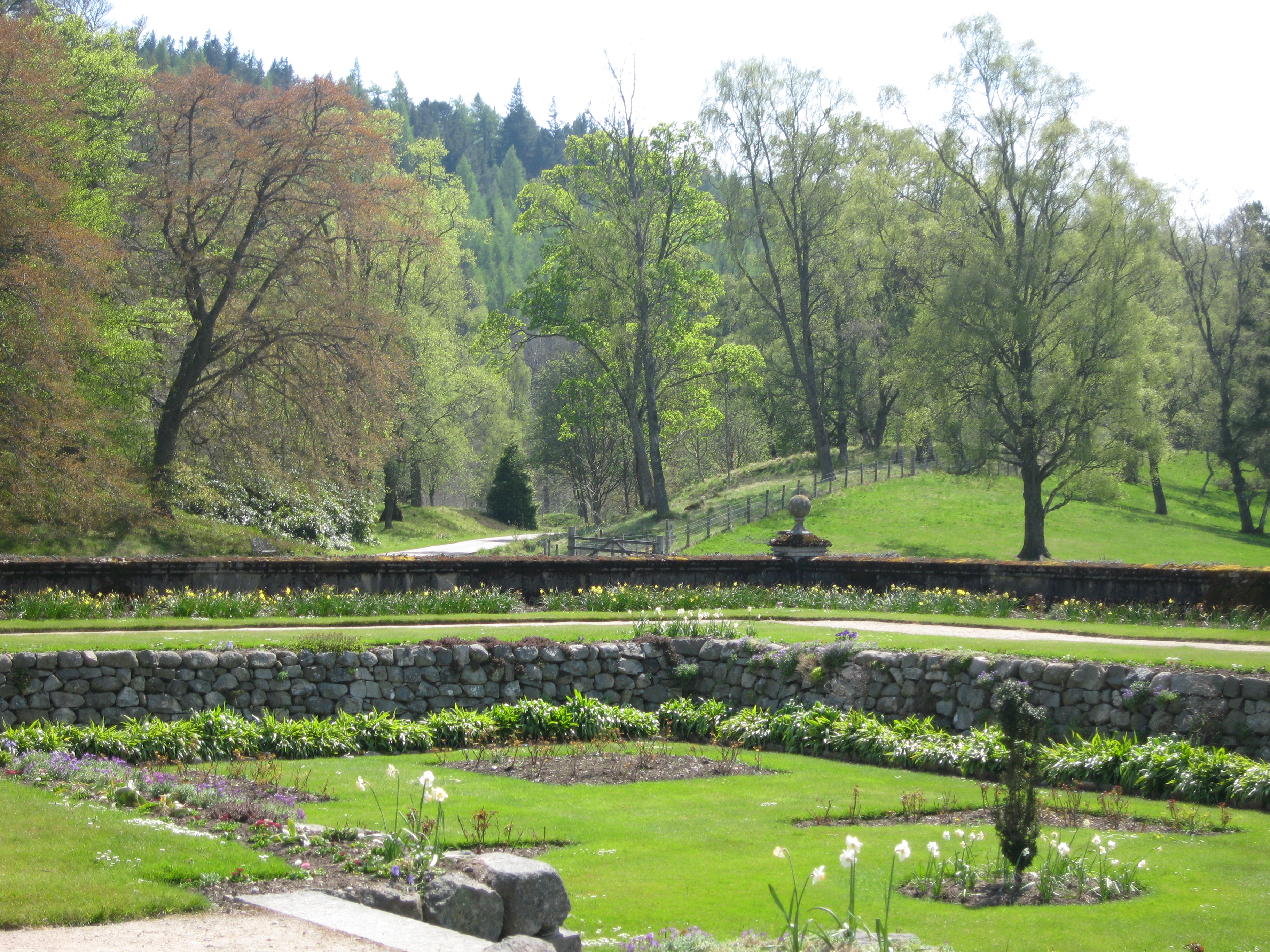
A very warm, sunny day in the gardens at Balmoral in Scotland in June. Photo by me.

A very warm, sunny day in the gardens at Balmoral in Scotland in early June. Photo by me.

Very unusual, yes. But we have learned in the UK to expect the unexpected and pack accordingly.
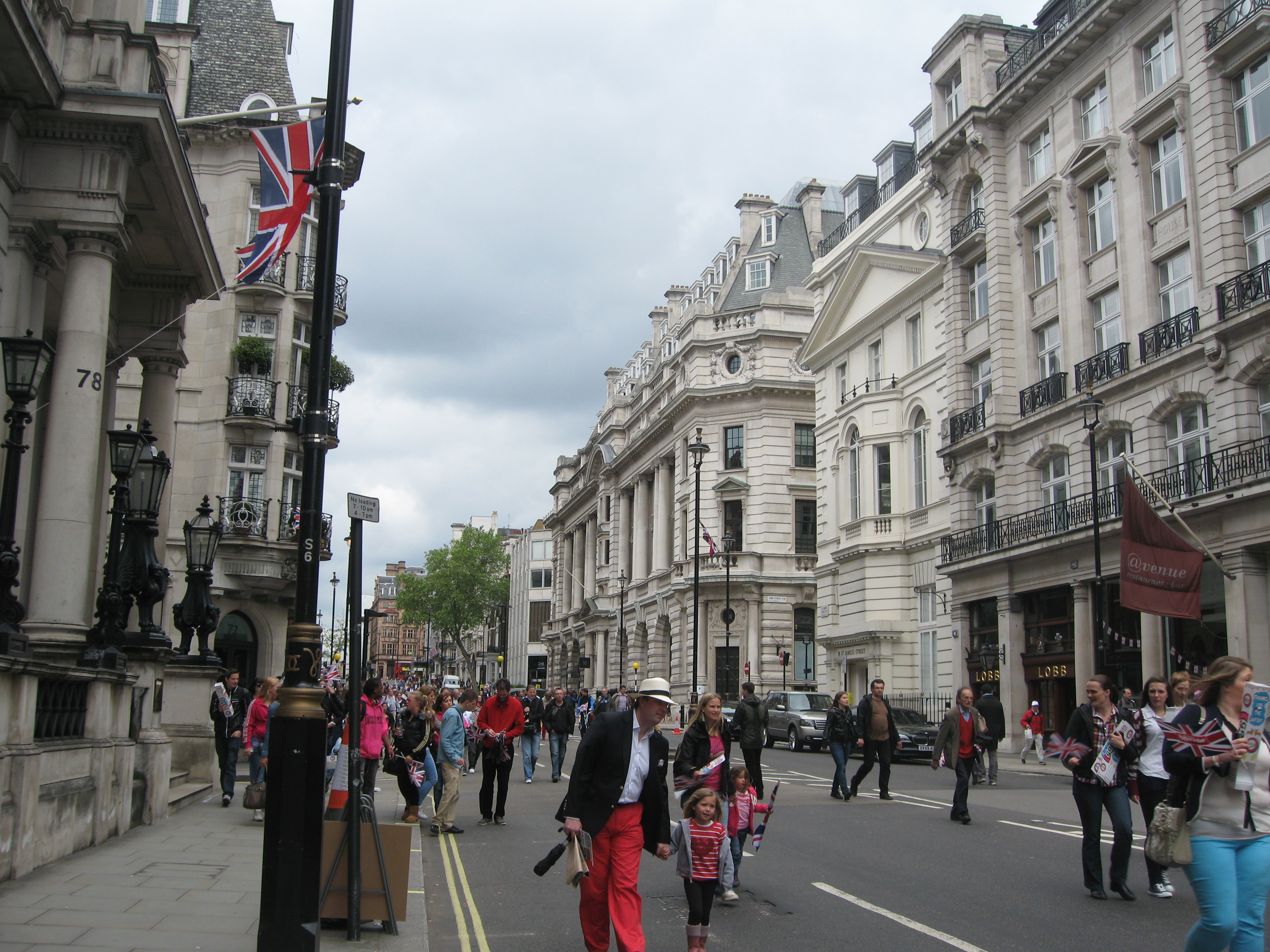
The crowds head to Buckingham Palace to see the Queen on the Diamond Jubilee weekend June 2012. Photo by me.

The crowds head to Buckingham Palace to see the Queen on the Diamond Jubilee weekend June 2012. Notice the light jackets, and brollies in hand. Photo by me.

Now, granted, we tend to go for long stretches of time…sometimes 5 or 6 weeks (we have a lot of family and friends to visit).  But the basics are the same.

1.  Don’t pack for a year.

There are laundrette’s all over the UK, and it is a great way to pass an hour or two with the locals and catch up on your reading. You can easily go online, google the town you will be in, and “laundrettes”, or ask at your B&B or hotel.  They will know. Service wash means the laundrette will do your wash for you and you can pick it up later or the next day.  Self Service means you do it yourself, which is what we do. Usually we are driving, and at the beginning of the trip we stop at a grocery store and get a small bottle of laundry detergent. Or the laundrettes usually have them available for purchase. Our detergent stays with us for the trip and makes it even easier to do laundry on the road.

Our favorite laundrette in Burnham on Crouch, England. Photo by me

Our favorite laundrette in Burnham on Crouch, England. Photo by me

2. Make it easy and comfortable

Pack things that are wrinkle free if you don’t want to iron, although many hotels now have facilities to iron.  I usually bring a pair of jeans for those country walks, and a couple of pairs of lighter washable slacks–one that is dressier for dinners out.  Instead of shirts, I bring knits–t-shirts for me, polos for him, and light, washable cotton sweaters (jumpers in Brit speak). My Beloved Brit always likes a few buttoned collared shirts of the wash and wear variety for when we go out. I bring one or two washable wrinkle free skirts just in case it gets really warm.  MBB does bring one pair of shorts just in case.  But we find even when all his friends have shorts on, we might have two or three layers of long pants, t-shirts and jumpers on. MBB calls it being unclimatized. We’ve never regretted not packing a bathing suit.
A fine, sunny day in England and the shorts have appeared. Photo by me

A fine, sunny day in England and the shorts have appeared. Photo by me

3.  Outerwear and an umbrella

Bring a scarf or two for around the neck, and preferably a rain-resistant jacket (or coat depending on the season) with a little warmth to it, just in case. I also usually pack a light, packable small umbrella.  It is England after all. Rain comes and goes. When I did the Diamond Jubilee week in London last year, it rained lightly off and on over the weekend.  I was fine with my layers, my little “brollie” and a smile.  It was a great time.
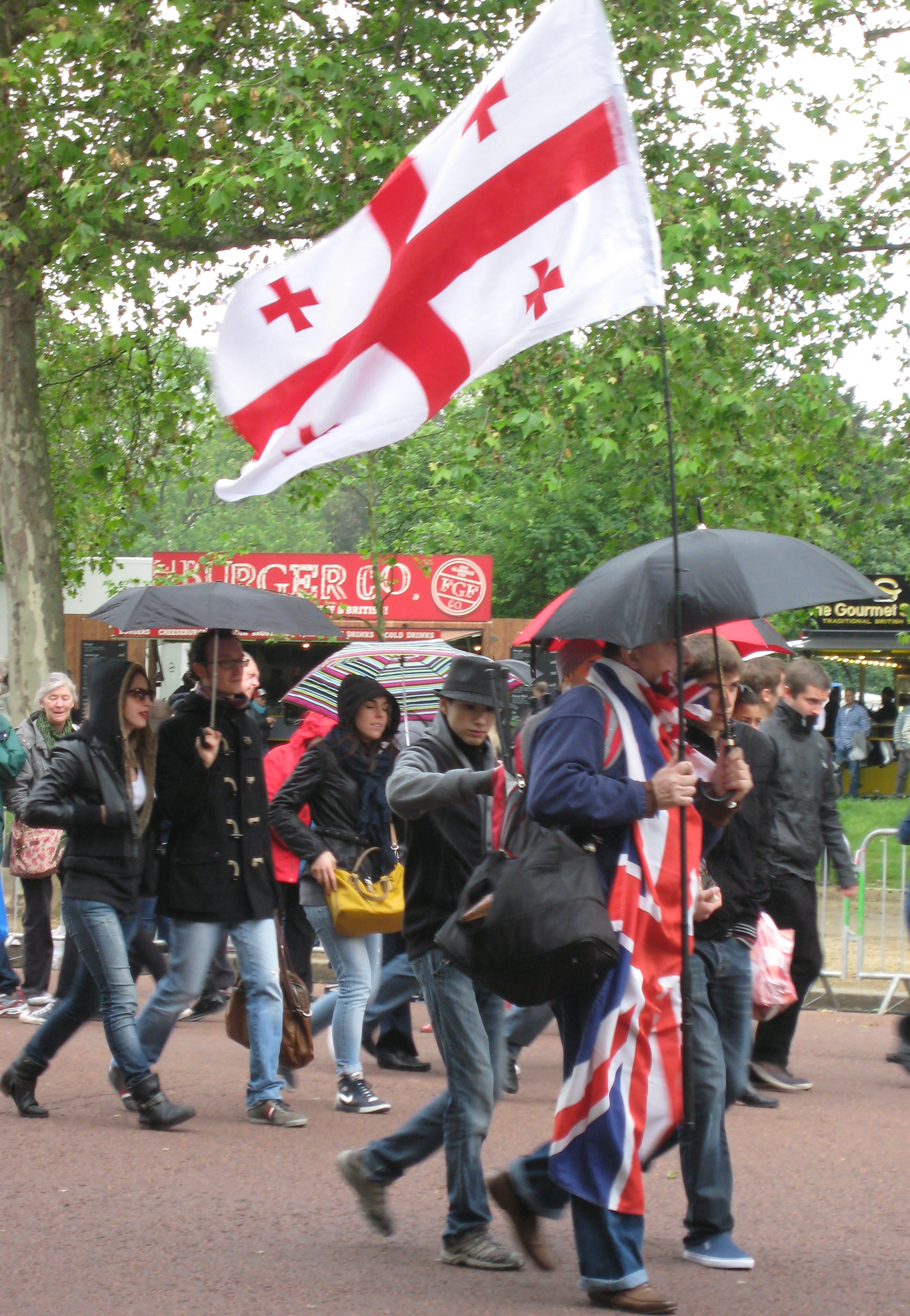
Jubilee weekend.  Brollies are up for a moment but the crowds don't care.  Notice the layers of clothing. Photo by me

Jubilee weekend. Brollies are up for a moment but the crowds don’t care. Notice the layers of clothing. Photo by me

4. Shoes.

Always a dilemma.  First and foremost is comfort.  England is known to be a wonderfully walkable place, so plan on taking walks in the country, through villages and footpaths, or long rambles around London.
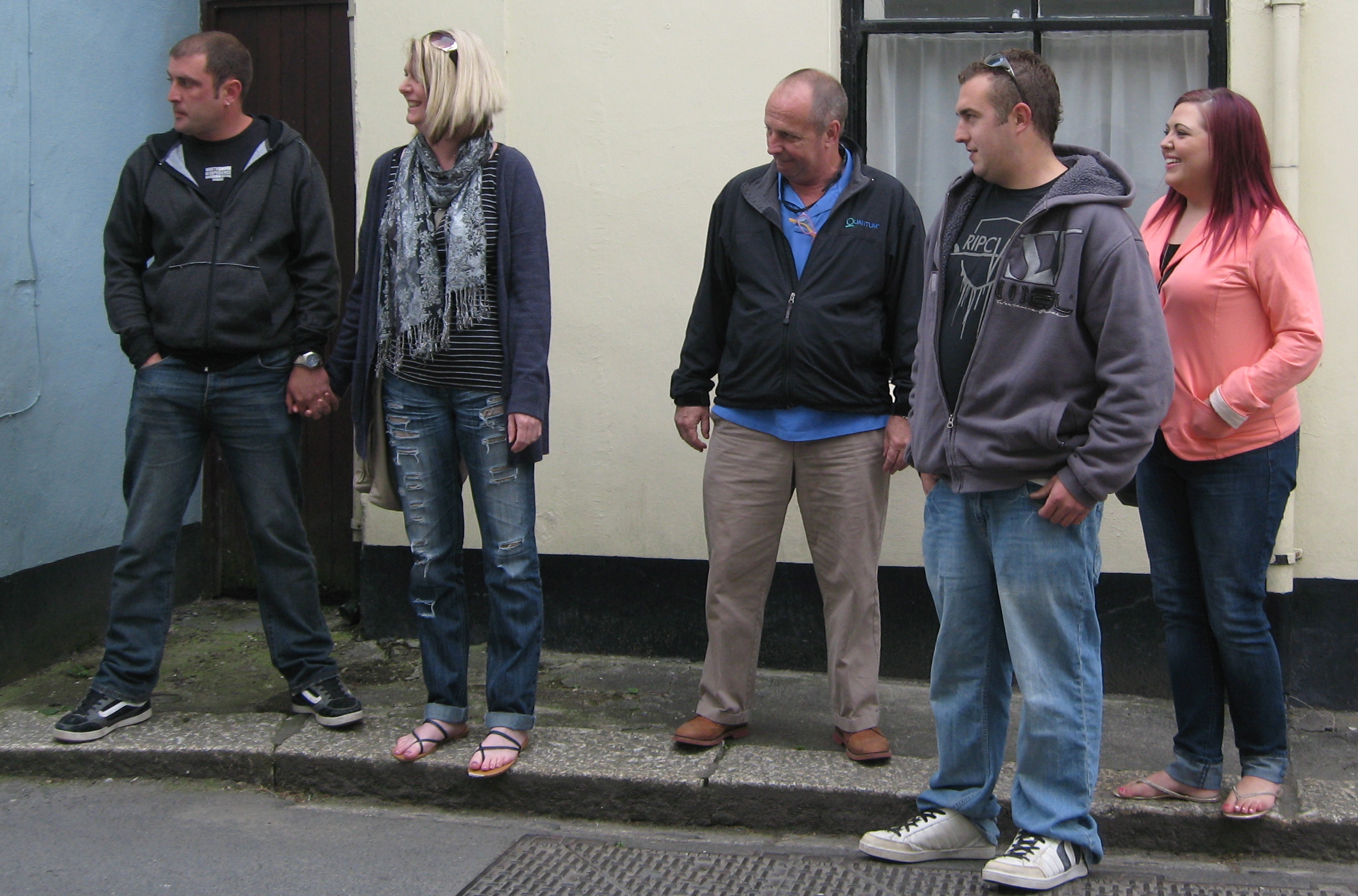
My Beloved Brit and his cousins walking in to Foey, Cornwall for Fish 'n' Chips.  Notice the English women have sandals on! Photo by me.

My Beloved Brit and his cousins walking in to Fowey, Cornwall in search of Fish ‘n’ Chips. Notice his English cousins have sandals on! Photo by me.

There’s usually public transportation, but walking is how you really get to see a country, and get a sense of the natives.  I usually opt for two pairs of very comfortable walking shoes that I can wear with socks, one pair a bit dressier to wear with the nice slacks. I also like a good pair of sandles in the summer for those days when you just feel like wiggling your toes in the sun, and to wear with my skirt.
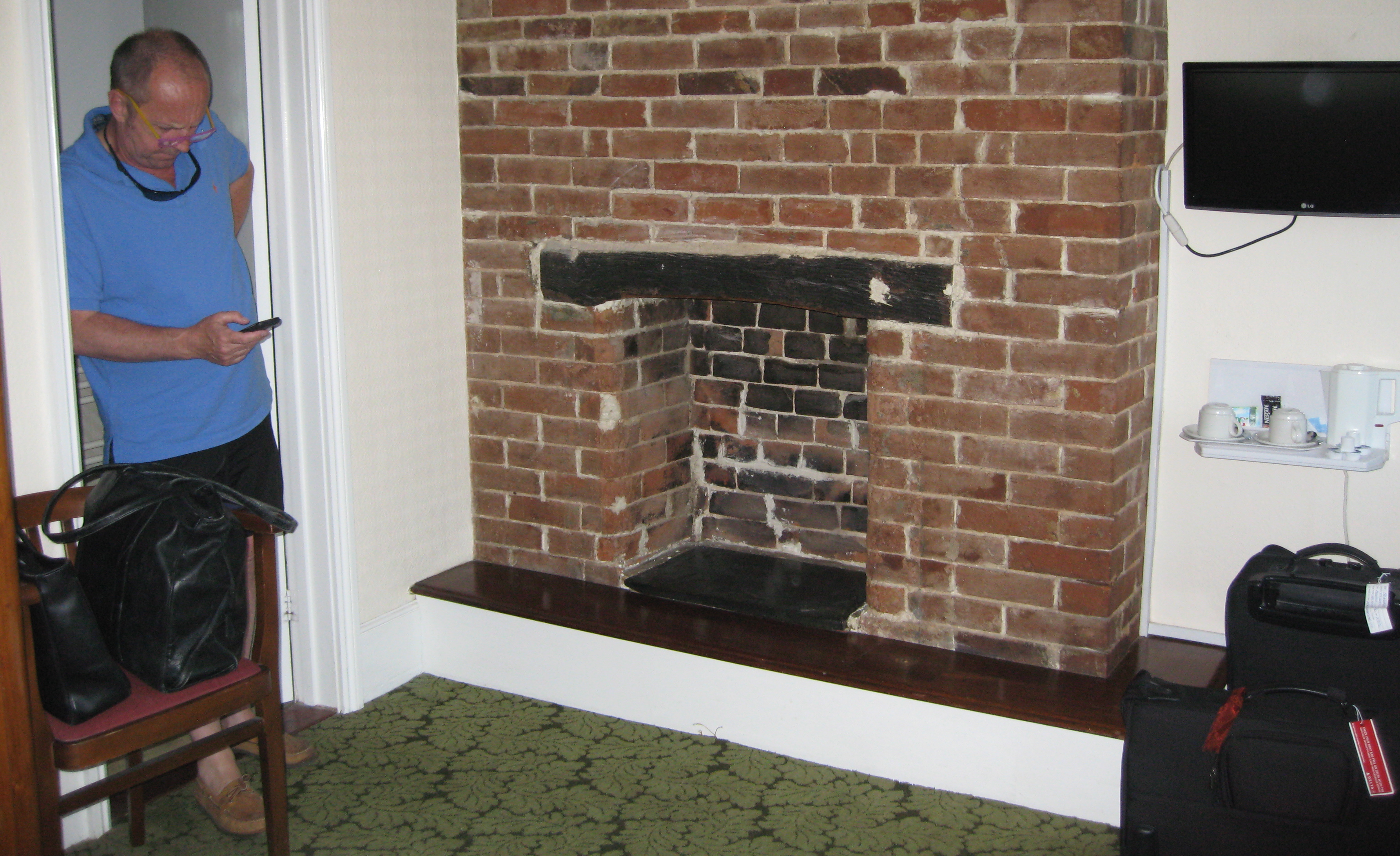
My Beloved Brit actually has shorts on again as we check in to our room in England. Notice the limited amount of luggage. Photo by me.

My Beloved Brit actually has shorts on again as we check in to our room in England. Notice the limited amount of luggage. There’s also always one large duffel for sailing gear. Photo by me.

5. For those special occasions.

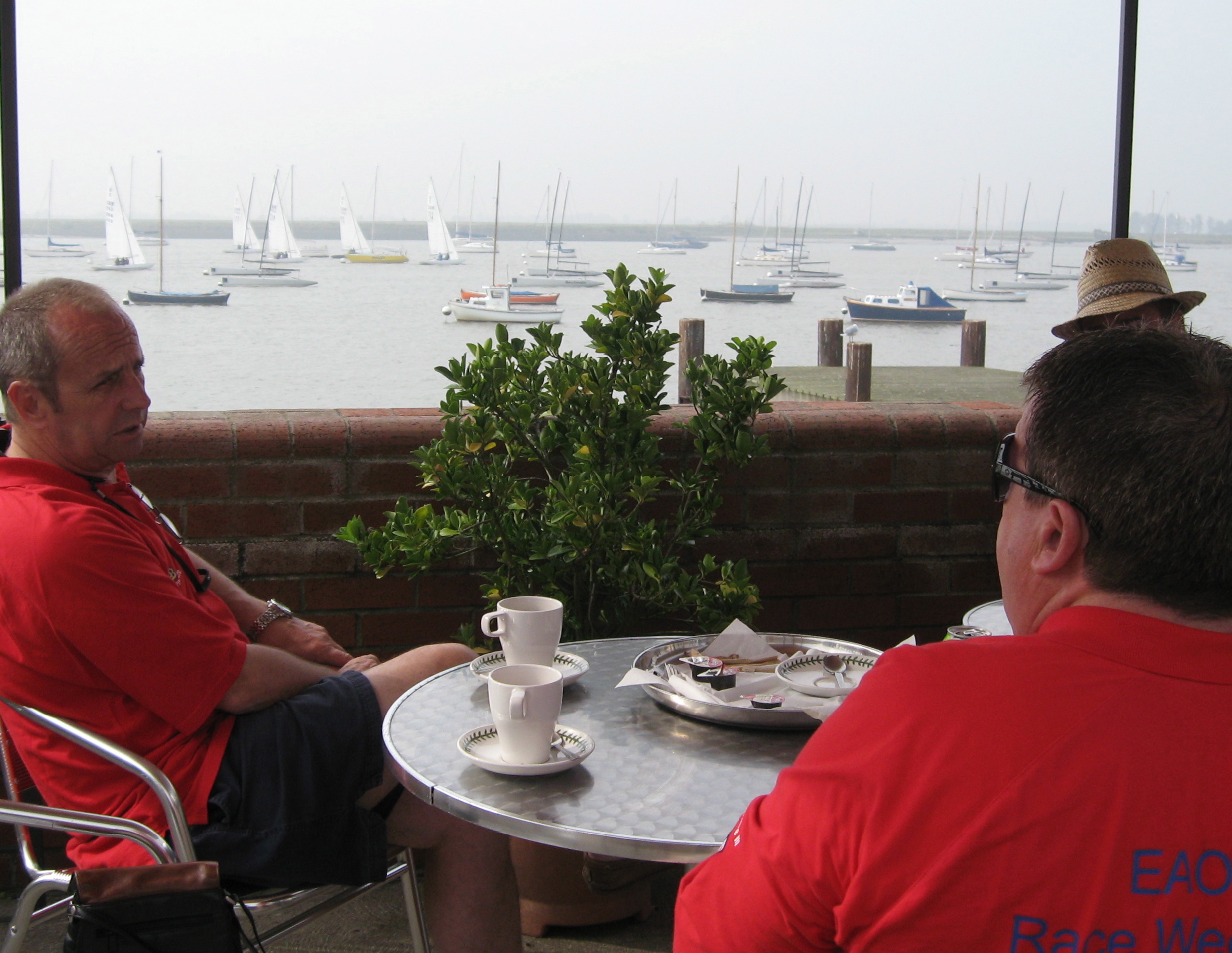
Dressed for a wedding reception at a sailing club.

Dressed for a wedding reception at a sailing club.


Then usually I bring one nice dress, often a very packable light knit, and a sweater I can wear with it for cold evenings.

For most restaurants and gatherings we go to , this is as dressy as we need.  I bring my pearls and good earrings in case it gets really dressy.

MBB does bring a solid colored sports coat and one tie, just in case there is a sailing race dinner at a club that requires it.


And that is pretty much it.  You start out on a summer morning with a pair of cotton slacks, a t-shirt, a sweater and maybe a rain jacket with a scarf around your neck.  By noon hopefully you’re down to the t-shirt, but more likely you are at sweater level.  And of course just when you think you have it all figured out, it changes and the temps are in the 80s for five days in a row.
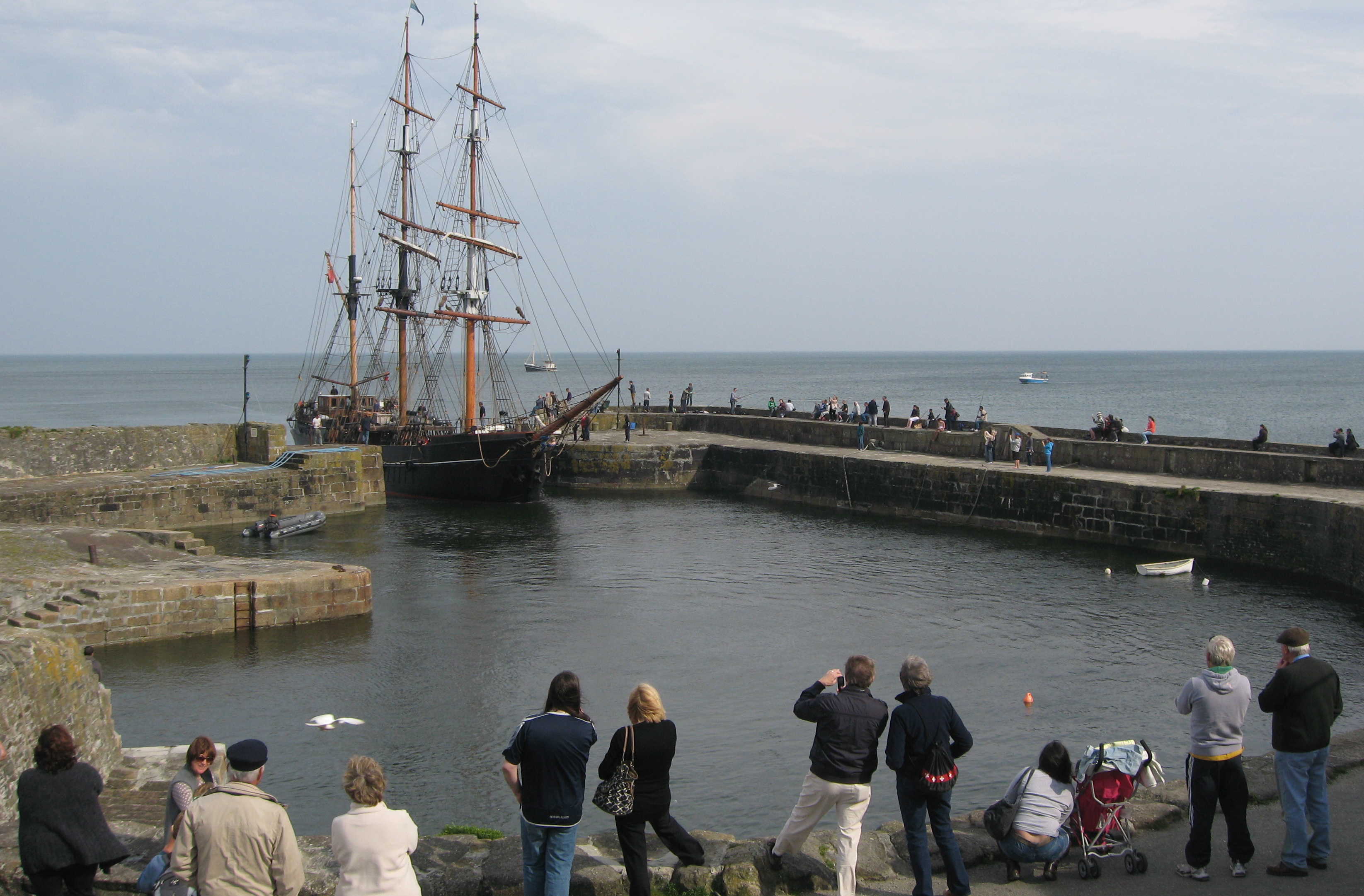
Holidaymakers in Charlestown, Cornwall.  There were kids swimming nearby. Photo by me.

Holiday makers in Charlestown, Cornwall. There were kids swimming nearby. Photo by me.

No matter.  A laundrette makes it all workable, and no one cares if you wear the same three outfits over and over.  Just pick what you love and what you are comfortable with.  It’s a snap.
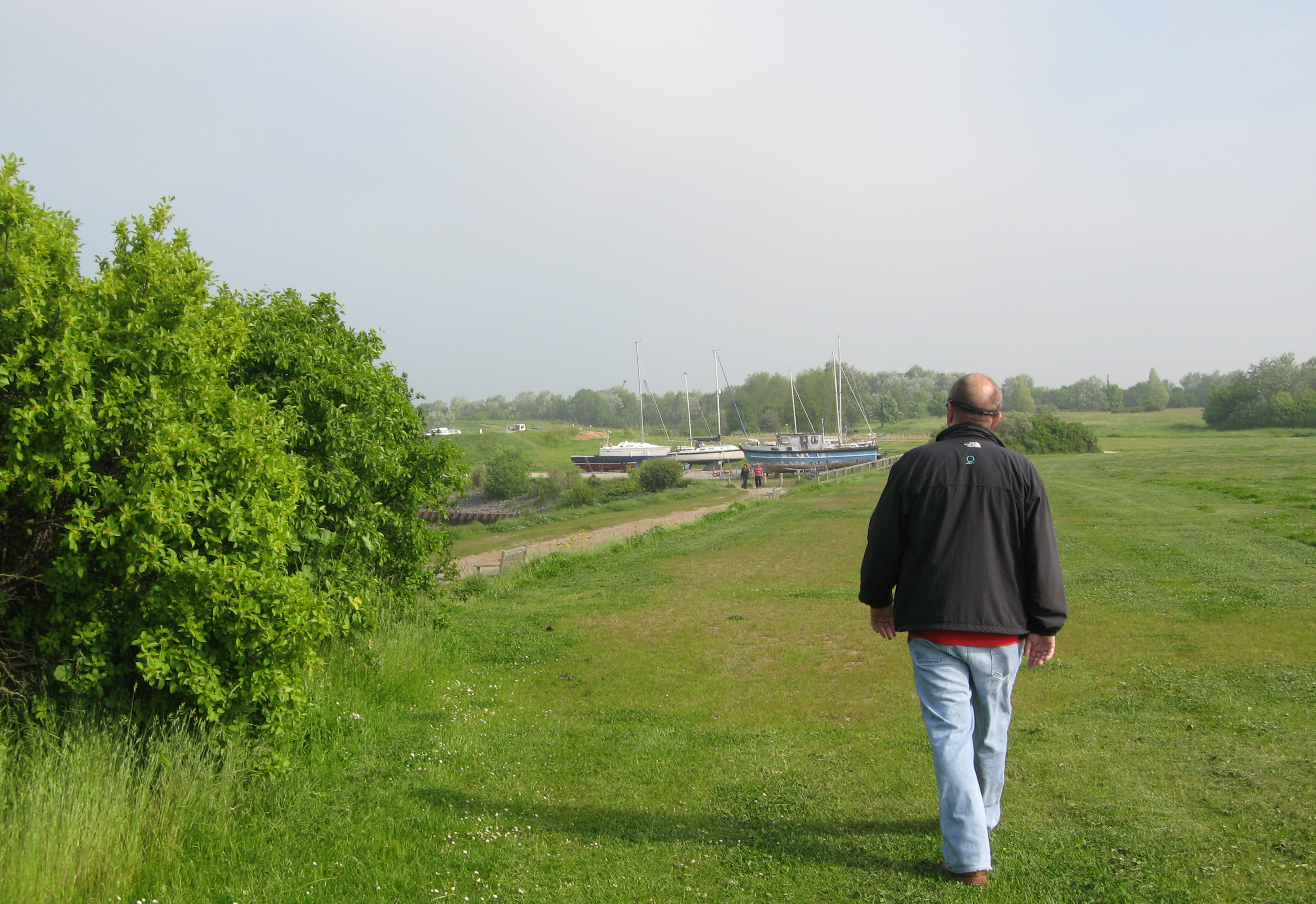
An early morning walk on a summers day in England. Photo by me.

An early morning walk on a summer’s day in England. Photo by me.

And then My Beloved Brit needs to bring all his sailing gear–boots, foul weather gear, thermals–which is a whole other story, and why we try to pack so light otherwise…
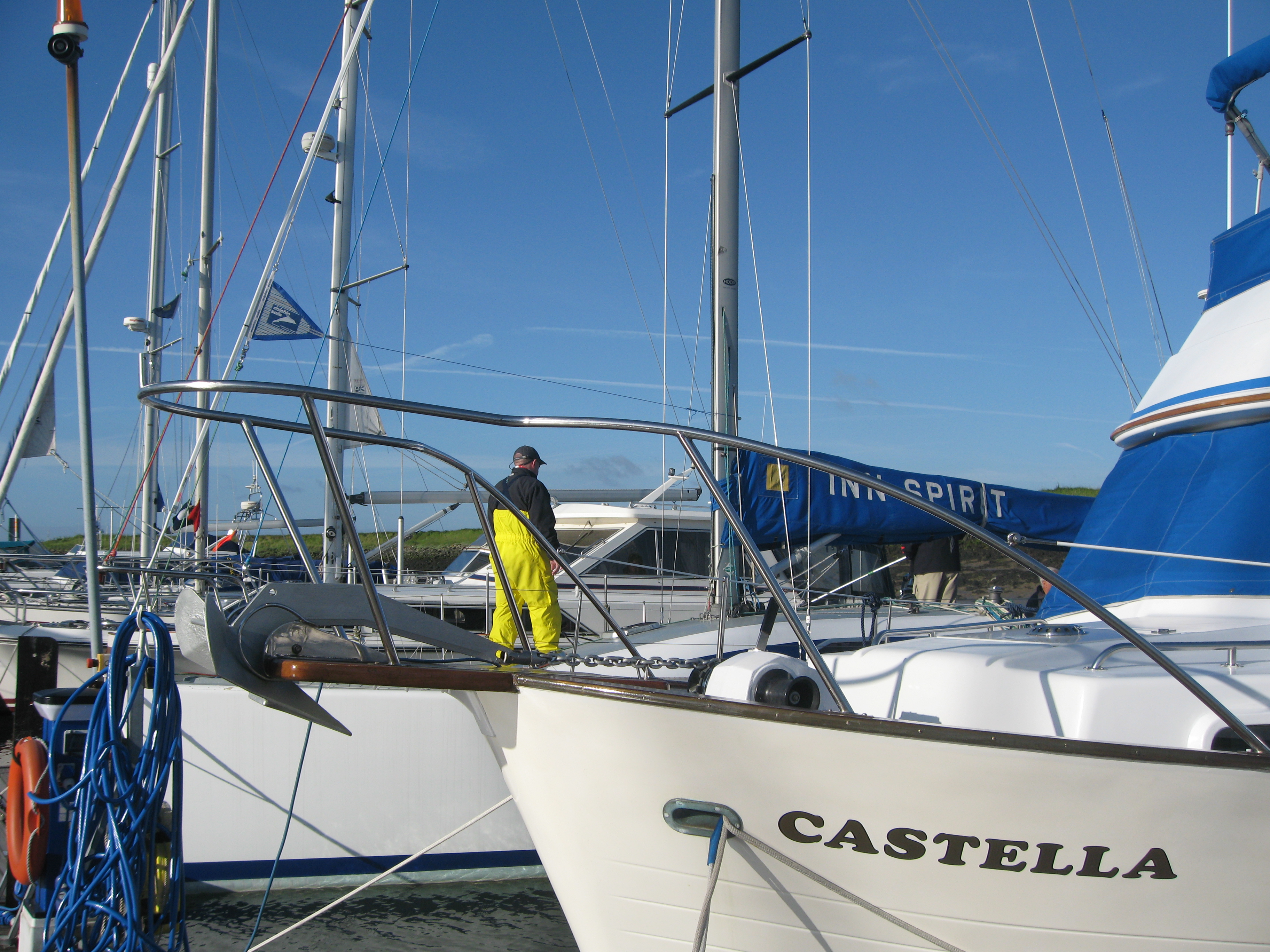
MBB dressed in many waterproof layers for sailing. Photo by me.
MBB dressed in many waterproof layers for sailing. Photo by me.
 

10 Downing Street and The White House

16 Tuesday Jul 2013

Posted by pat in History, London, Uncategorized

≈ Leave a Comment

Tags

10 Downing Street, Prime Minister, The White House, Washington DC

10 Downing Street has been the “locale” of British Prime Ministers since 1735, over 50 years before construction began on The White House.

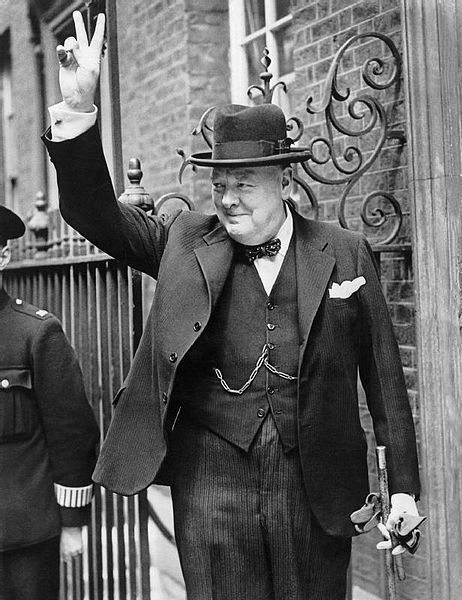
Winston Churchill emerges from 10 Downing Street flashing a V for Victory

Winston Churchill emerges from 10 Downing Street flashing a V for Victory


It’s instantly recognizable black door has shielded some of the most important decisions made in the last 275 years…the First and Second World Wars, the ending of The Empire, the building of the British nuclear bomb, handling the economic crisis of the Great Depression…just to name a few.

2010_Official_Downing_Street_pic

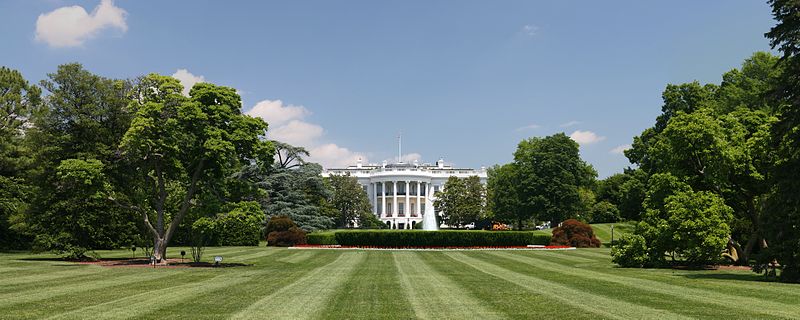
The White House, on the other hand, has only been on its current location since construction began in 1792, and was first occupied by President John Adams.  The total cost to build was $232,372, and until after the Civil War it was the largest house in the United States. (The British burned it August 24, 1814, during the War of 1812, but did not destroy it. We’ve forgiven them since then.)

The White House

The White House


Both 10 Downing Street and The White House are the official residences, and also house the offices of The Prime Minister and The President, respectively. Both also are used to host countless receptions for both national and overseas guests.

Prime Minister Winston Churchill along with Roosevelt's Joint Chiefs of Staff outside The White House May 24, 1943. Franklin D. Roosevelt Presidential Library

Prime Minister Winston Churchill along with Roosevelt’s Joint Chiefs of Staff outside The White House May 24, 1943. Franklin D. Roosevelt Presidential Library

The 55,000 square foot White House is 168 feet long by 85 feet wide (152 feet with its porticos), and is on 18 acres of land, with 132 rooms.

President and Mrs. Lyndon B. Johnson walk through White House Cross hall with guest of honor, Prime Minister Harold Wilson, June 1967

President and Mrs. Lyndon B. Johnson walk through White House Cross hall with guest of honor, Prime Minister Harold Wilson, June 1967


10 Downing Street is much bigger than it appears from outside. In the late 18th century, the house on Downing Street was joined to a more spacious and formidable building located behind it. And over the decades it has also taken over most of 11 and 12 Downing Street. It is hard to find out exactly how many square feet or how many rooms there might be, but everyone concurs that it is a labyrinth of hallways, reception rooms and office space. William Pitt the Younger, who last lived in the house in 1806, referred to it as “My vast, awkward house”.

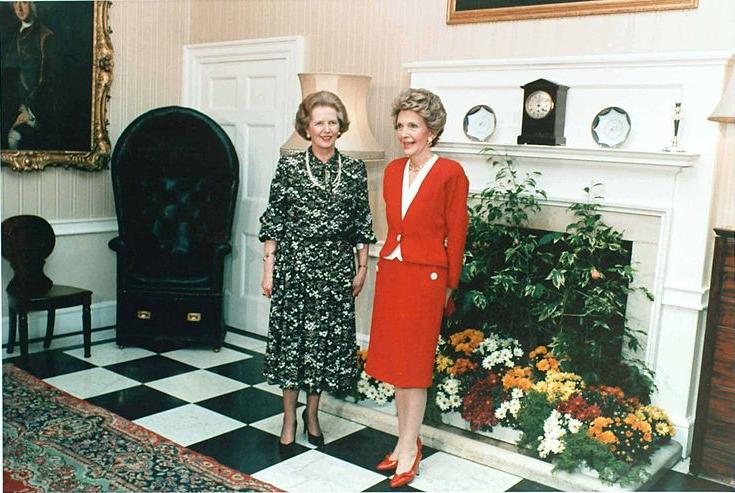
Margaret Thatcher and Nancy Reagen in the recption area at 10 Downing Street

Margaret Thatcher and Nancy Reagan in the reception area at 10 Downing Street

The White House, of course, is white. 10 Downing Street is black. When it was refurbished in the early 60s, it was discovered it was not black at all, but that pollution had resulted in the black appearance over the yellow brick. To keep the familiar appearance, the newly cleaned yellow bricks were painted black to match their previous color.

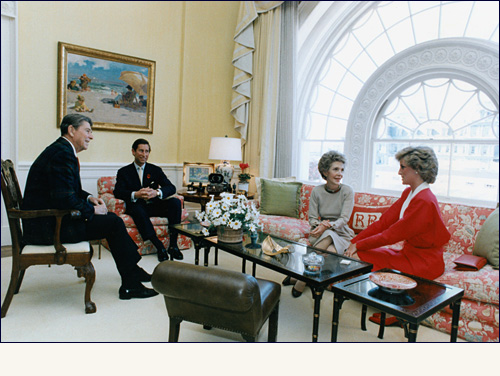
President Ronald Reagan and First Lady Nancy Reagan chat with Prince Charles and Princess Diana in the East sitting Hall, November 9, 1985. Ronald W. Reagan Presidential Library

President Ronald Reagan and First Lady Nancy Reagan chat with Prince Charles and Princess Diana in the East Sitting Hall, November 9, 1985. Ronald W. Reagan Presidential Library


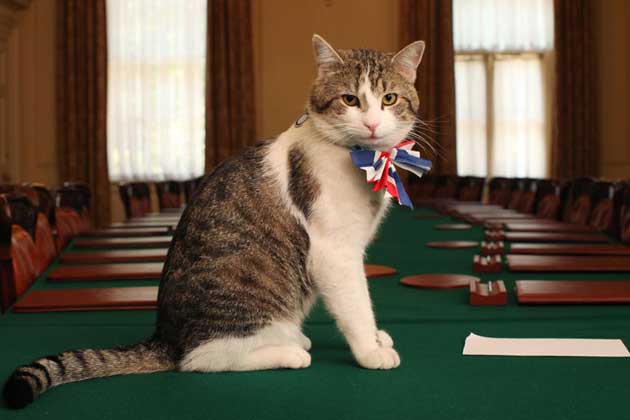
10 Downing Street’s Cabinet Office has its own official mouser, Larry the Cat. Larry was recruited from Battersea Dogs & Cats Home “on recommendation of his mousing skills”. On the 10 Downing Street website it is concluded that since joining the staff, he has made a significant impact.

Larry the Cat

Larry the Cat


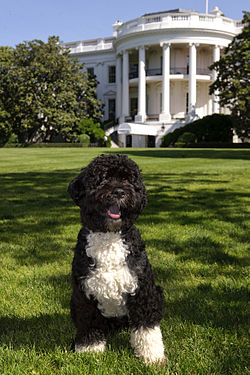
I wonder how he would get along with Beau…

250px-Bo_official_portrait

London’s Serpentine Gallery unveils new structure in Kensington Gardens

09 Tuesday Jul 2013

Posted by pat in Art, England, London

≈ Leave a Comment

Tags

Fujimoto, Kensington Gardens, Serpentine Gallery

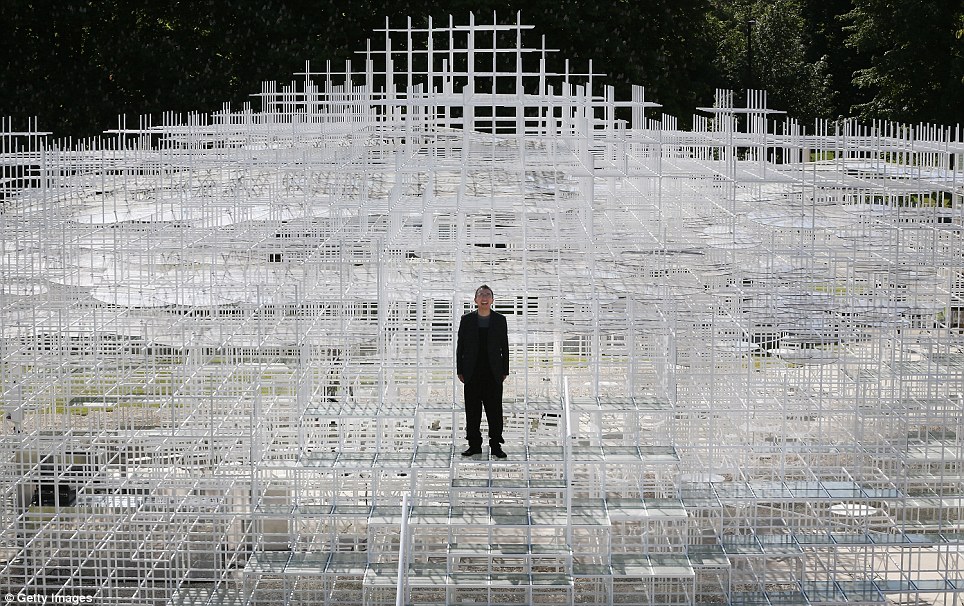
I found this article in The Daily Mail announcing the latest temporary pavilion for London’s Serpentine Gallery created by Japanese architect Sou Fujimoto.  See the whole article here!

Cloud-like: Sou Fujimoto stands upon his giant creation at the Serpentine Gallery, the latest temporary installation for the gallery's pavilion

Cloud-like: Sou Fujimoto stands upon his giant creation at the Serpentine Gallery, the latest temporary installation for the gallery’s pavilion

London Bridges

26 Wednesday Jun 2013

Posted by pat in England, London, Uncategorized

≈ 1 Comment

Tags

Bridges in London London Bridge, Chelsea Bridge, Tower Bridge

The River Thames winds through London, and even on the dreariest day the bridges crossing from one bank to the other are beautiful and varied.  I love crossing from end to end, often traveling from one very different neighborhood to another.

Tower Bridge

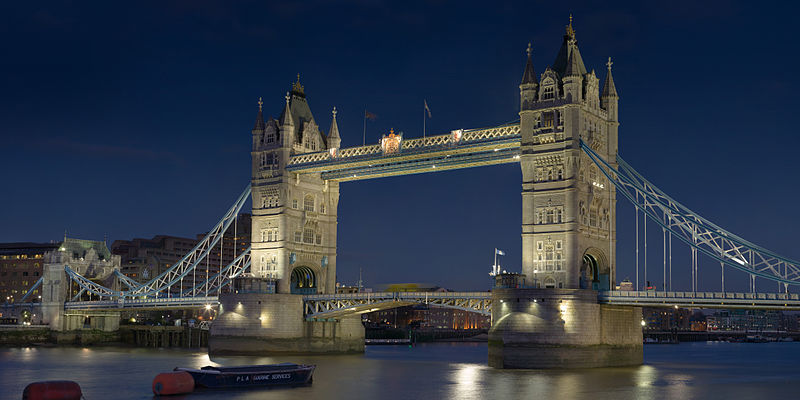
Tower Bridge. Photo: Photo by DAVID ILIFF. License: CC-BY-SA 3.0

Tower Bridge. Photo: Photo by DAVID ILIFF. License: CC-BY-SA 3.0

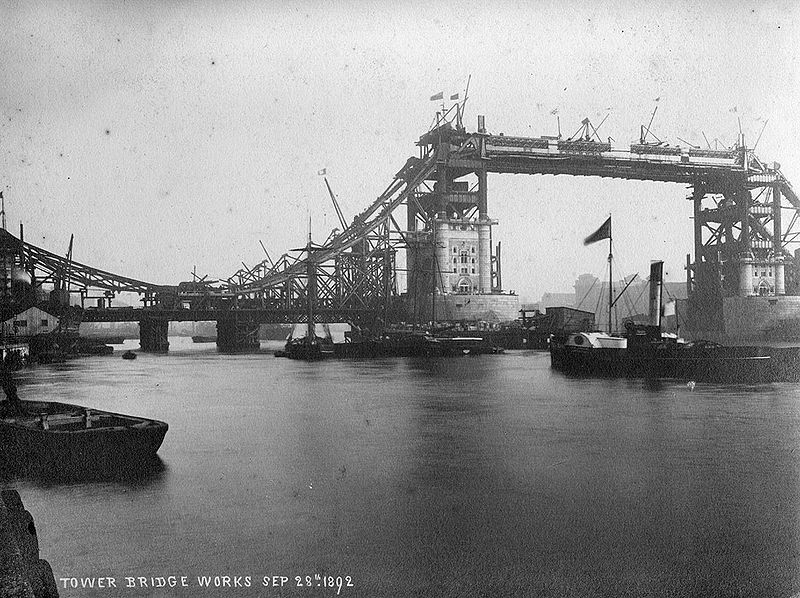
Tower Bridge is relatively young by London Bridge standards.  It was opened in June 1894 after years of discussion and eight years of construction. Tower Bridge is a combined bascule bridge (the word means see-saw or rocker in French) and suspension bridge.

View of Tower Bridge construction works, September 28th, 1892. Photo is in public domain.

View of Tower Bridge construction works, September 28th, 1892. Photo is in public domain.

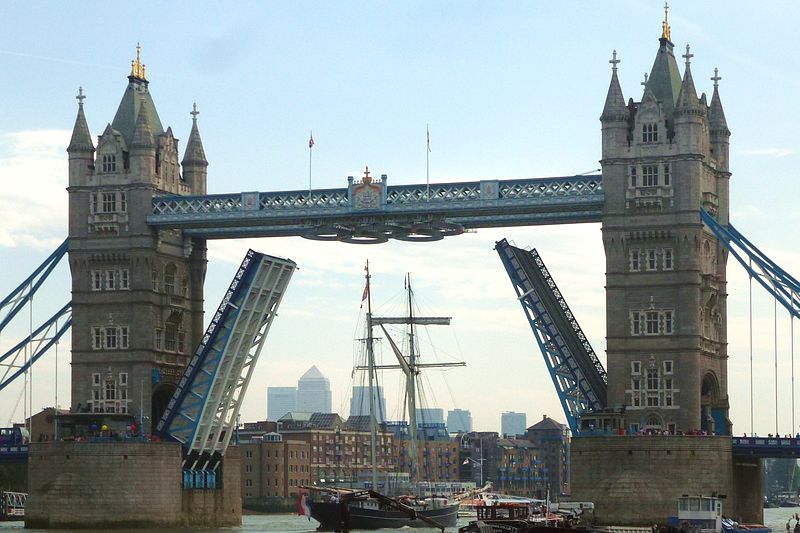
This allows it to be raised quickly for passing ships. Visitors can walk across the high walkways and enjoy spectacular views of London, and it is close to The Tower of London, from which it takes its name.

A tall ship passing under Tower Bridge decorated for the London Olympics in August 2012. Photo by Cmglee

A tall ship passing under Tower Bridge decorated for the London Olympics in August 2012. Photo by Cmglee

The bridge’s current color scheme of red white and blue dates from 1977 in honor of Queen Elizabeth II’s silver jubilee. Originally it was painted a greenish-blue color.

London Bridge

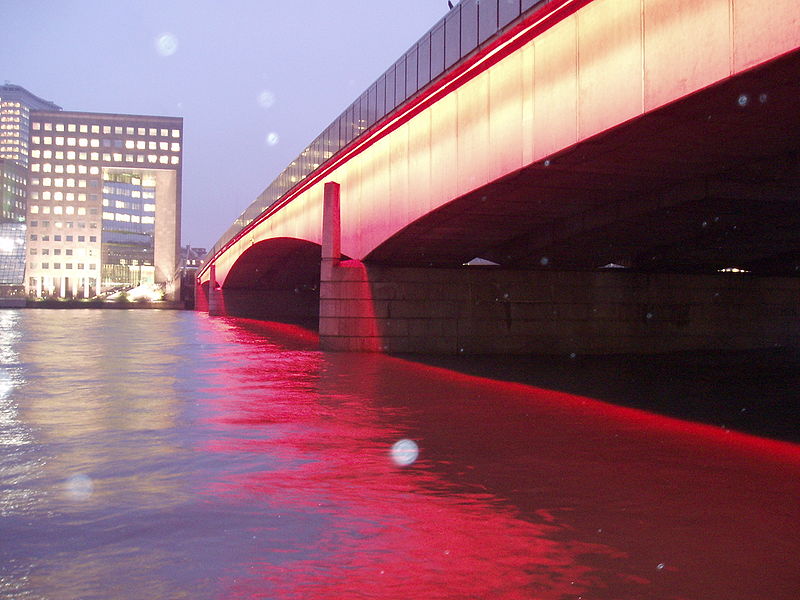
The London Bridge, in one form or another, has existed on this spot for over 2000 years. The Romans were the first to put one up when they first came to London in 46 AD. Originally built of wood, the bridge was prone to falling down from fires, storms or invading armies.  Thus the nursery song.

London Bridge, photo by Peter Burgess

London Bridge, photo by Peter Burgess

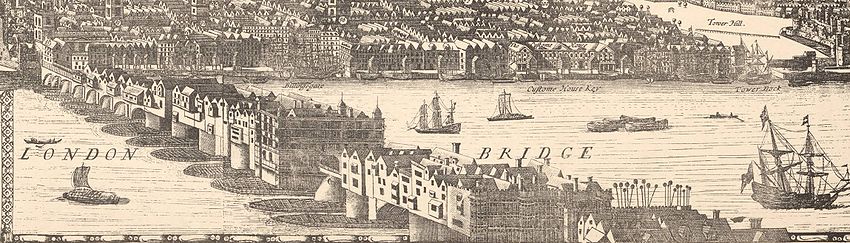
The first stone bridge was constructed in 1209 when King John was on the throne, and he permitted houses and shops to be placed on the span which took 33 years to build. There was a drawbridge to allow ships traffic to pass, and gates at either end.

Drawing of London Bridge from 1682 London Map.

Drawing of London Bridge from 1682 London Map.

It lasted until 1831, and was replaced with a bridge that had foundation problems. The current London Bridge was opened by Queen Elizabeth II in 1973 and both vehicles and pedestrians now use the bridge.

Cannon Street Rail Bridge

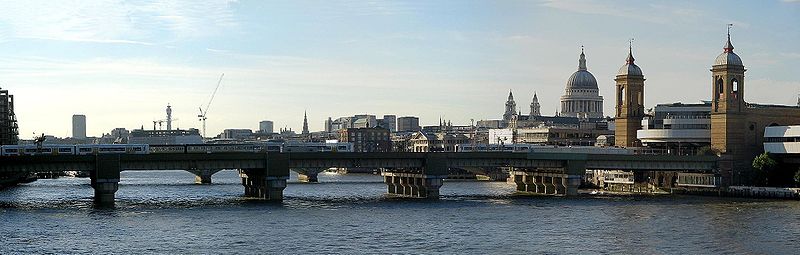
Originally called the Alexandria Bridge after the wife of King Edward VII when it was opened in 1866, the Cannon Street Station Bridge has taken on the name of the terminal station of the National Rail at the end of the bridge.

Cannon Street railway bridge. Photo taken by Will Fox 2005.

Cannon Street railway bridge. Photo taken by Will Fox 2005.

Southwark Bridge

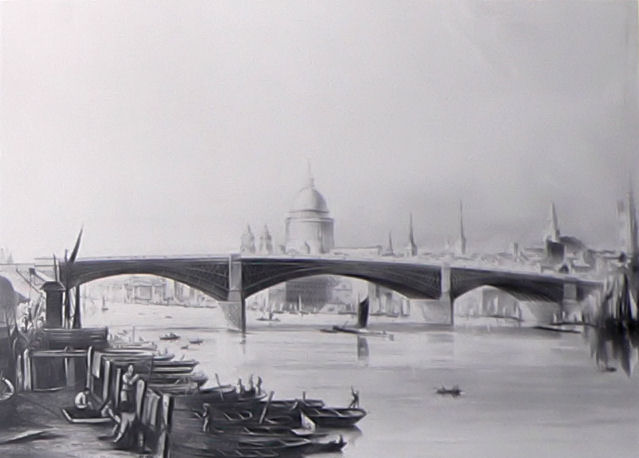
Originally known as the Queen Street Bridge or “Iron Bridge”, it opened in 1819. It was demolished in 1913.

Southwark Iron Bridge. Wikimedia Commons.

Southwark Iron Bridge. Wikimedia Commons.

The new arch bridge opened in 1921, having been delayed by WWI, linking Southwark and the city across the Rivers Thames.

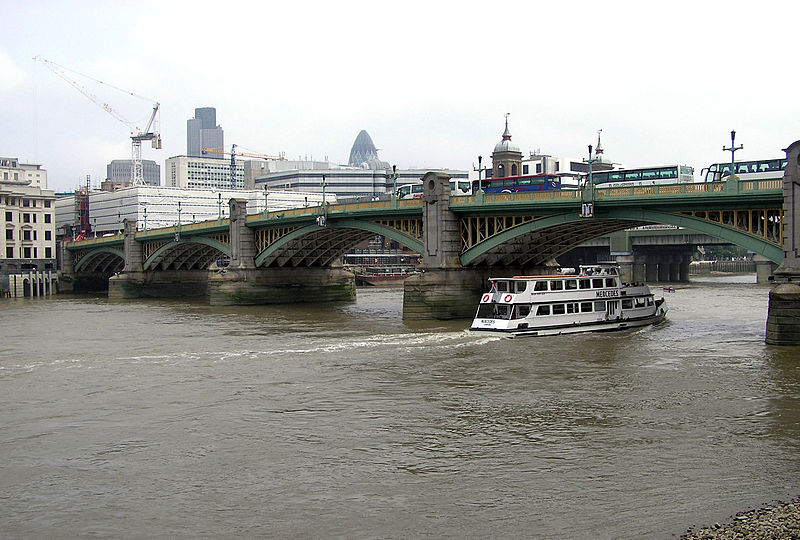
Southwark Bridge from the south bank of the Thames.  Photo: released to public domain by Arpingstone.

Southwark Bridge from the south bank of the Thames. Photo: released to public domain by Arpingstone.

In the past, watermen would transport people from one side of the river to the other, and the stone steps to the water under the south side are still visible. It has the reputation for being the least used bridge in central London. The south end is near the Tate Modern.

Millennium Bridge

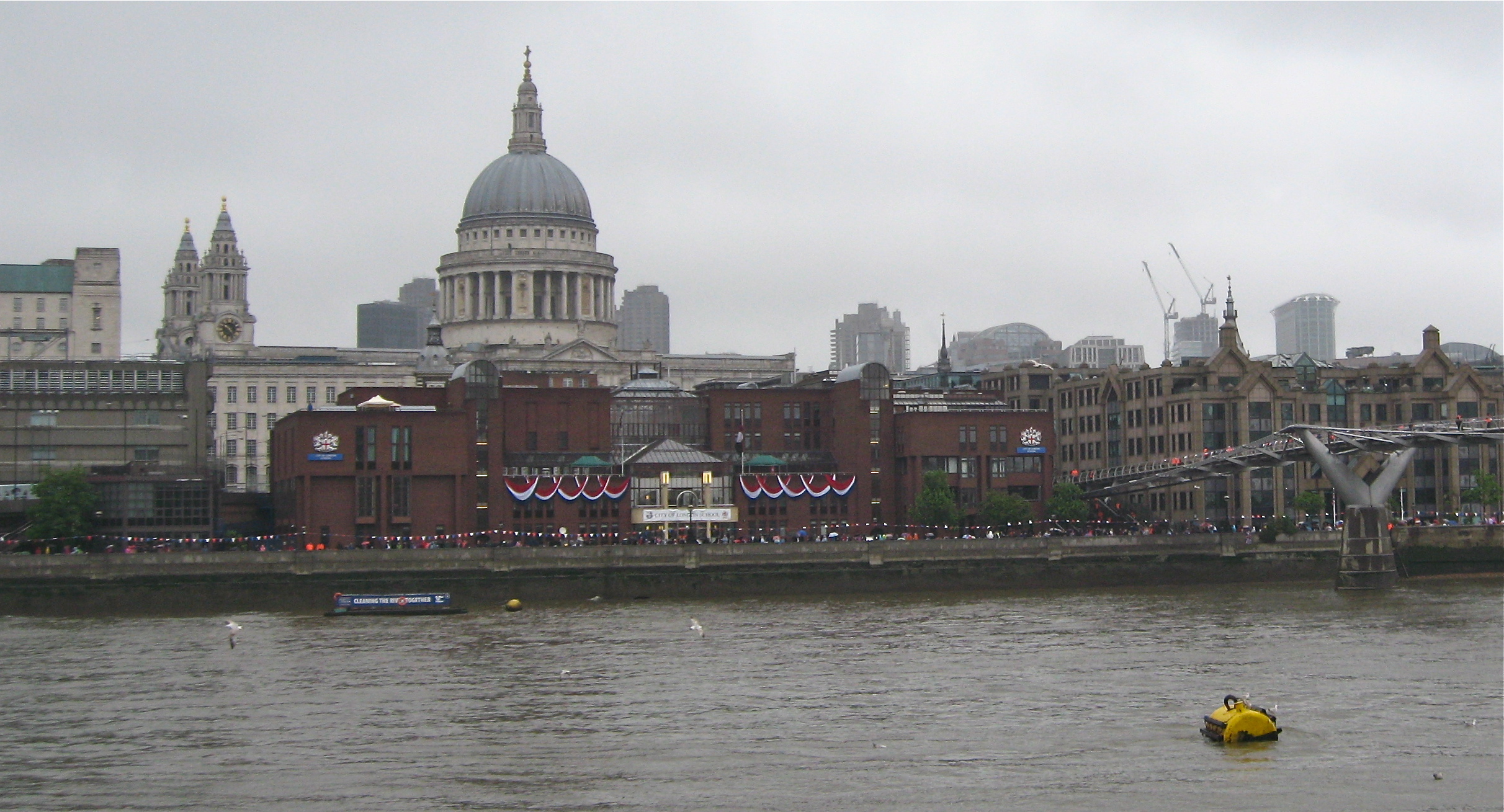
I love the Millennium Bridge–a pedestrian-only bridge that crosses over the river from St. Paul’s Cathedral to The Tate Modern Art Museum on Bank Side.

The Millennium Bridge on a grey English morning. Photo by me.

The Millennium Bridge on the right and St. Paul’s cathedral in the center on a grey English morning. Photo by me.
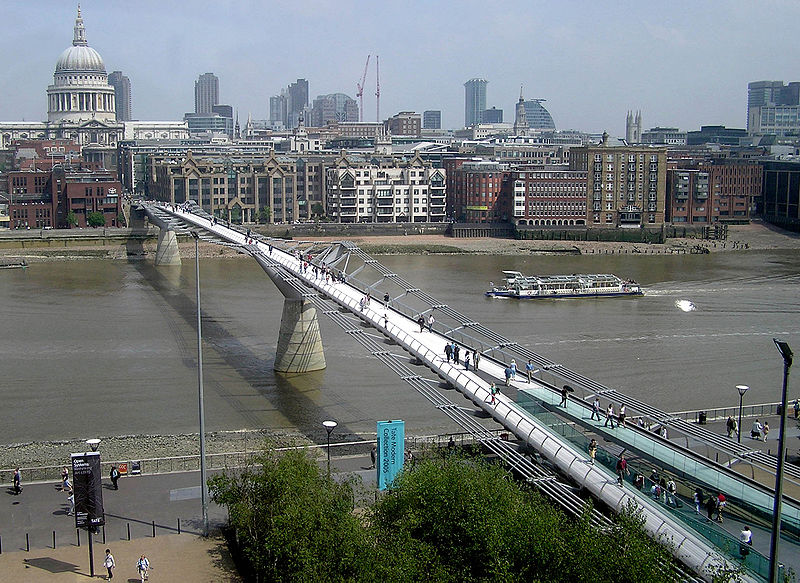
It opened in 2000, but closed a few days later.  There was a problem with a wobble, not something you want when crossing a river on foot. They had not counted on the effect of the many people walking across at the same time.

The Millennium Bridge from the Tate Modern. Wikimedia Commons

The Millennium Bridge from the Tate Modern. Wikimedia Commons

A few million pounds, and a couple of years later and it re-opened.  No wobble at all.  The Southern end of the bridge is near the Globe Theatre, the Bankside Gallery (home to the Royal Watercolour Society and the Royal Society of Painter Printmakers. and Tate Modern.

Blackfriars Rail Bridge

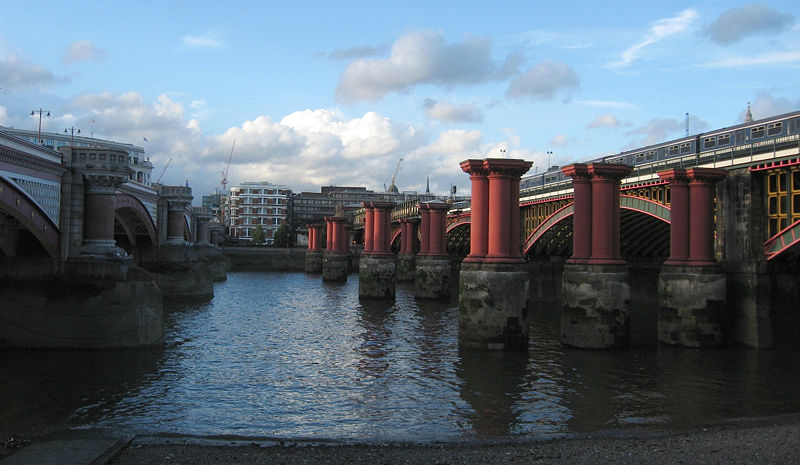
The new bridge which opened in 1864 replaced  a less strong bridge that had opened in 1864.

View from South Bank between Blackfriars and Blackfriars Railway bridges, showing train. Photo by Alethe, Creative Commons

View from South Bank between Blackfriars and Blackfriars Railway bridges, showing train. Photo by Alethe, Creative Commons

The new bridge could handle the “modern” trains.  It is named for Blackfriars’ Station.

Blackfriars Bridge

Blackfriars was named for a 13th century Dominican Monastery that had provided the name for that section of London near Ludgate Hill, and is both a vehicle and pedestrian bridge.

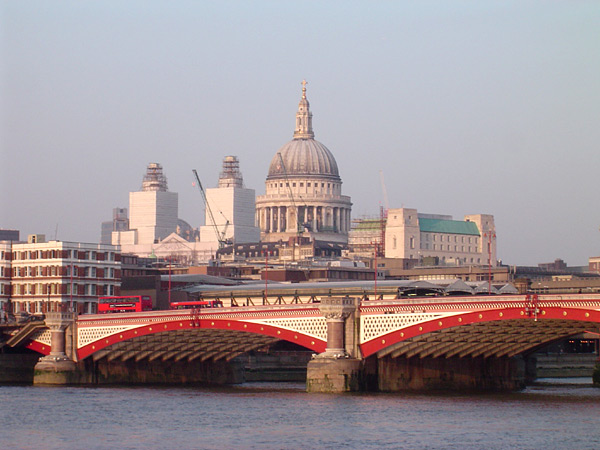
Blackfriars Bridge, London, with St. Pauls Cathedral behind. Photo Wikimedia Commons

Blackfriars Bridge, London, with St. Paul’s Cathedral behind. Photo Wikimedia Commons

The first bridge at this spot was opened in 1769 as a toll bridge, and was replaced by the current bridge which was opened by Queen Victoria in 1869.

Waterloo Bridge

This bridge leads to the South Bank where you will find the Royal Festival Hall, Waterloo Station and the Royal National Theater.  You can walk this one, or ride across.

Waterloo Bridge, London.Photo: Colin, Wikimedia Commons

Waterloo Bridge, London.Photo: Colin, Wikimedia Commons

The first bridge on this site opened in 1817 as a toll bridge and is named for the Napoleonic War’s Battle of Waterloo. The current bridge was completed in 1945.

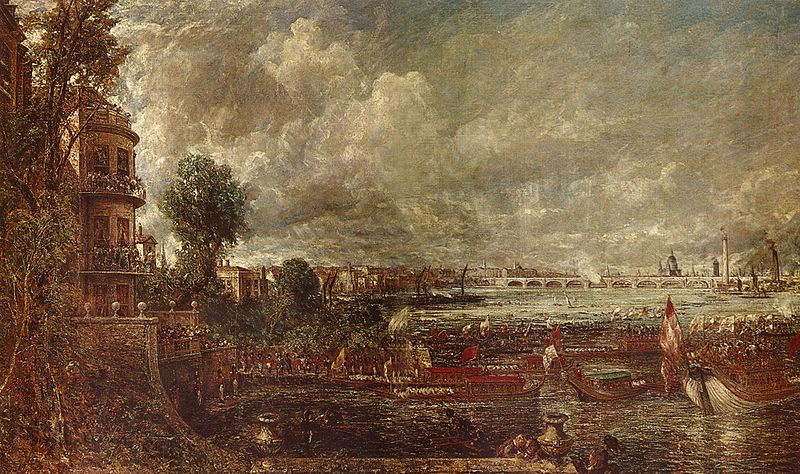
John Constable, View of the old Waterloo Bridge from Whitehall stairs, 1817.

John Constable, View of the old Waterloo Bridge from Whitehall stairs, 1817.

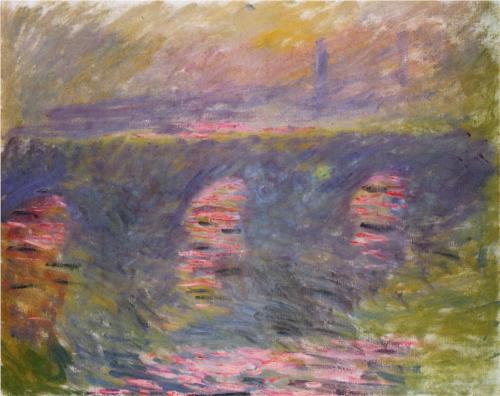
Waterloo Bridge, Claude Monet 1899

Waterloo Bridge, Claude Monet 1899


Hungerford Bridge/Golden Jubilee Bridge

A railway bridge, sometimes known as the Charing Cross Bridge.

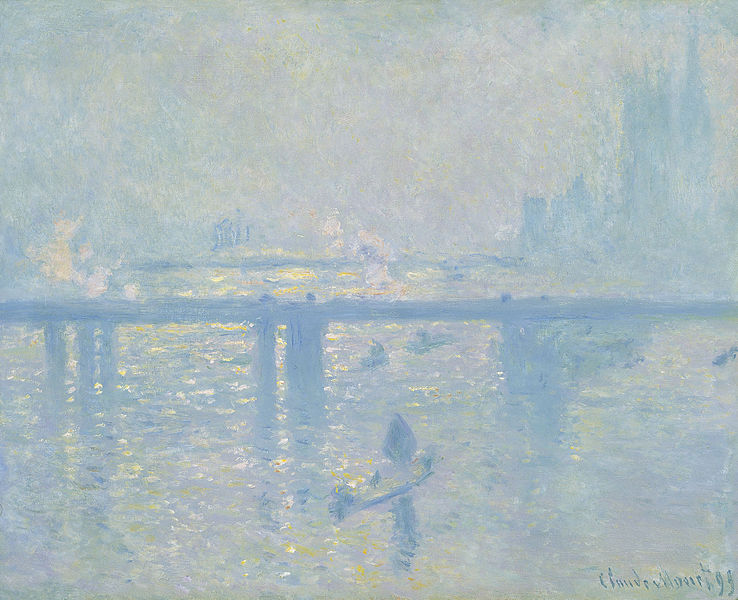
Charing cross Bridge, Claude Monet

Charing Cross Bridge, Claude Monet

The bridge is now a vehicle bridge bordered by two pedestrian walkways. The first bridge on this site was a suspension foot bridge in 1845.

Hungerford Bridge from the London Eye. Creative Commons

Hungerford Bridge from the London Eye. Creative Commons

Less than 20 years later it was replaced to accommodate the railroad.

Westminster Bridge

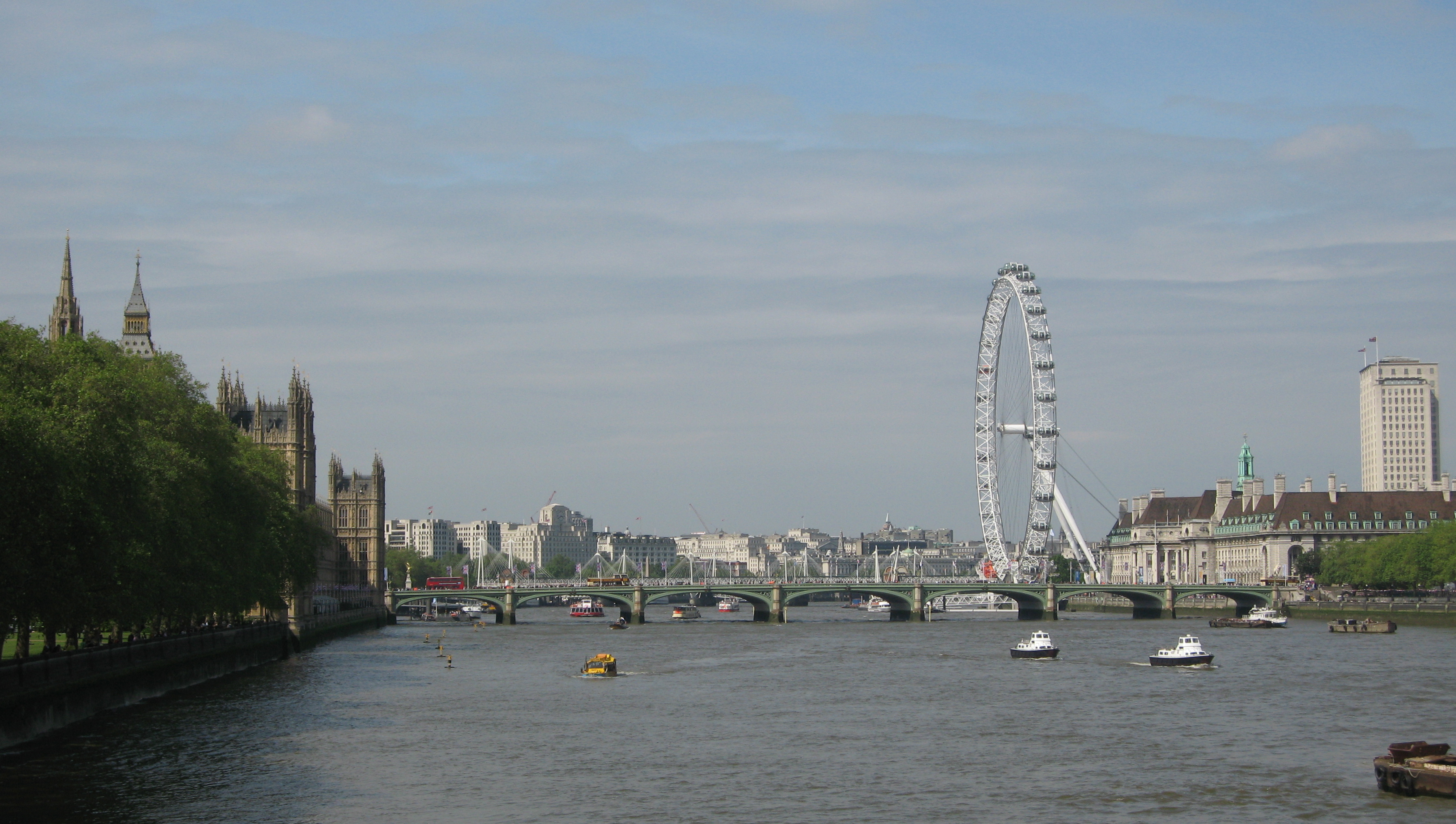
Made of wrought iron, the current bridge opened in 1862 and is London’s oldest bridge, connecting Westminster and Lambeth.

Westminster Bridge. Photo by me.
Westminster Bridge. Photo by me.

The Gothic Detail reflects the nearby Houses of Parliament and can handle both vehicles and pedestrians. The bridge is painted predominantly green, the same color as the leather seats in the House of Commons which is on the side of the Palace of the Westminster nearest the bridge.

Lambeth Bridge

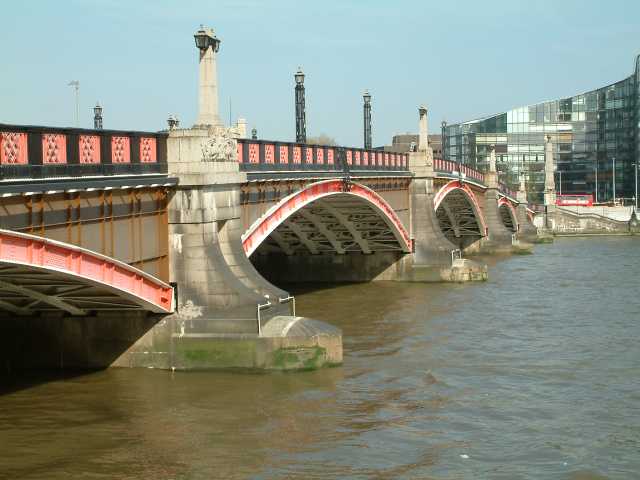
The next bridge is painted predominantly red for the House of Lords, in fair play since the Westminster is green for the House of Commons.

Lambeth Bridge, London. Wikimedia Commons.

Lambeth Bridge, London. Wikimedia Commons.

The vehicle and pedestrian bridge was opened in 1932 by King George V. The bridge was used for the 2004 film Harry Potter and the Prisoner of Azkaban for a scene where the Knight Bus must pass between two Leyland Titans.

Vauxhall Bridge

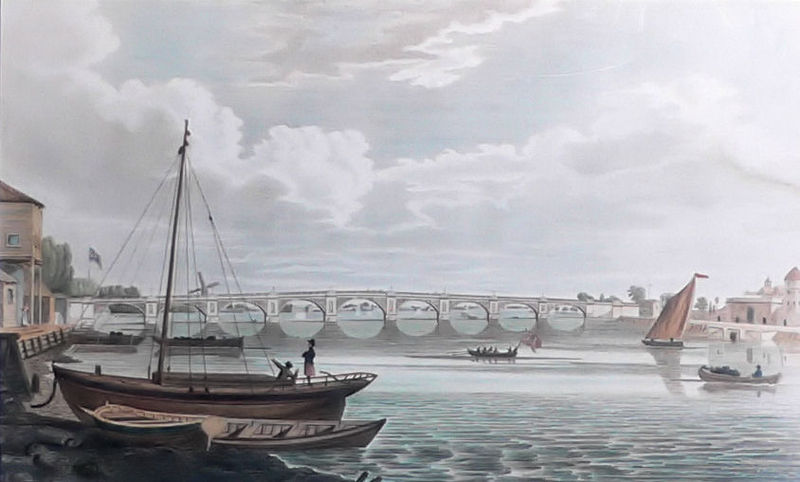
The original bridge was built on the site of a former ferry between 1809 and 1816, and was the first iron bridge over the Thames.

A view of James Walker's Regent's Bridge of 1816. Artist Unknown.

A view of James Walker’s Regent’s Bridge of 1816. Artist Unknown.

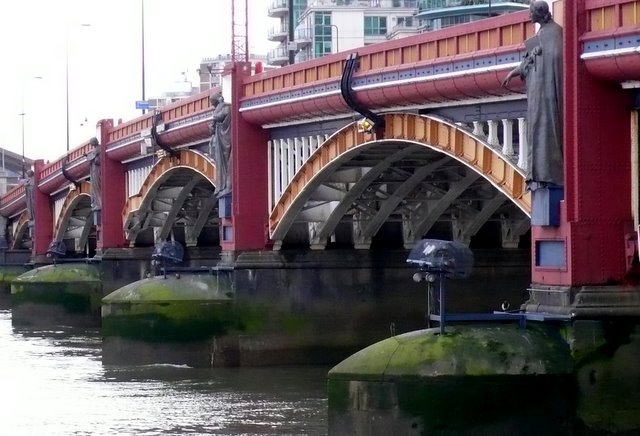
The current bridge, originally known as Regent Bridge, was opened in 1906, and now connects Vauxhall on the south bank and Pimlico on the north bank. The bridge carried electric trams until service ended in 1951.

Vauxhall Bridge, London. View of the downstream side (NE) of the bridge from Millbank on the north bank of the Thames River.Photo Nigel Mykura

Vauxhall Bridge, London. View of the downstream side (NE) of the bridge from Millbank on the north bank of the Thames River.Photo Nigel Mykura

Grosvenor Bridge

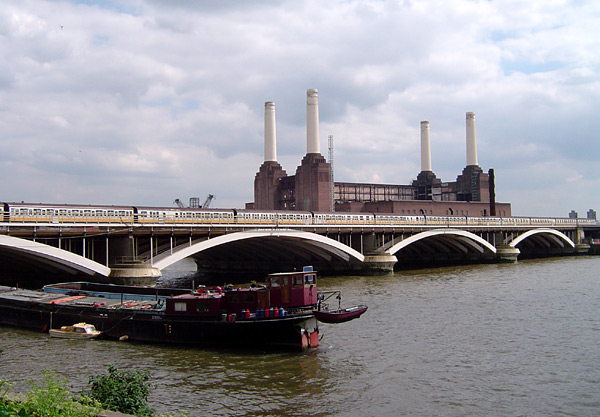
Originally known as Victoria Railway Bridge, Grosvenor Bridge is an arched railway bridge  originally constructed in 1860.  The bridge was rebuilt and widened again in the 1960s.

Grosvenor Bridge. Photo: ChrisO Wikimedia Commons

Grosvenor Bridge. Photo: ChrisO Wikimedia Commons

It was the first railway bridge across the Thames in central London, and carries trains into Victoria Station. On the South Bank is Nine Elms to the east and Battersea to the west.

Chelsea Bridge

Chelsea Bridge in west London connects Chelsea on the north bank to Battersea on the south bank.

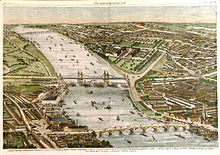
Vauxhall Bridge, Victoria (now Chelsea) Bridge and Battersea Bridge, London 1859

Vauxhall Bridge, Victoria (now Chelsea) Bridge and Battersea Bridge, London 1859

There was a natural ford on the site, a shallow crossing of the Thames where you were able to cross by wading or in a vehicle.


The first Chelsea Bridge did not open until 1857, and was built to provide convenient access to the new Battersea Park. The suspension Bridge was narrow and structurally unsound. Between 1934 and 1937 it was demolished  and replaced by its current structure, the first self-anchored suspension bridge in Britain.

800px-Chelsea_Bridge,_London_-_Oct_2012

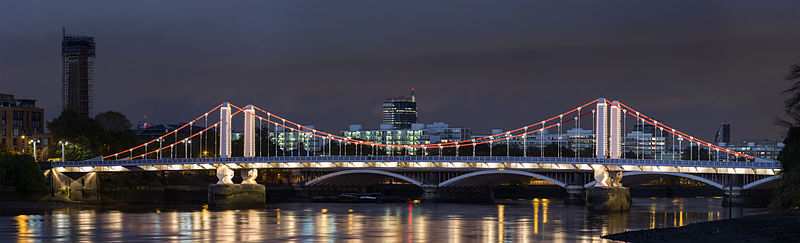
Panoramic view of Chelsea Bridge at night in London. Photo: David Diliff. License: CC-by-SA 3.0

The bridge is floodlit from below during the hours of darkness.  The towers and cables are illuminated by 936 feet of light-emitting diodes. In 2004 a smaller bridge perpendicular to the main bridge Battersea Footbridge was opened beneath the southern span.

Who would have thought bridges could have such rich histories…only in London.

Moving Day

19 Wednesday Jun 2013

Posted by pat in England, Gardens, History, London, The Royal Family

≈ Leave a Comment

Tags

Kensington Palace, William & Kate

William and Kate, otherwise known as The Duke and Duchess of Cambridge, move in to their new quarters at Kensington Palace sometime before the end of this year.  It is the beginning of a new and more visible royal role for the couple, as they ease ever more quickly into a very public life.  They must have mixed feelings about the move, but excited especially with the new baby due in the next month.

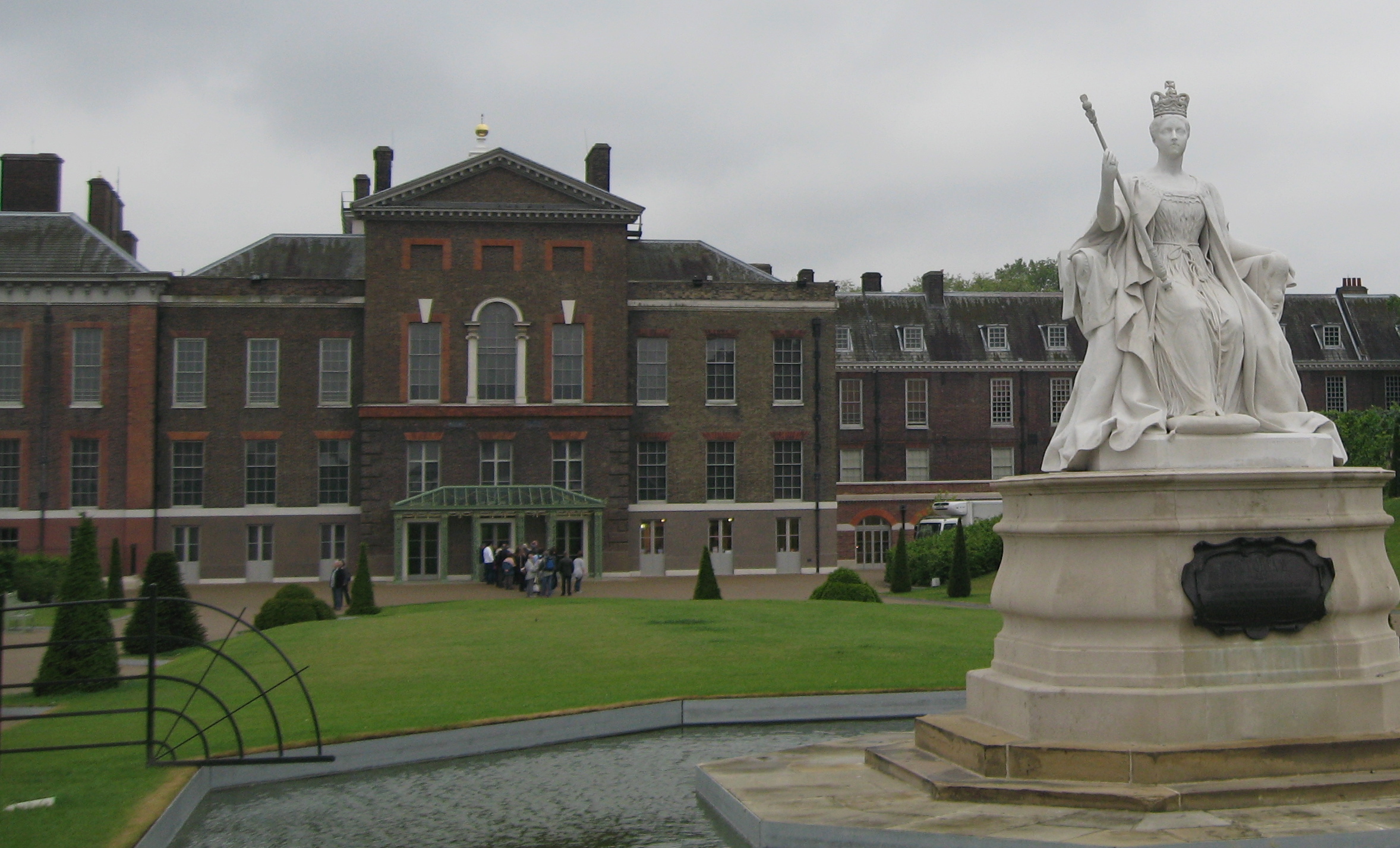
Kensington Palace from the more public East side. Photo by me

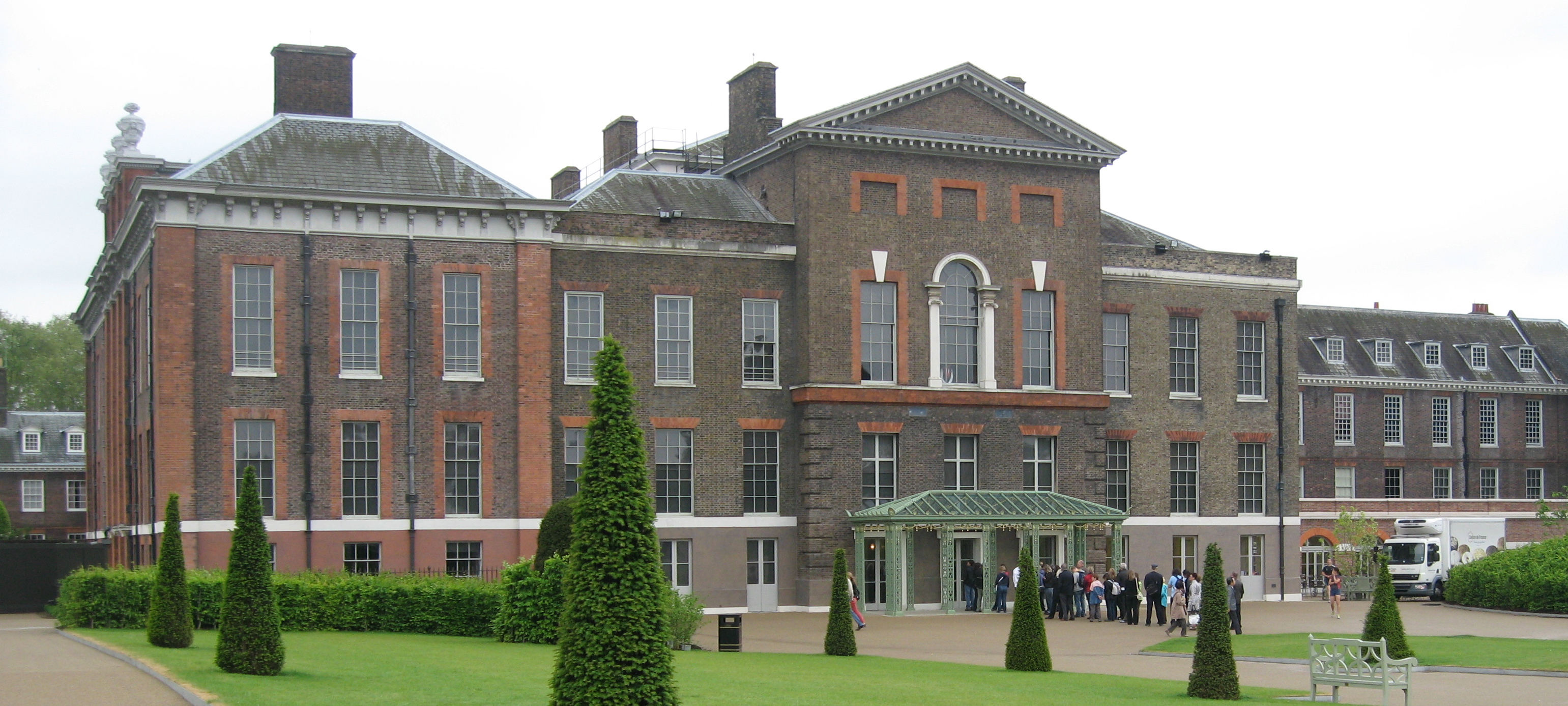
Kensington Palace from the more public East side. Photo by me

They will soon live in Apartment 1A, formerly the home of Princess Margaret. Up to now the apartment has remained unused since Princess Margaret’s death in 2002. They currently have a small, two-bedroom apartment residence at the palace.

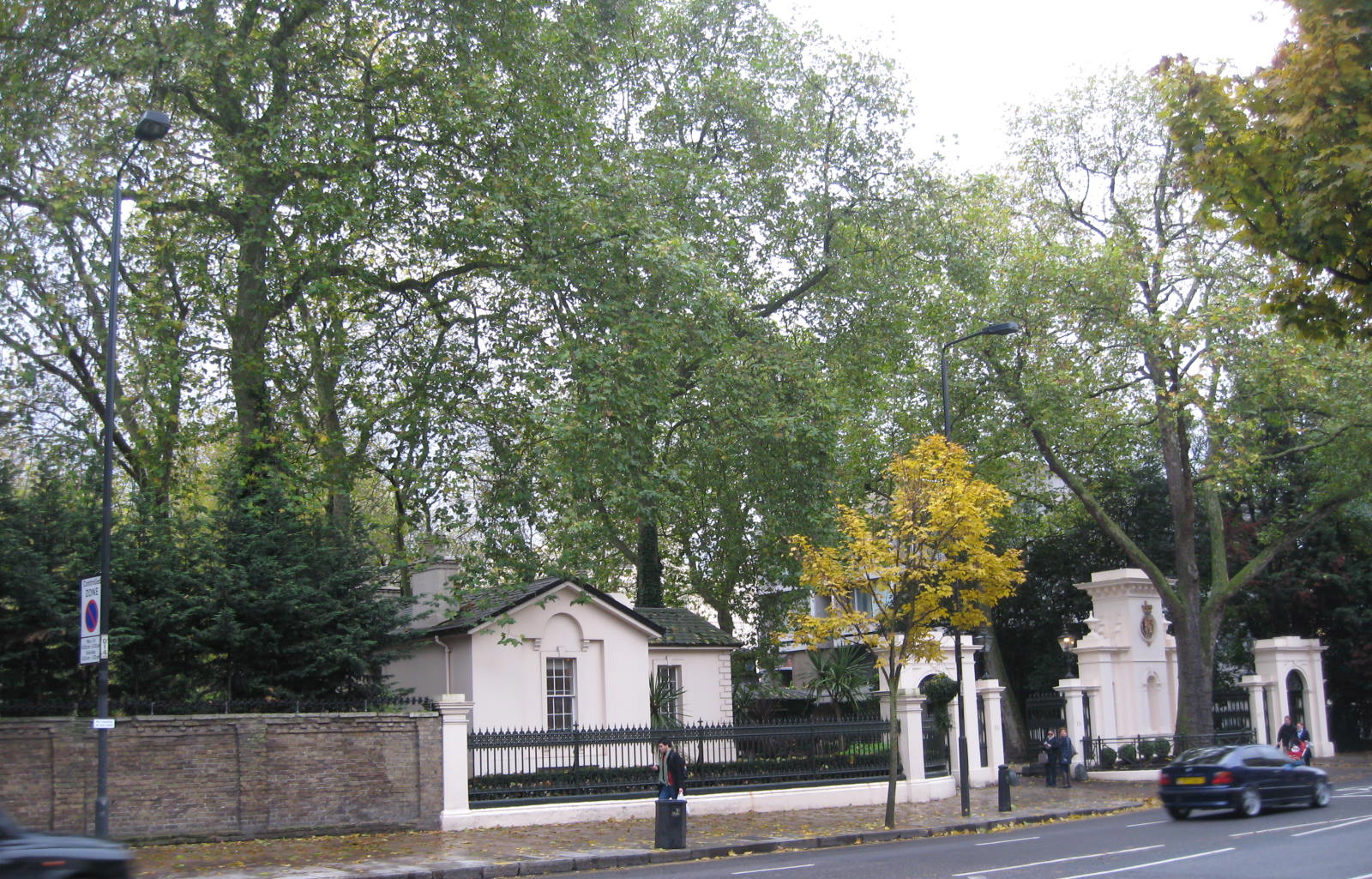
The entrance to the beautiful street that Kensington Palace is on, as well as many embassies. Photography is not allowed on this street once you get past these white walls. Photo by me

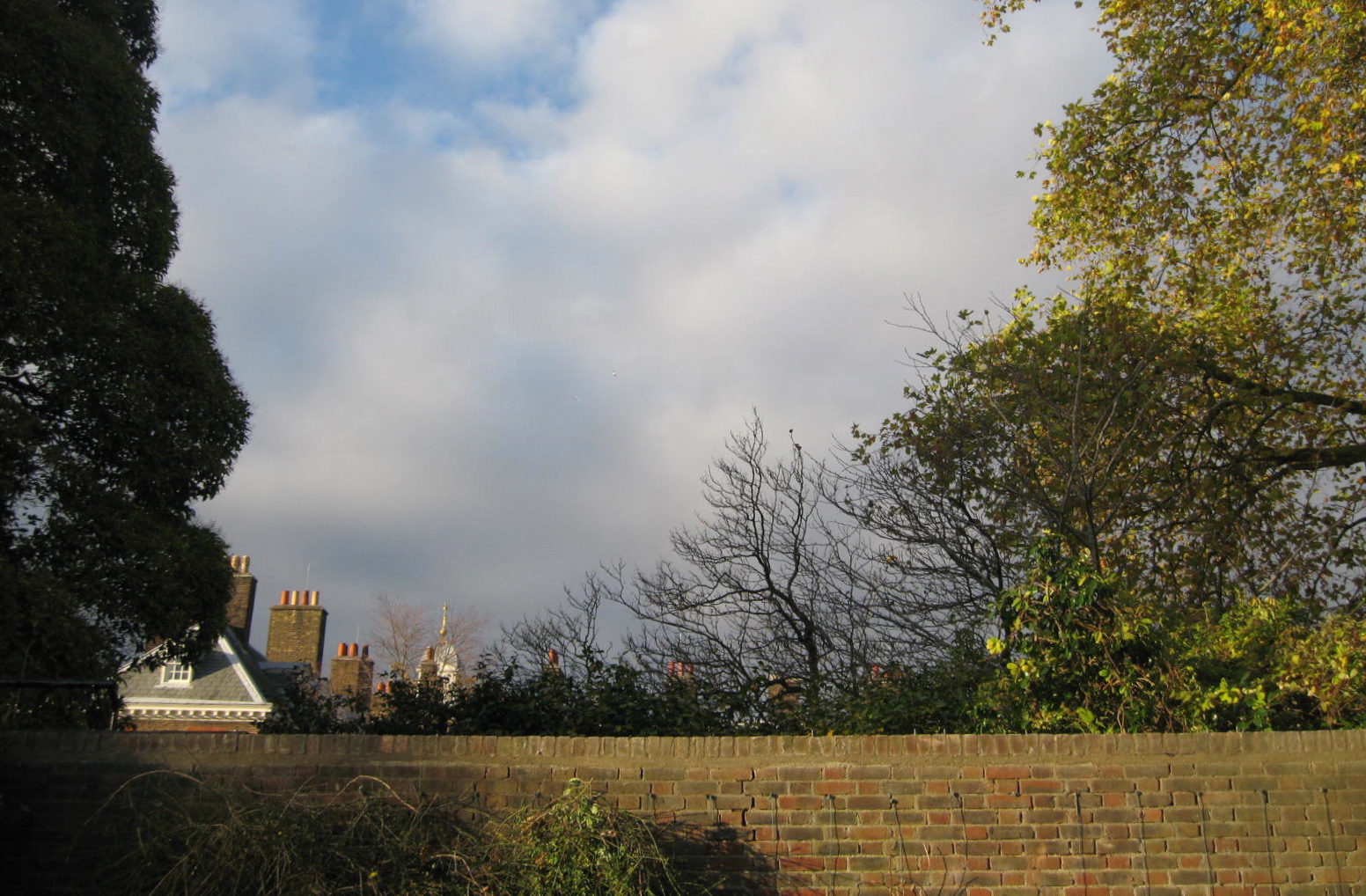
When I walked by Kensington Palace this past November, I noticed workers busily installing great black iron spikes along the top of this lovely garden wall.  Increased security I’m sure.  A strange world we now live in.

There was also extensive rewiring, new plumbing and the removal of asbestos. What fun to decorate all 20 rooms, including a nursery. The Duchess has had her last public royal appearance before the birth of the baby, and I am sure she will use some of that quiet time to finish furnishing her new home.

The beautiful walls around Kensington Palace, before the addition of spikes. Photo by me

I can only wish them years of happiness raising a family is this idyllic place.

Kensington Gardens

17 Friday May 2013

Posted by pat in Art, England, Gardens, London, The Royal Family, Uncategorized

≈ Leave a Comment

Tags

Kensington Gardens, Kensington Palace

One of my favorite parks in London is Kensington Gardens.

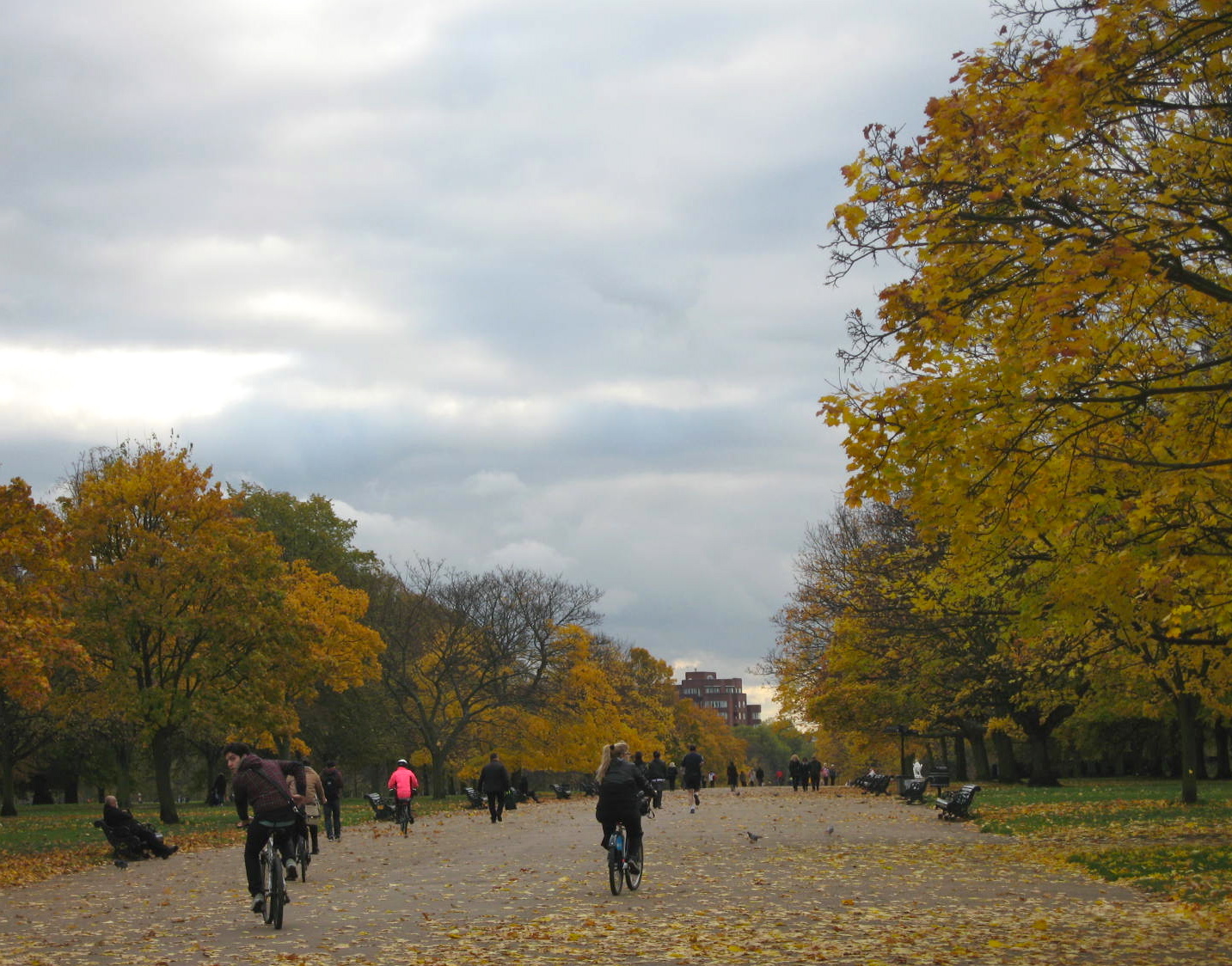
Entering Kensington Gardens from the Notting Hill side. Photo by me.
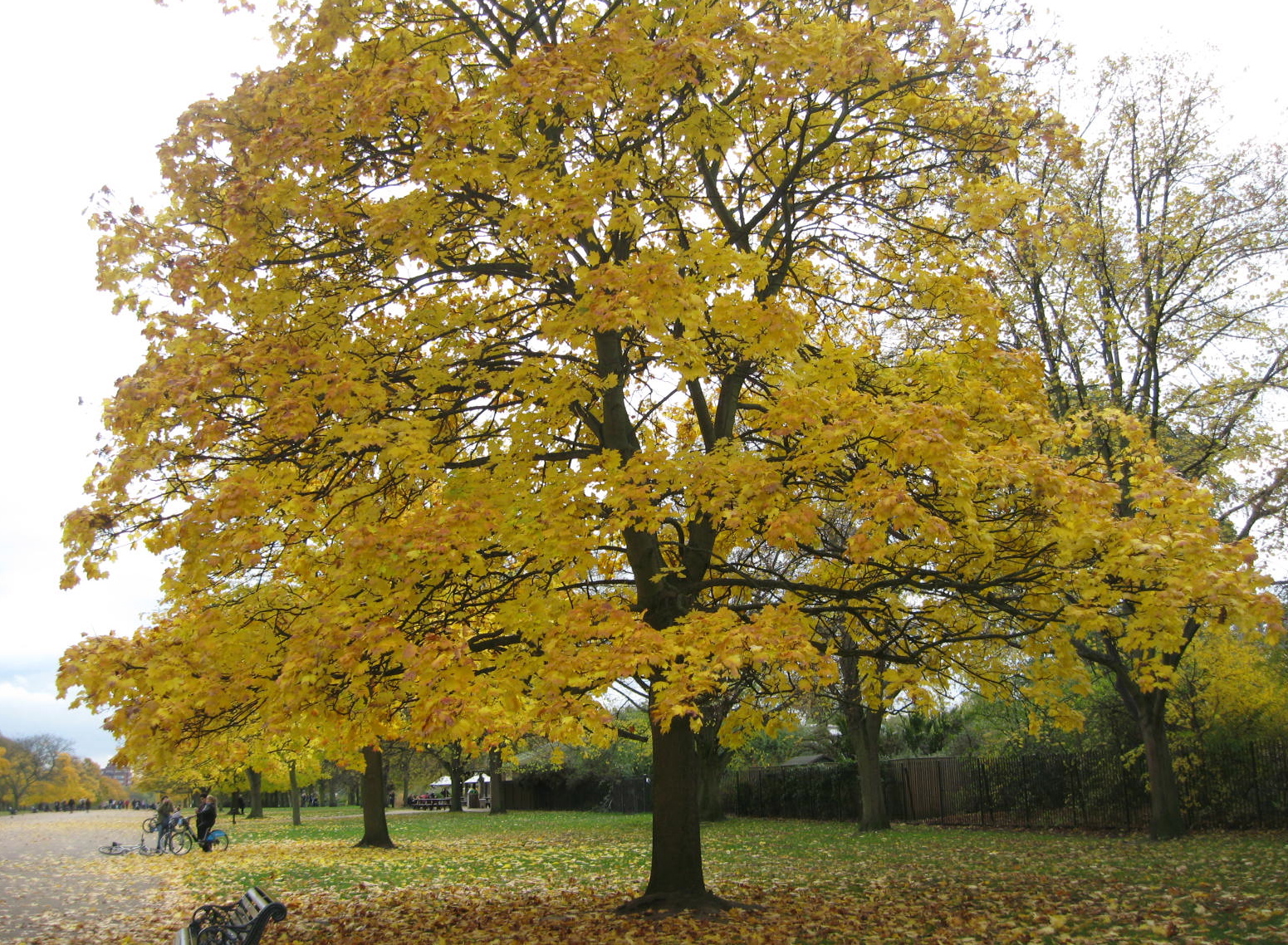
Entering Kensington Gardens from the Notting Hill side in autumn. Photo by me.
I discovered it last year, and since then I can’t stay away.

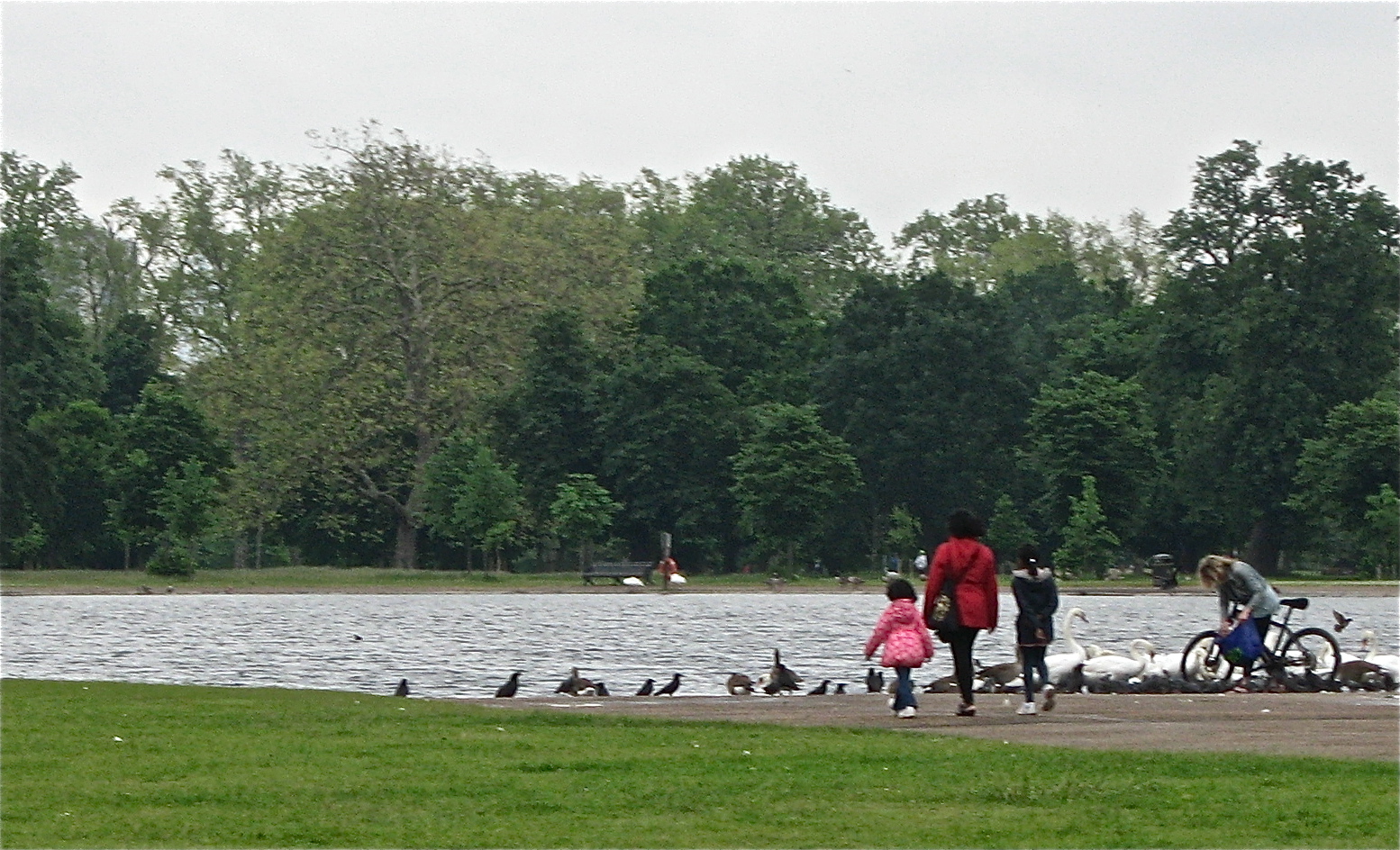
Kensington Gardens'  Round Pond.  The perfect spot on a summer's day. Photo by me.
Kensington Gardens’ Round Pond. The perfect spot on a summer’s day. Photo by me.
One of London’s Royal Parks, it flows out from behind Kensington Palace…

Kensington Palace. Photo by me

Kensington Palace. Photo by me

…to join with Hyde Park on its eastern border. 

On the western side of London, Kensington Gardens is next to one of the most desirable areas in London– Kensington–known for some of the best shopping in the city.

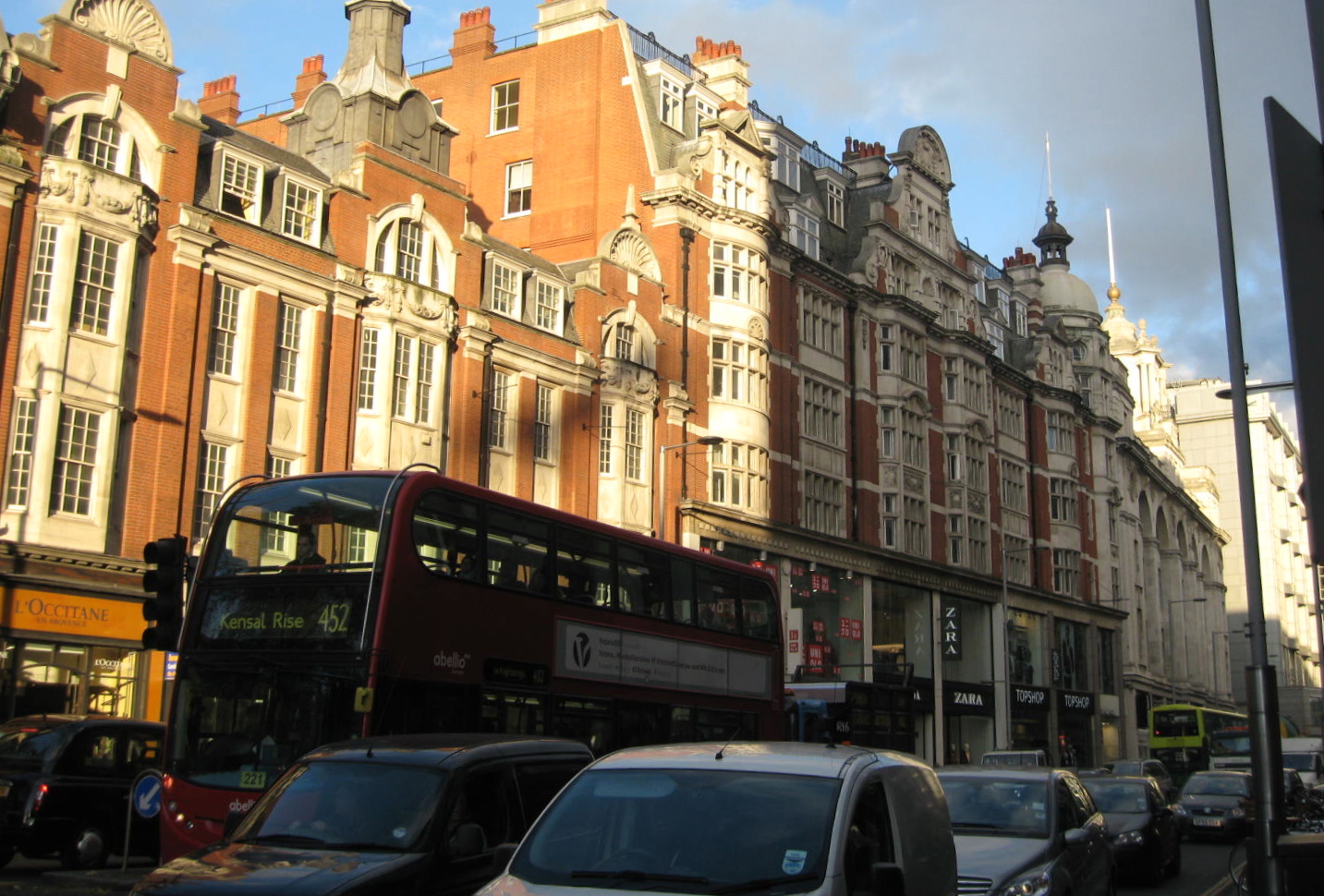
Kensington High Street. Photo by me

Kensington High Street, just a few blocks from Kensington Gardens. Photo by me

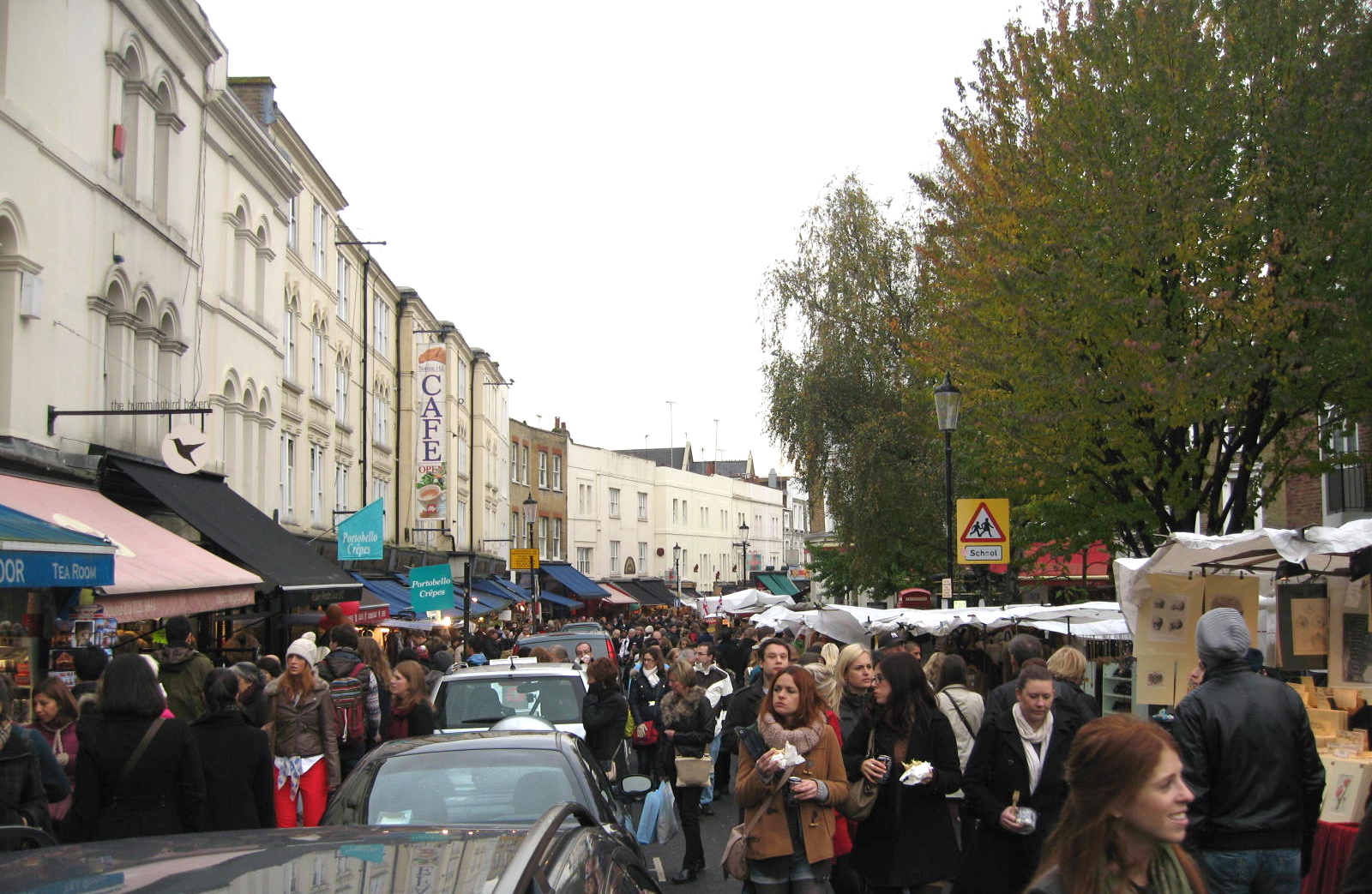
It is also very near the popular Notting Hill neighborhood and the famous Portobello market.

Sunday afternoon on Portobello Road at the market. Photo by me.
A crowded Sunday afternoon shopping on Portobello Road at the market. Photo by me.
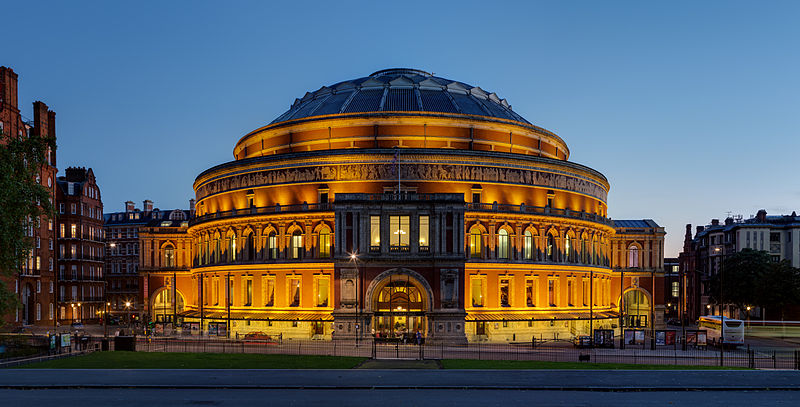
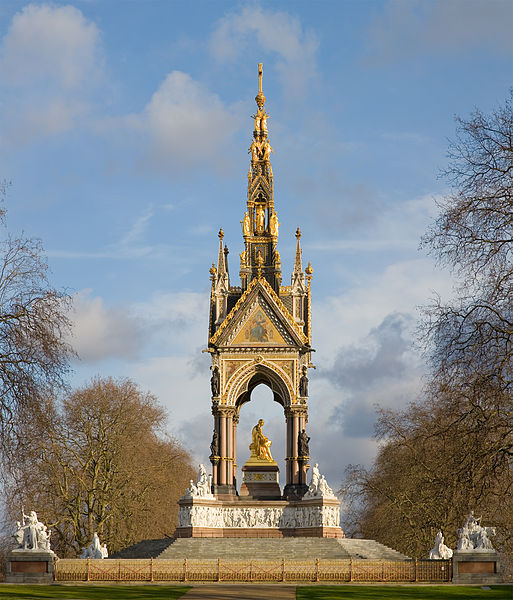
To the south of the park is the famous concert hall, The Royal Albert Hall, best known for holding the annual summer Proms concert since 1941. It is right across from the Albert Memorial Gate entrance to the park and the Albert Memorial on Kensington Road.

Royal Albert Hall viewed from Kensington Gardens. Photo by David Iliff, Creative Commons

Royal Albert Hall viewed from Kensington Gardens. Photo by David Iliff, Creative Commons


The Albert Memorial.

The Albert Memorial. Photo Wikimedia Commons by D. Iliff

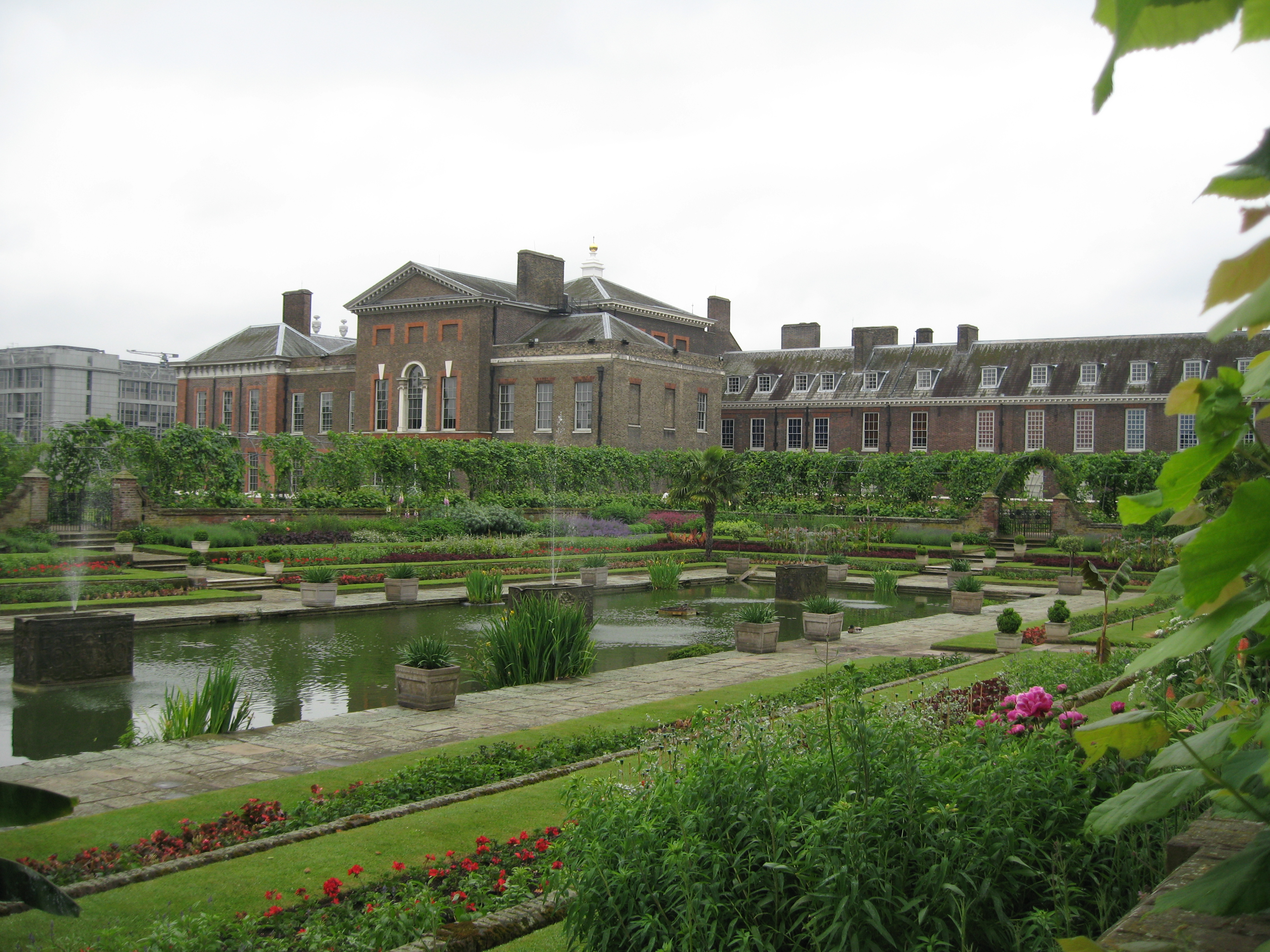
And of course right inside the gardens on the west side of the park is Kensington Palace, the London home of the Duke and Duchess of Cambridge (Will & Kate) and Prince Harry.

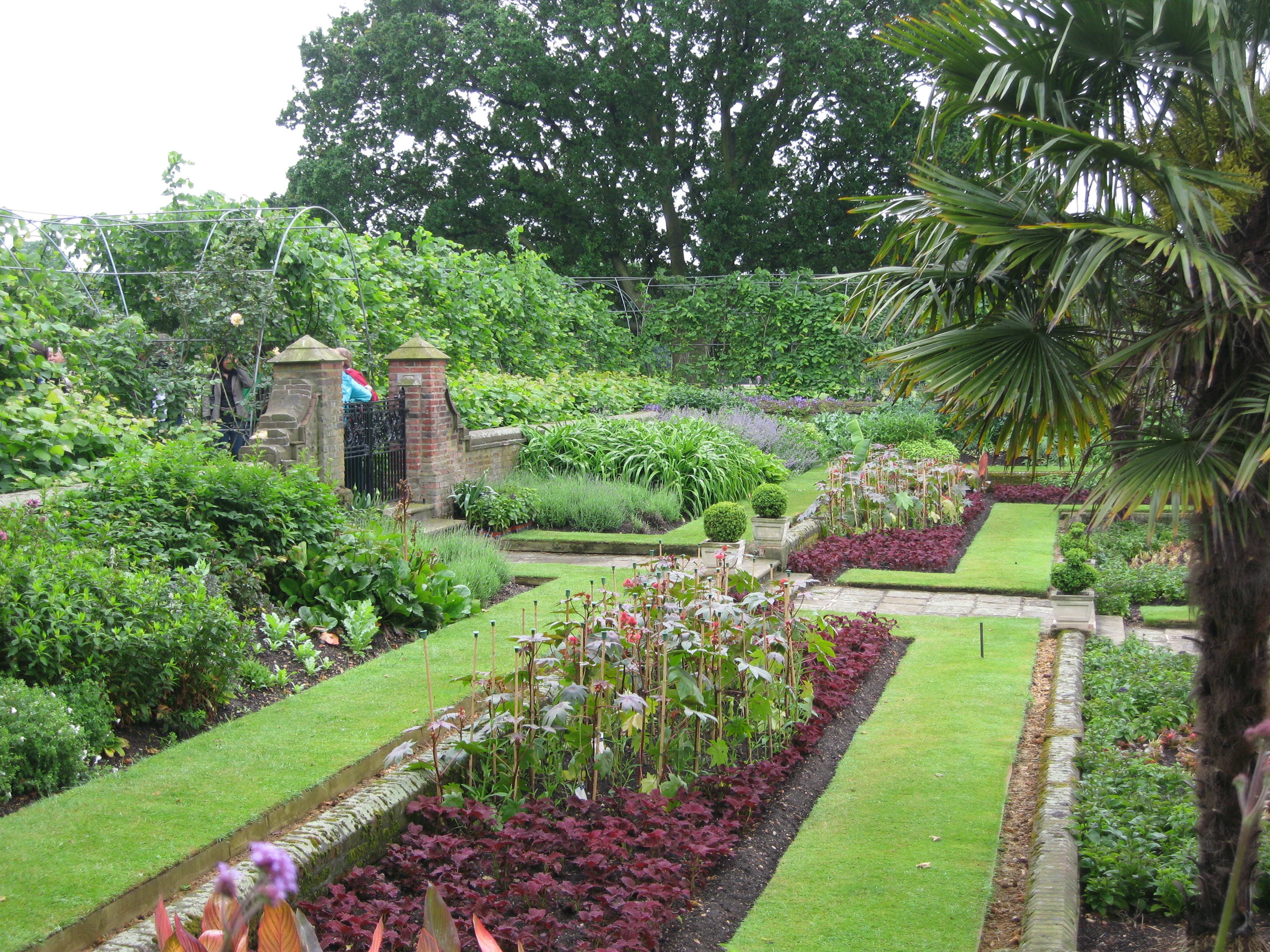
Kensington Palace from the Sunken Garden in June. Photo by me.
Kensington Palace from the Sunken Garden in June. Photo by me.
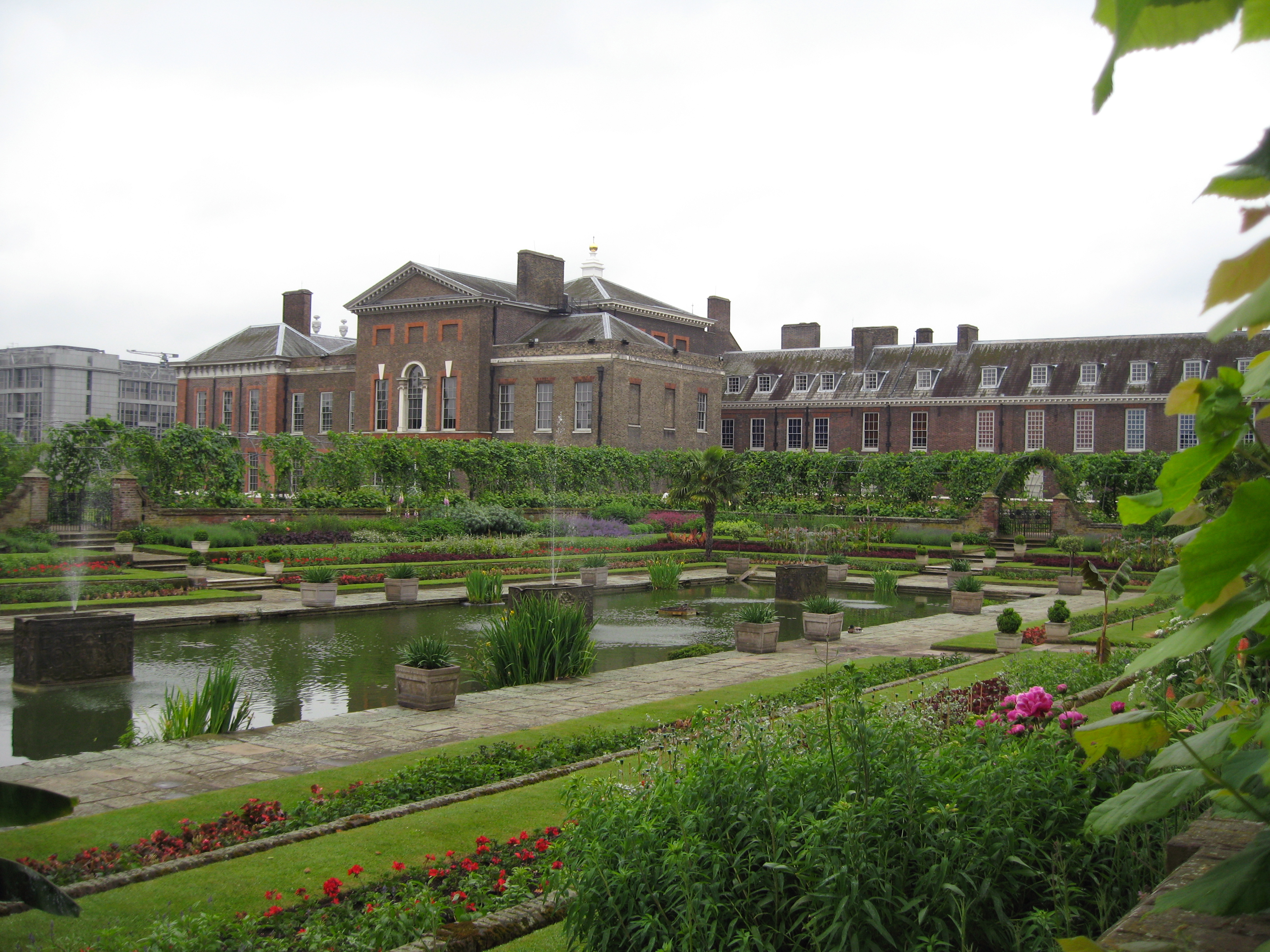
The Sunken Garden outside the palace, on the edge of Kensington Gardens. Photo by me.
The Sunken Garden outside the palace, on the edge of Kensington Gardens. Photo by me.
Kate has been known to walk Lupo in the park with her security guard at her side.
Kate was seen recently walking Lupo around the Italian Gardens in the park.Creative Commons photo

Kate was seen recently walking Lupo around the Italian Gardens in the park.Creative Commons photo

But so far I have not been fortunate enough to run in to them.
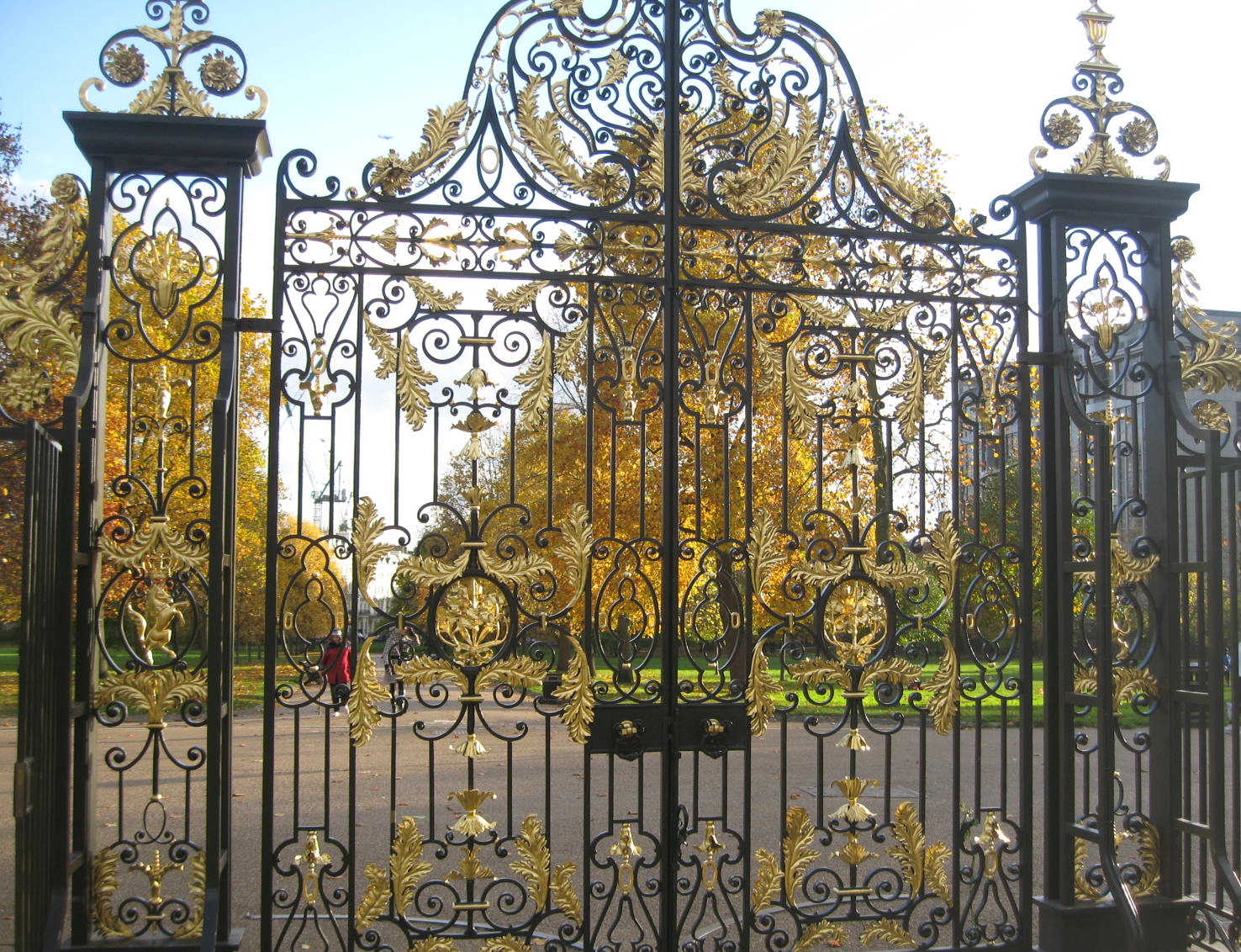
The gates between Kensington Palace and the park. Photo by me.

The gates between Kensington Palace and the park. Photo by me.

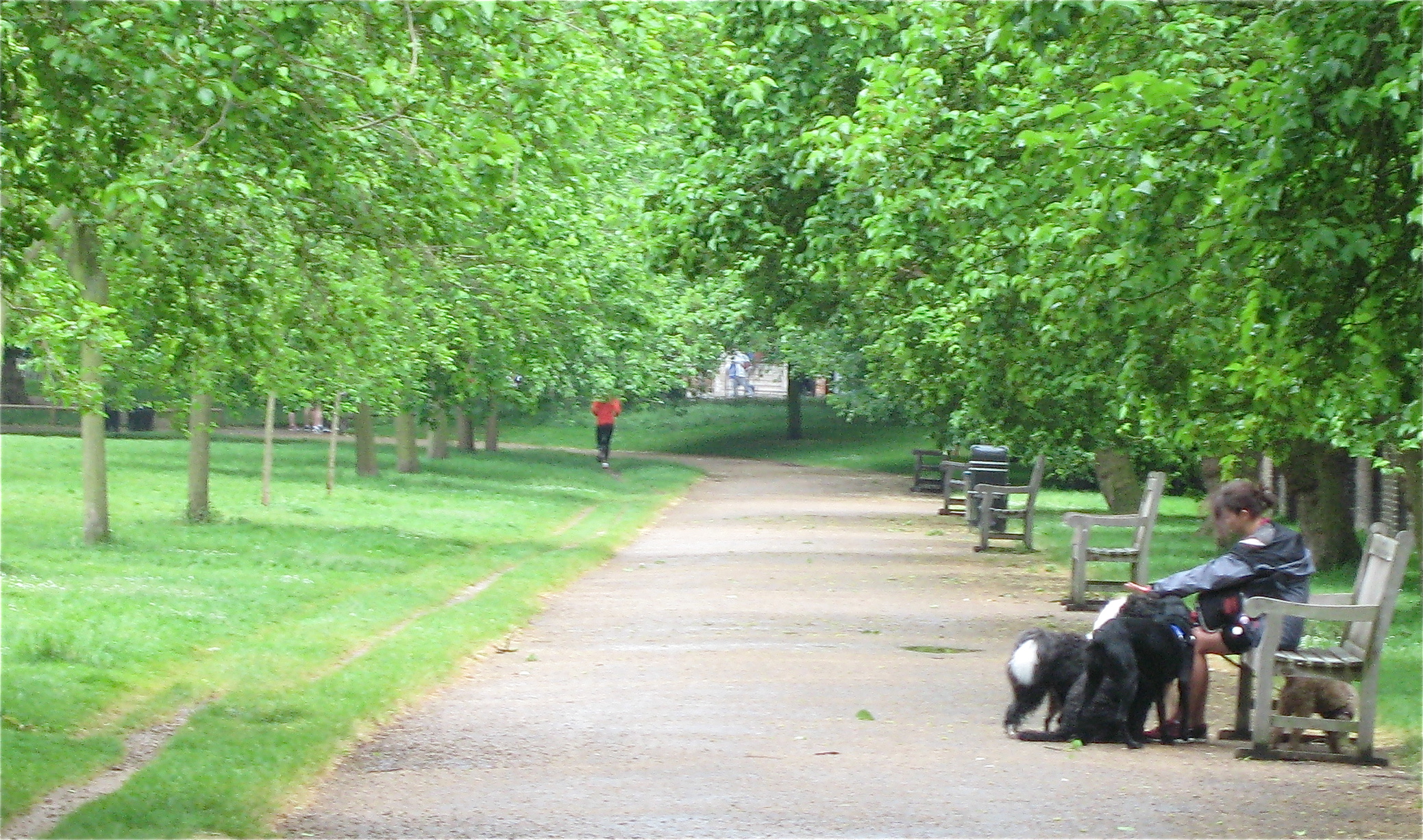
There are lots of dog walkers in the park, and to be a “commercial dog walkers” you do need a license to “operate” in the royal parks.  But these British dogs seem very well-behaved, following all the rules…most of the time.

A dog walker takes a break in KG. Photo by me.

A dog walker takes a break in KG. Photo by me.

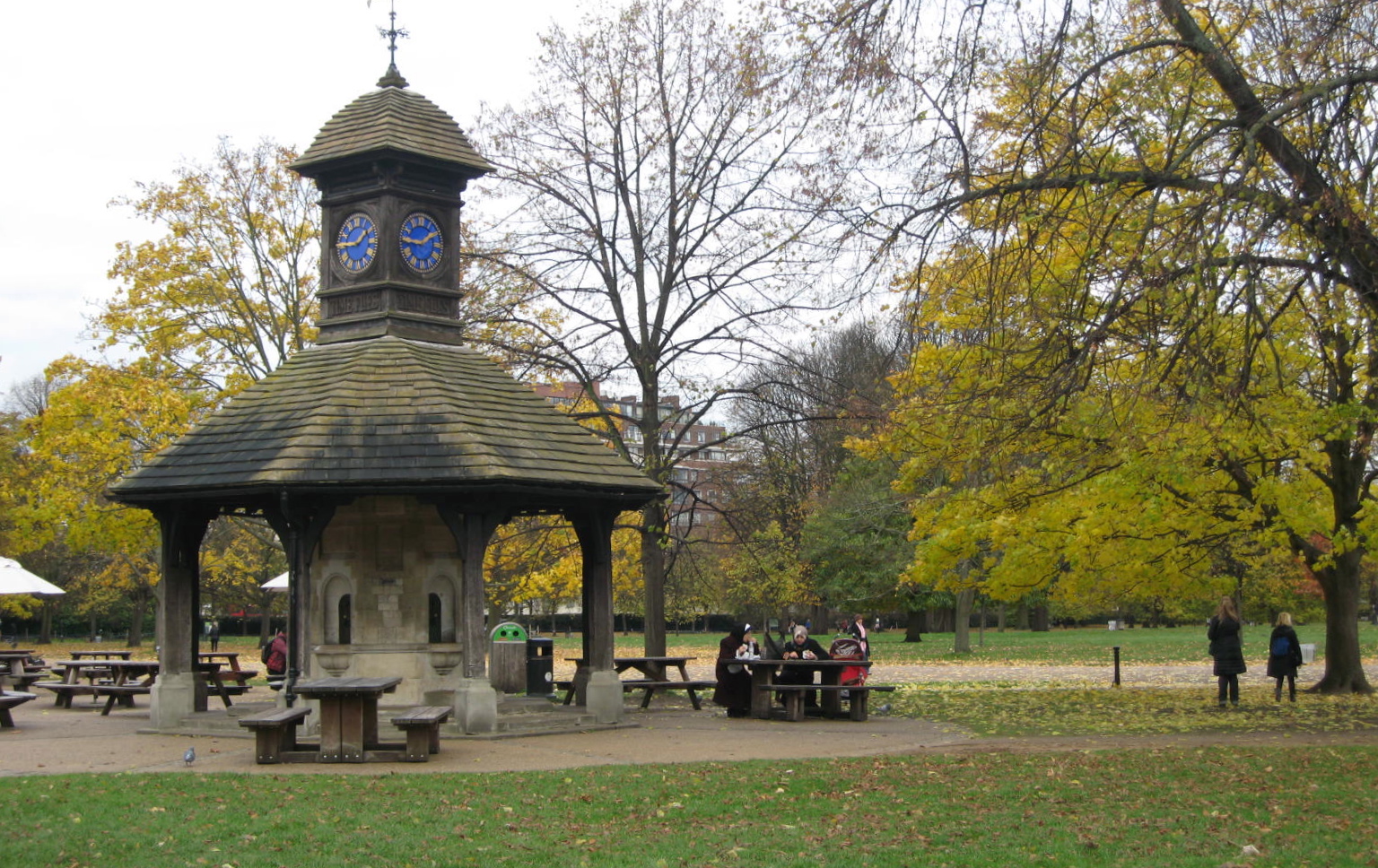
You are very aware of the royal residents who used the park as their backyard.  This small cafe is next to The Princess Diana Memorial Playground.

One of several small shelters to stop and sit and enjoy the park. Photo by me.

One of several small shelters to stop and sit and enjoy the park. Photo by me.

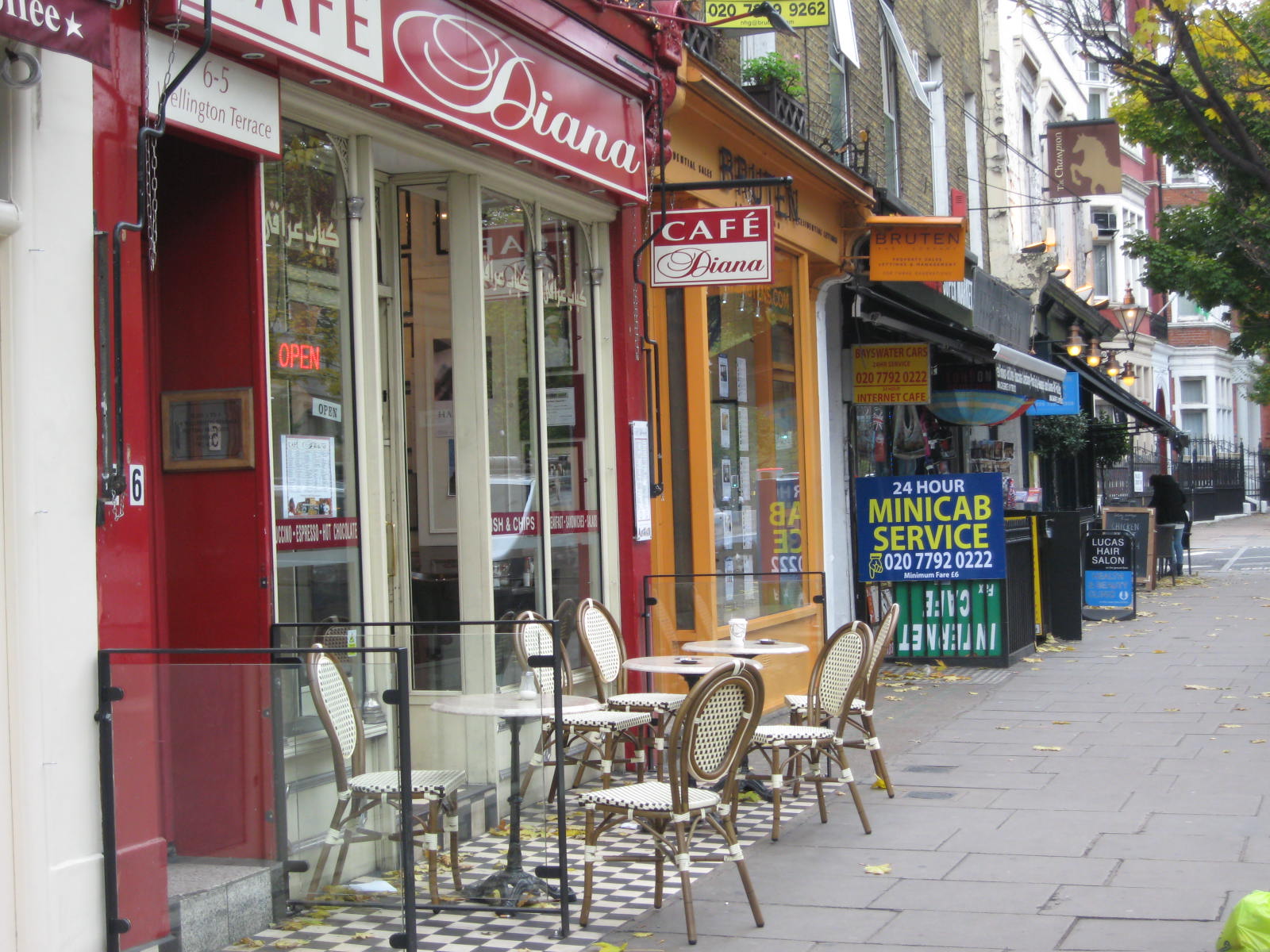
Word has it that the Princess stopped for coffee at the small shop that now bears her name which is right outside the gates that lead to the palace.

The Diana Cafe where I stopped for lunch on my walk around the park back to my hotel. Photo by me.

The Diana Cafe where I stopped for lunch on my walk around the park back to my hotel. Photo by me.

But it is the beauty of the park itself that keeps me coming back.  It is well used by the locals and visitors.  You can feel the friendliness as soon as you enter.

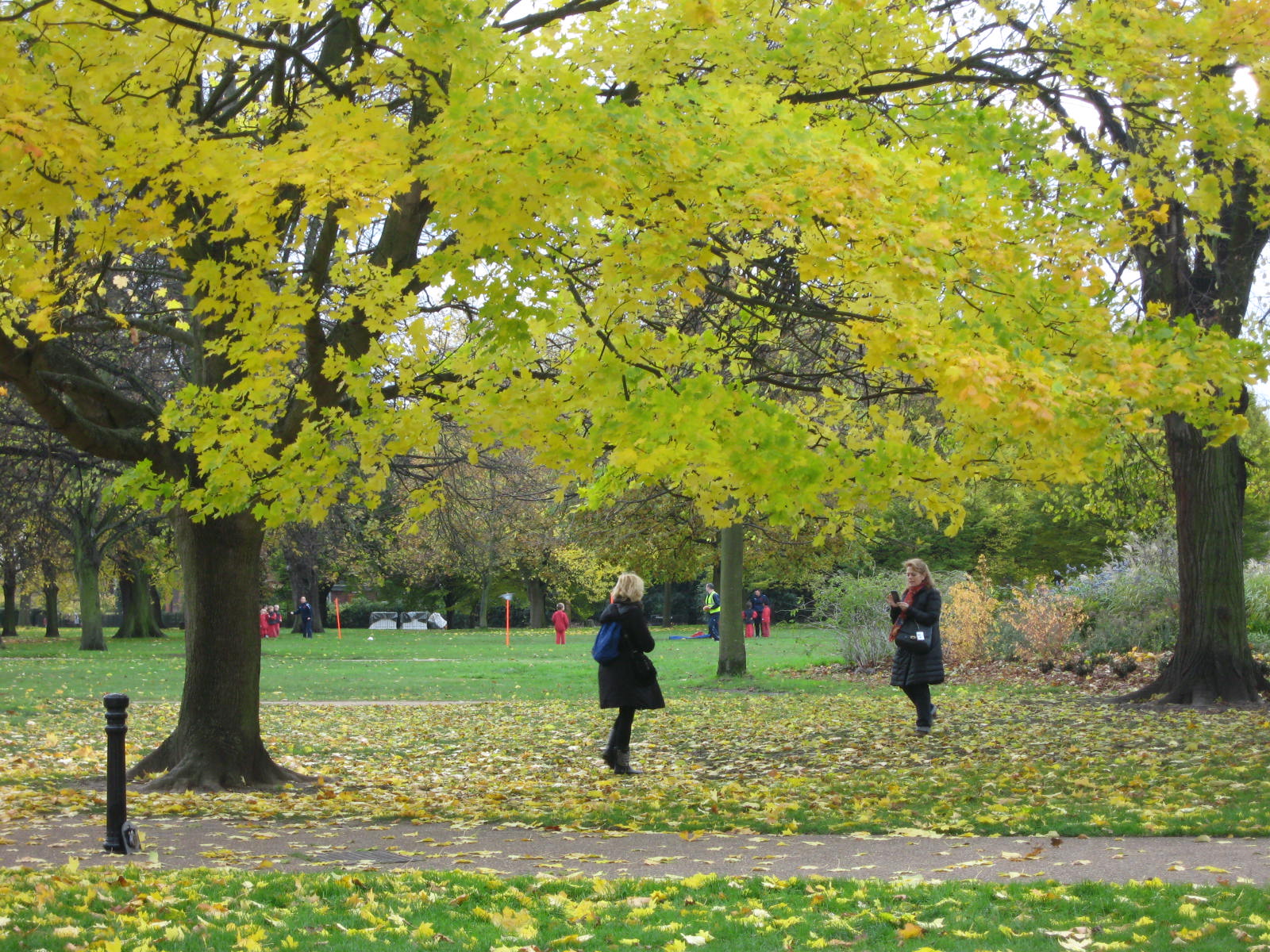
A friend captures the foliage and her friend in a photo, while a group of children practice their "football" (soccer in the US) in the background. Photo by me.

A friend captures the foliage and her friend in a photo, while a group of children practice their “football” (soccer in the US) in the background. Photo by me.

No matter what the season, it just seems like a lovely space to meet a friend and spend an hour or two walking.

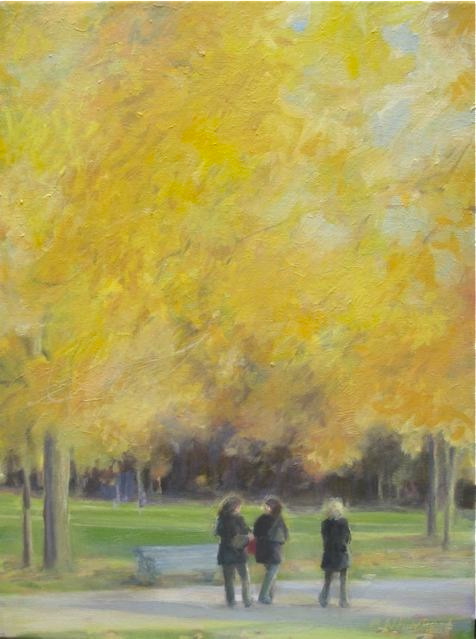
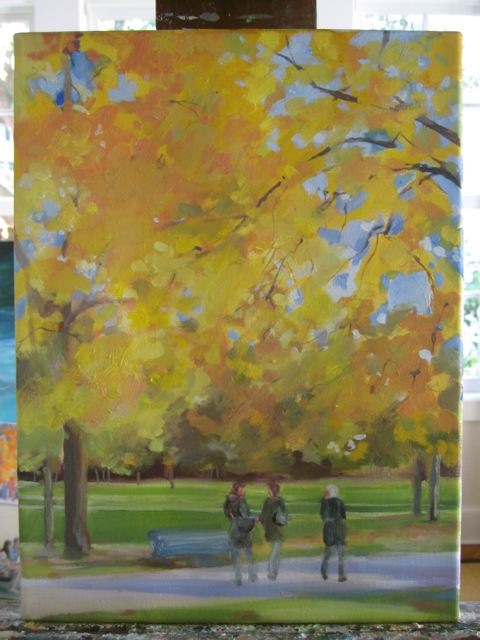
A painting of Kensington Gardens by me.

A painting of Kensington Gardens by me.


The Urban Fox

29 Monday Apr 2013

Posted by pat in London, Scotland, Uncategorized, United Kingdom

≈ Leave a Comment

Tags

red fox, Urban fox

When we were in London several years ago, My Beloved Brit and I were walking back from a pub on a dark narrow street, and were surprised to hear a noise in the nearby alley.  Looking down the narrow passageway, we saw a red, fuzzy tailed creature escaping from a row of trash cans.  The London urban fox.

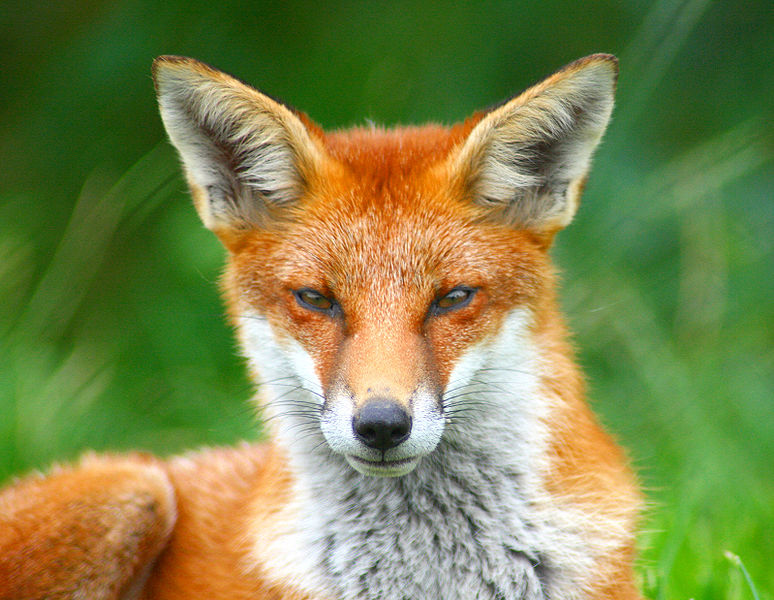
The Red Fox. photo from creative commons.

The Red Fox. photo from creative commons.

Great Britain and foxes have always been closely associated.  The red fox is right in there with a cup of tea, the red telephone box and plaid wool.  But to see one on a London street was really quite surprising.

The mammal is native to England, and English literature has always made room for the creature– from Reynard the fox in The Canterbury Tales, to Roald Dahl’s Fantastic Mr. Fox.  The Scottish heroine Isabel Dalhousie of Alexander McCall Smith’s “The Sunday Philosophy Club” novels, welcomes the stealthy presence of a fox in her garden in the city of Edinburgh. Perhaps to her it is a symbol of the wild traditions of the country.

PSM_V38_D833_English_fox

Although the sport of fox-hunting was outlawed in England and Wales in 2005, some of the wily creatures still seem to prefer the cities to the open fields of the countryside. I must admit, London seems a pleasant place to live. I guess the little fox agrees.

The Royal Residences

23 Tuesday Apr 2013

Posted by pat in History, London, Scotland, The Royal Family, Uncategorized

≈ 2 Comments

Tags

Balmoral Castle, Buckingham Palace, Clarence House, Frogmore, Kensington Palace, Palace of Holyroodhouse, Sandringham House, St. James's Palace, Windsor Castle

The term “Royal Residence” brings to mind an amazing world of fantasy. Sleeping Beauty’s Castle is what an American girl grows up with as her vision of what a royal residence really looks like.  But the facts are much different from this fairy tale and much more interesting in England.  For many decades, even centuries, kings and queens of the United Kingdom have built or bought incredibly diverse palaces to serve as a family home or workplace–or just a little spot to rule from.

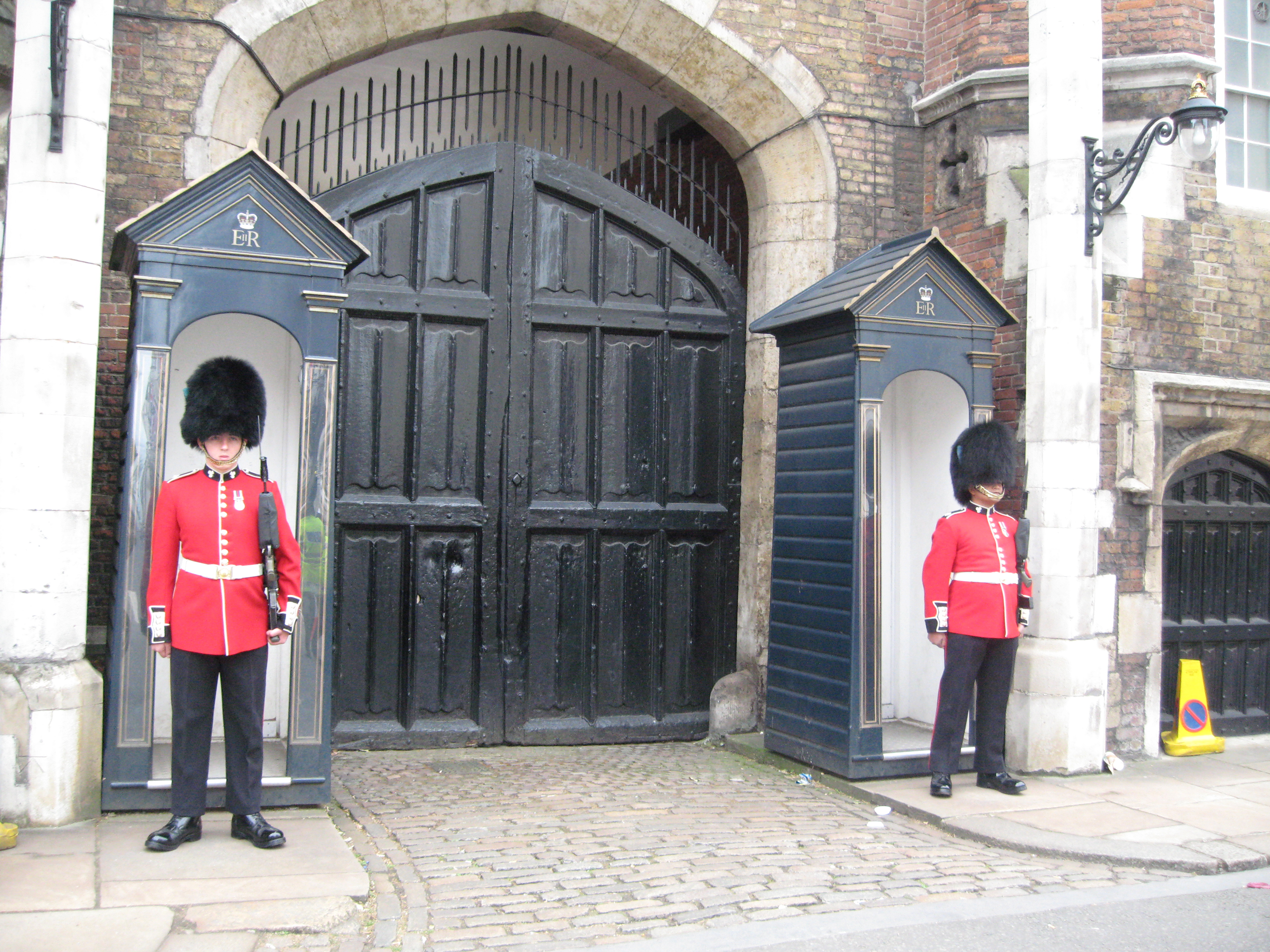
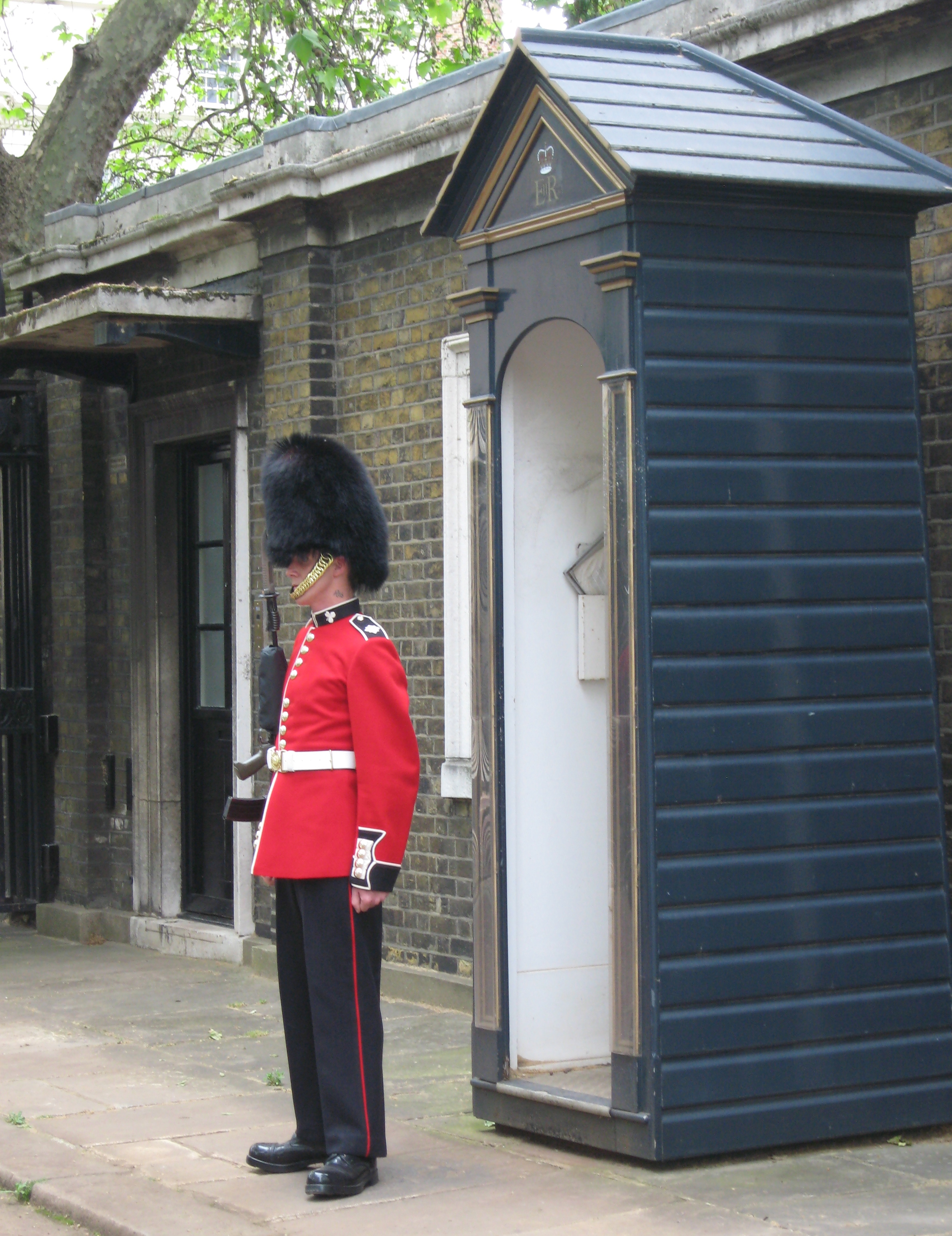
Guarding St. James's Palace. Photo by me.

Guarding St. James’s Palace. Photo by me.

Royal Residences fall in to three general categories: Official Royal Residences which are held in trust for future generations, Private Estates which are owned by the Queen and can be private residences for the Queen and her family or may generate income, and Unoccupied Royal Residences which are all other buildings in Great Britain which once housed members of the Royal Family and therefore may be of historical interest.

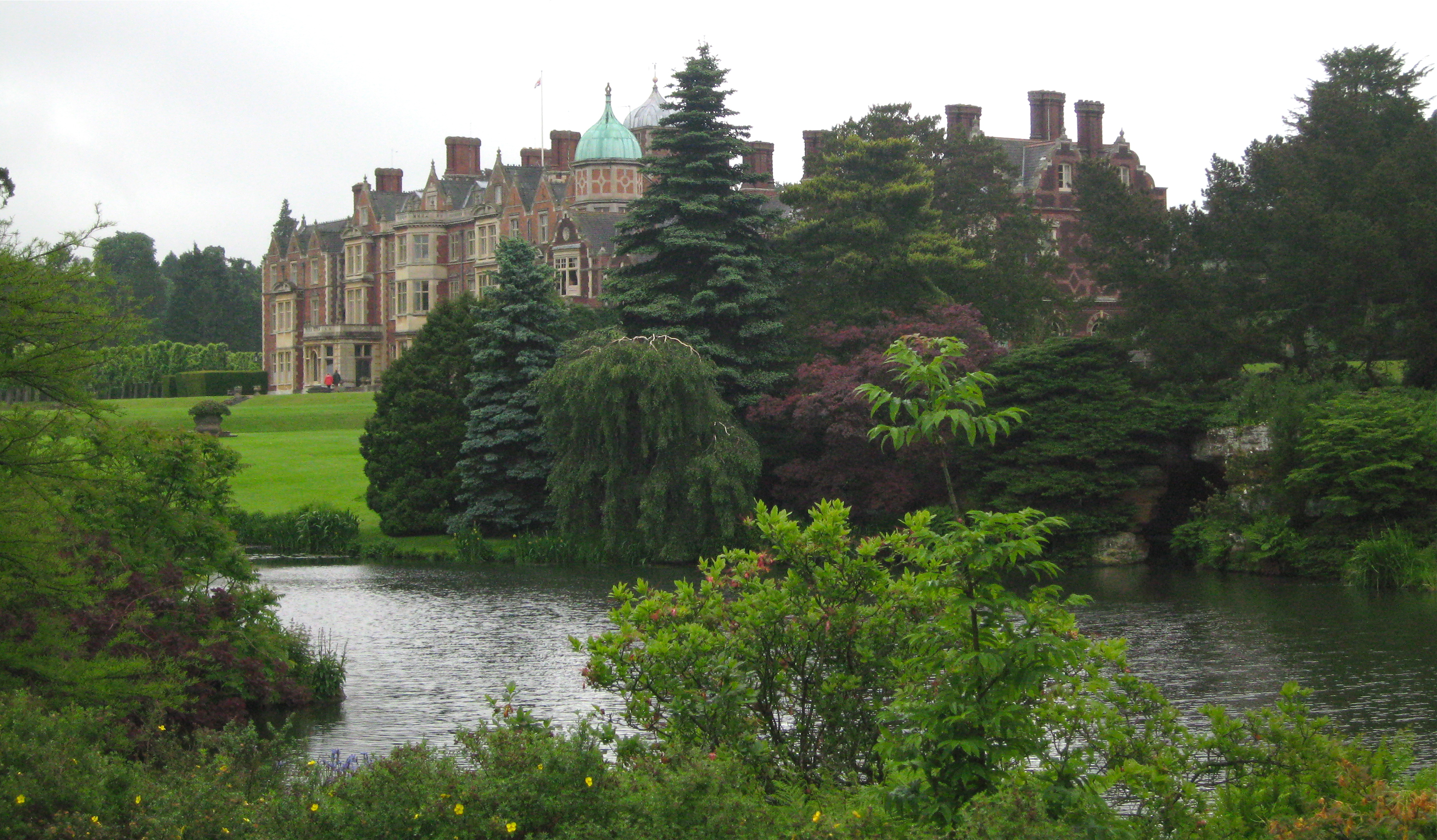
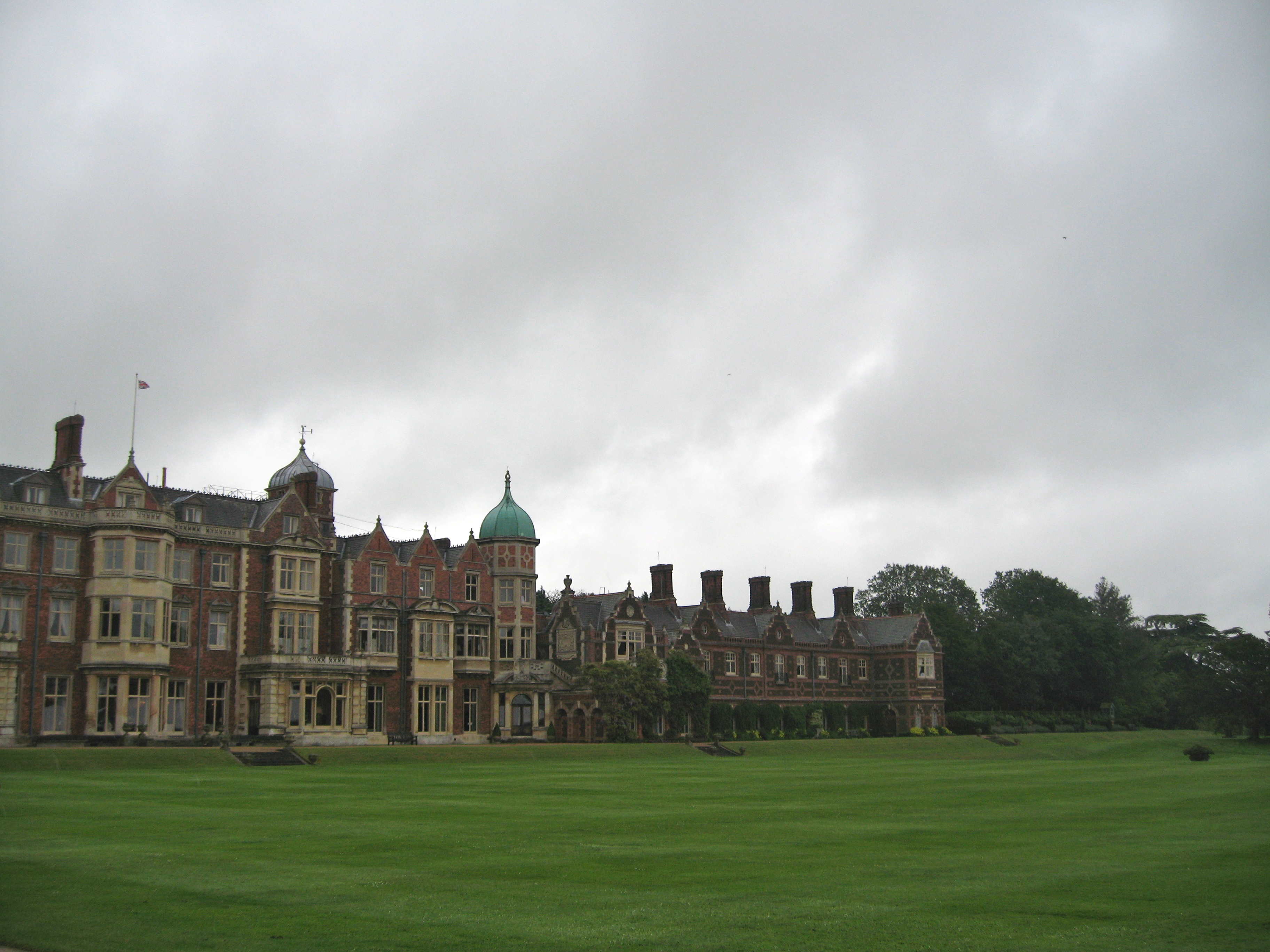
Sandringham, the Queen's estate in Norfolk, England. Photo by me.

Sandringham, the Queen’s estate in Norfolk, England. Photo by me.

We have seen many of these incredible palaces and estates on our travels throughout Great Britain, but it might be fun to revisit them here.   Some are open to the public, some only allow their gardens to be viewed at certain times of the year, and many of the official residences are used for receptions, investitures, banquets and garden parties.

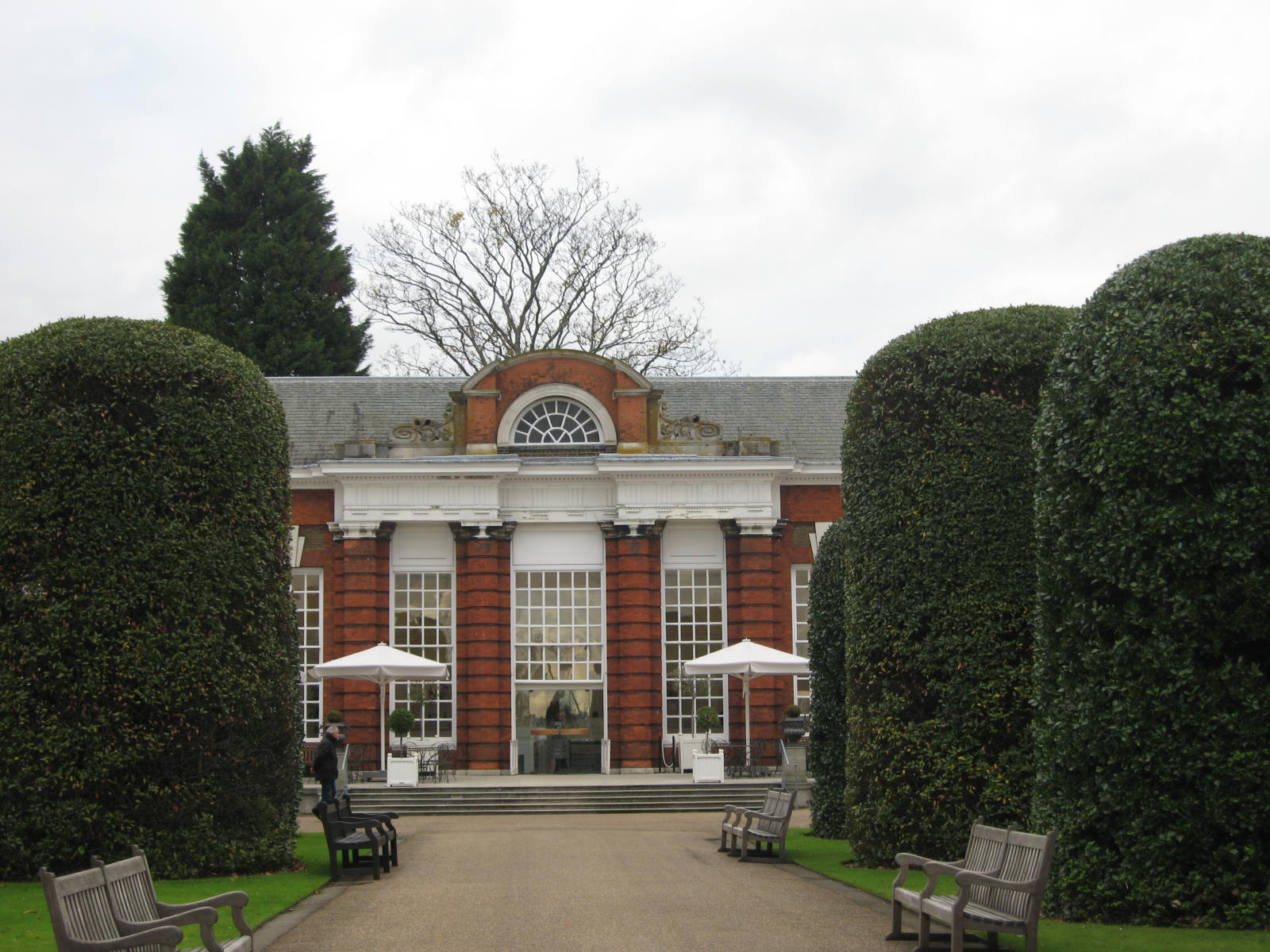
A lovely place to get some lunch just across the garden from Kensington Palace, Photo by me.

A lovely place to get some lunch just across the garden from Kensington Palace. Photo by me.

Then there are the private residences, used by the Royal Family for generations.  These, too, are sometimes available to see, at least from the outside gardens.

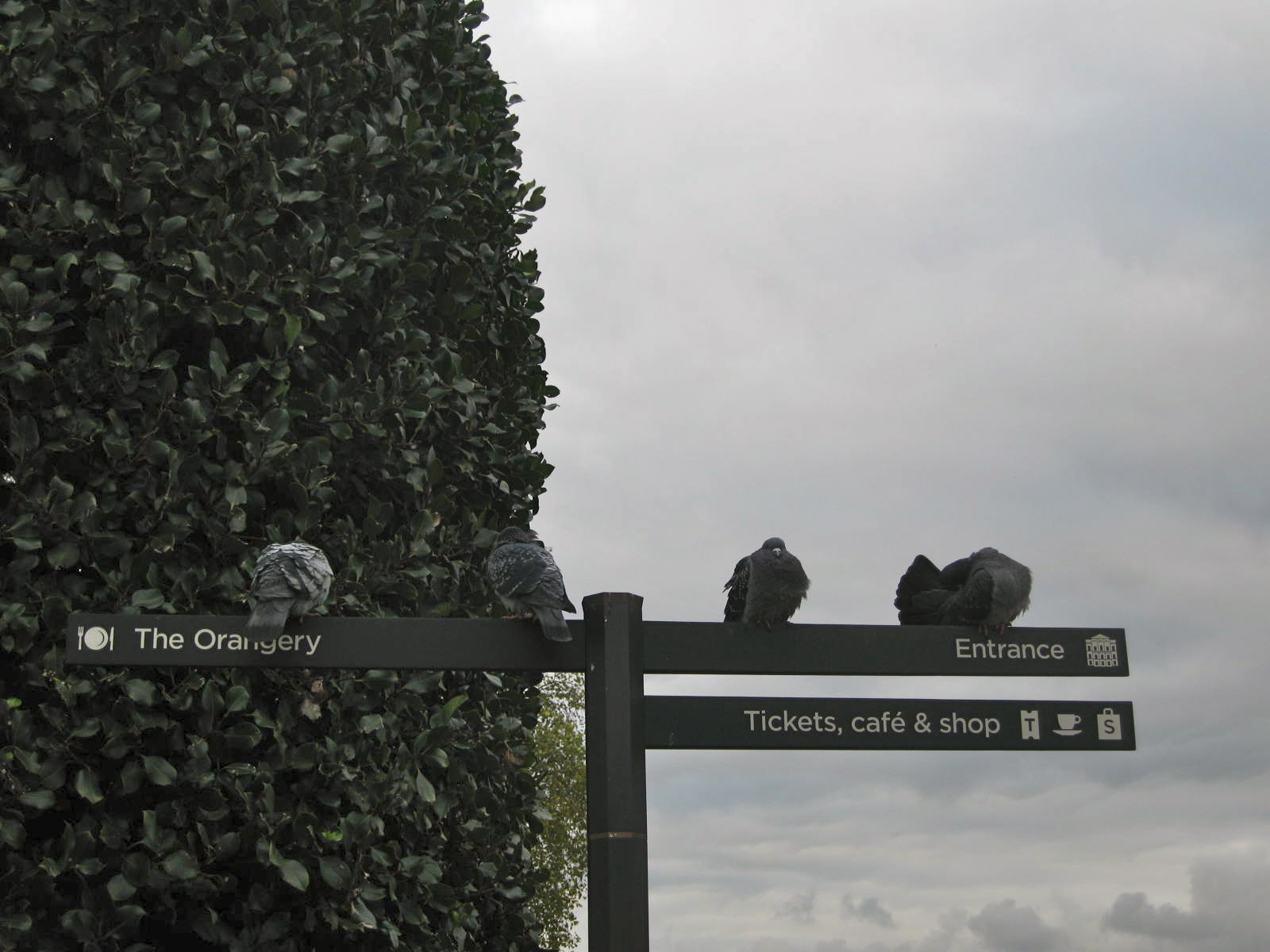
Some visitors waiting outside Kensington Palace in London. Photo by me.

Some feathered visitors waiting outside Kensington Palace in London. Photo by me.

Thanks to the official website of the British Monarchy, I was able to recall all that I had seen, and discover a few I’ve missed.  Next visit, maybe.

Buckingham Palace, The Royal Mews and The Queens Gallery

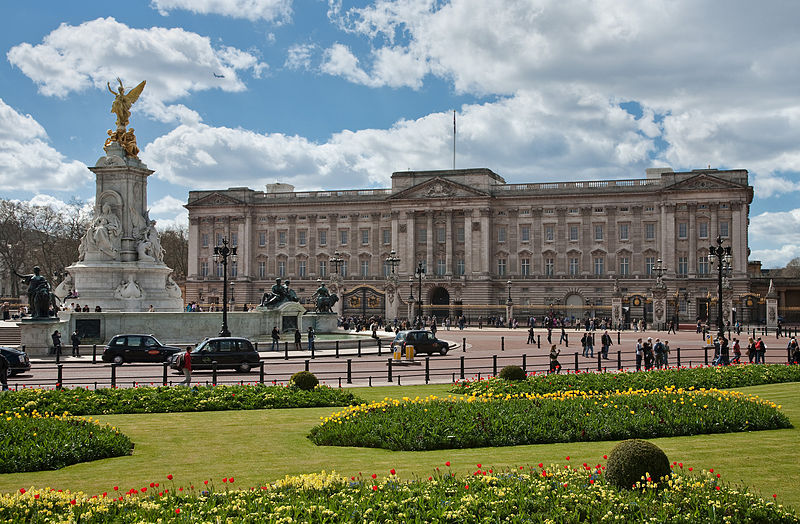
800px-Buckingham_Palace,_London_-_April_2009

Buckingham Palace, London. Photo by DAVID ILIFF. License: CC-BY-SA 3.0 from Wikipedia Commons

Certainly BP is one of the most familiar Royal Residences from viewing years of public events on television.  We actually went on a tour of the Palace on one of our first trips together to London.  My Beloved Brit had never been inside, and found it fascinating and familiar from all the news footage of the famous residence. The Palace, all 775 rooms of it, has served as the official London residence of Britain’s sovereigns since 1837 and today is the administrative headquarters of Queen Elizabeth II. For information on planning a visit see The Royal Collection website. Just as an aside, there are 52 Royal and guest bedrooms, and 188 staff bedrooms. Oh my!

Windsor Castle

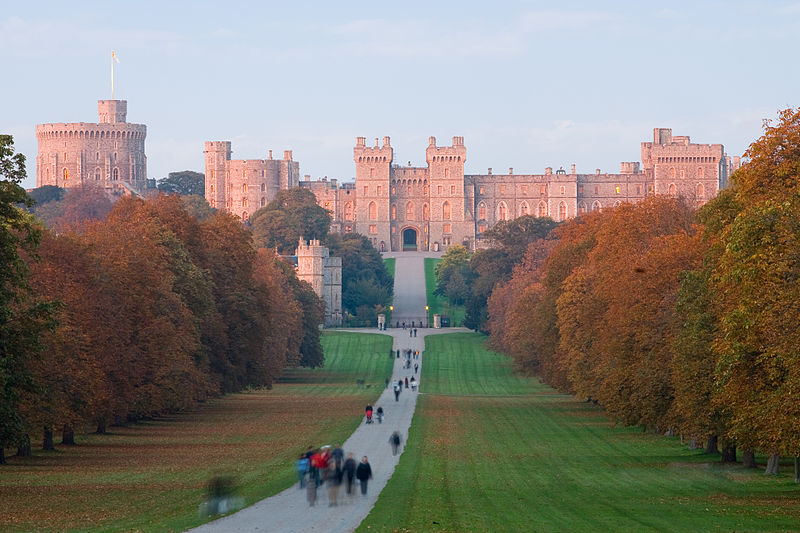
Windsor Castle at sunset viewed from the Long Walk in Windsor, England.Photo by DAVID ILIFF. License: CC-BY-SA 3.0 from Wikipedia Commons

Windsor Castle at sunset viewed from the Long Walk in Windsor, England. Photo by DAVID ILIFF. License: CC-BY-SA 3.0 from Wikipedia Commons

Windsor Castle was one of the first of the Royal Residences that My Beloved Brit and I ever visited together.  It is quite near Heathrow, and the city of Windsor is a good last stopping point before heading to the airport to come home. The Castle itself is very imposing (it is the largest occupied castle in the world!) and right in city center so great to walk to and view. Windsor has been a Royal home and fortress for over 900 years and still is an active residence today. The Queen usually uses Windsor as a private home, escaping from London on the weekends, but it is also used for more formal duties. Every Easter, the Queen takes up official residence for a month–Easter Court. Many parts of the Castle are open to the public. For more information, check here.

Palace of Holyroodhouse

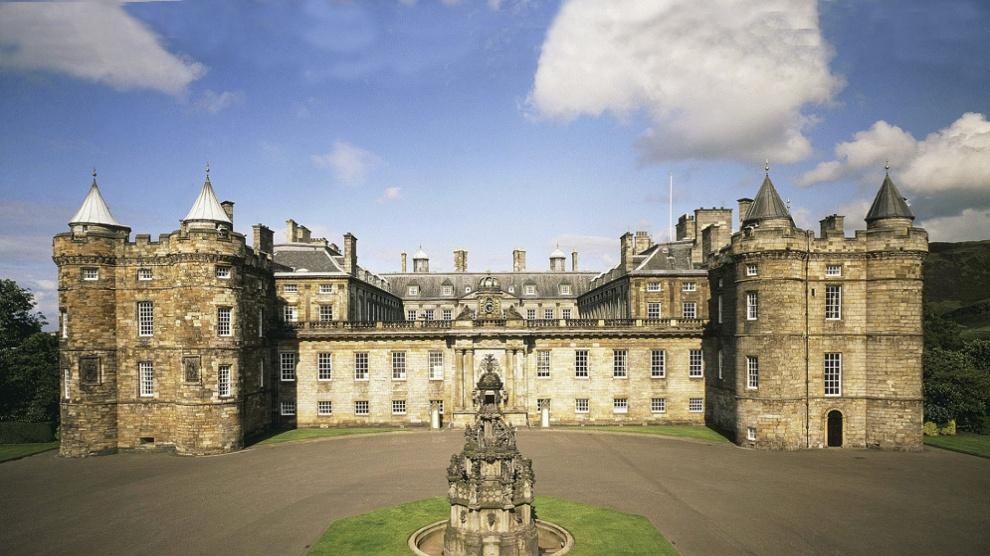
From The Royal Collection site, visit Palace of Holyroodhouse. © HM Queen Elizabeth II 2013

From The Royal Collection site, visit Palace of Holyroodhouse. © HM Queen Elizabeth II 2013

I think this was one of my personal favorites.  I love Edinburgh anyway, and Holyroodhouse has such a strong sense of history. There is so much to see, and much of it seems unchanged from the 1500s. The Queen’s official residence in Scotland, the Palace is closely associated with Mary Queen of Scots, who lived here between 1561 and 1567. You can almost feel the court intrigue and drama.  I half expected to see blood on the floor. For visitor information, see here.

Frogmore House

Frogmore

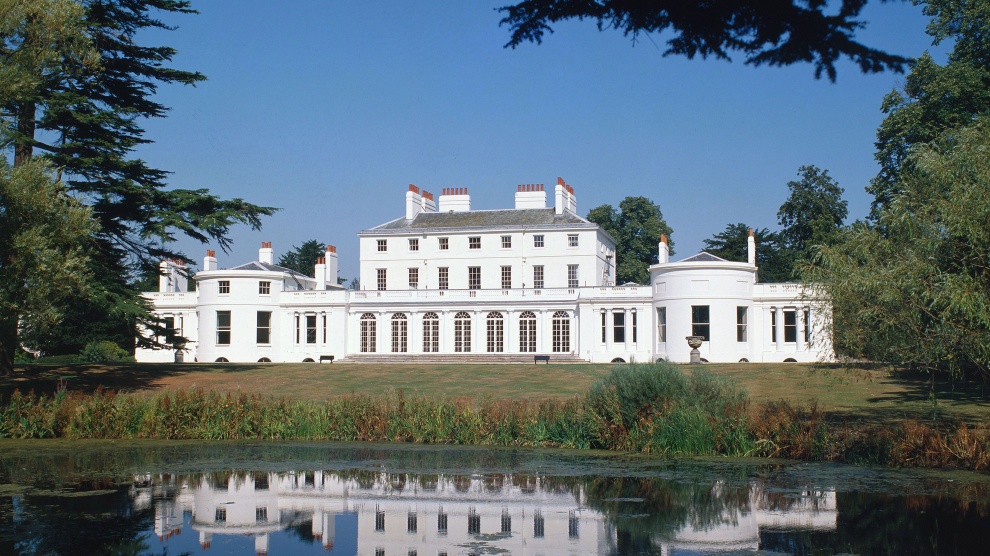
Frogmore House. From The Royal Collection site, visit Frogmore House. © HM Queen Elizabeth II 2013

I have never seen Frogmore House, which is no longer a royal residence, but the house and gardens are sometimes used for official receptions or gatherings hosted by the Royal Family. Frogmore is located on the grounds of Windsor Castle. It is most closely associated with Queen Victoria, and was one of her favorite retreats. In the gardens is the Mausoleum where Queen Victoria and Prince Albert are buried. Check here for visitor information.

Balmoral Castle

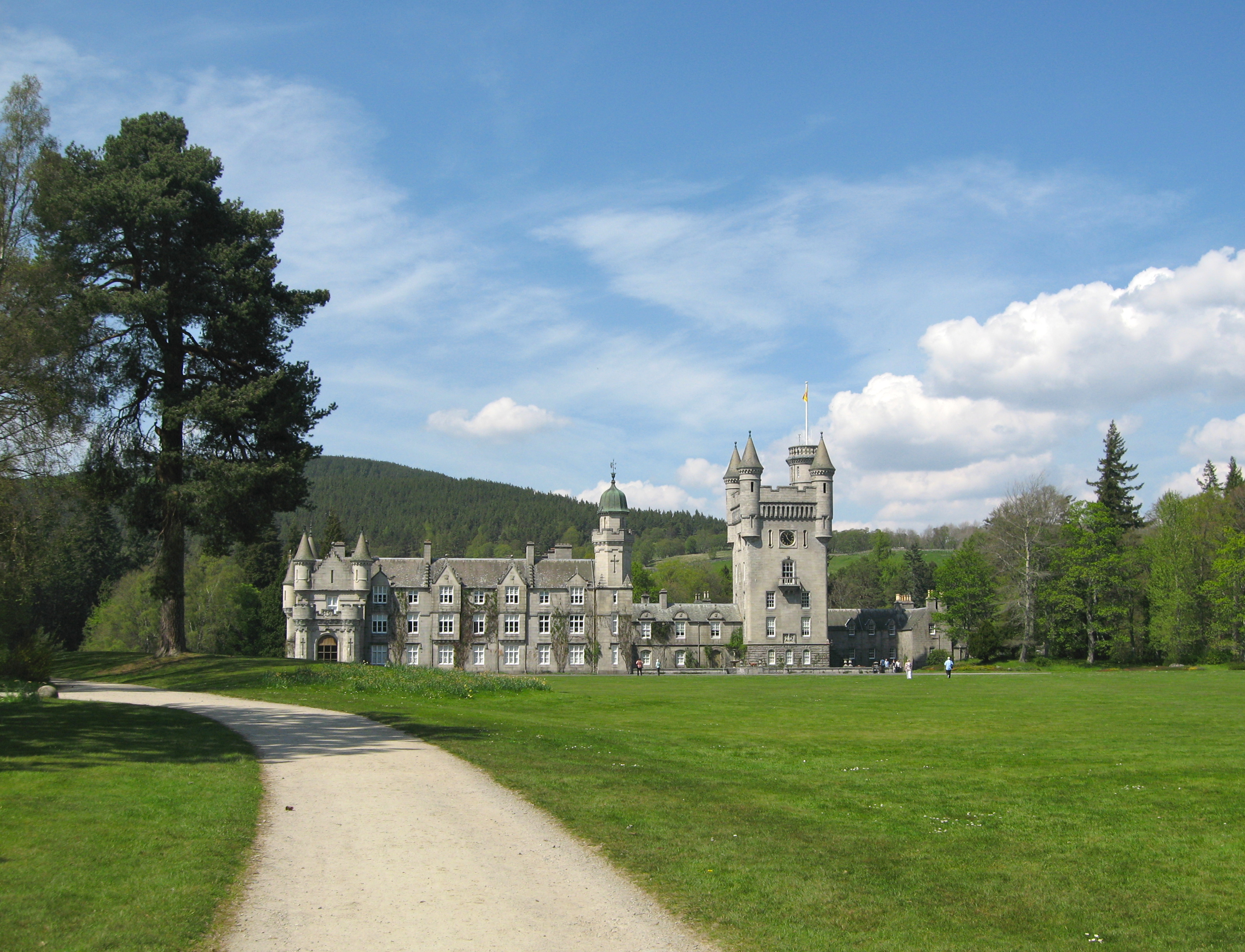
Balmoral in June. Photo by me.

Balmoral in June. Photo by me.

We visited Balmoral in Early June last year, and were shocked to find warm balmy weather…in Scotland!…in June! But we were thrilled.  The gardens were active and blooming early that year.  You can walk around the gardens, the stable exhibitions and the ballroom at Balmoral, but not actually through the Castle.  That was fine.  The grounds are magnificent. Located in Aberdeenshire, Scotland, it is the private residence of the Queen who spends her summer family holiday there every August. Visit the Balmoral website.

Sandringham House

Sandringham House in June.  The grounds are as lovely as the house. Photo by me.

Sandringham House in June. The grounds are as lovely as the house. Photo by me.

This lovely sprawling house on a charming estate is in Norfolk in Eastern England, and we got to visit it last summer.  It has been the private home of Sovereigns since 1862.  The Queen and members of the Royal Family spend Christmas at Sandringham, and you can walk the grounds as they do each year, strolling from the grand main house to the small church where they attend Christmas services. We were able to tour the grounds and gardens, a large museum and exhibition in the stable block which had an extensive car collection, as well as walk through the main level of the house.  We could even gaze at the table where the Queen works on her crossword puzzles.  It was all very intimate and warm.  For information on times when you can visit the residence, check here.

St. James’s Palace

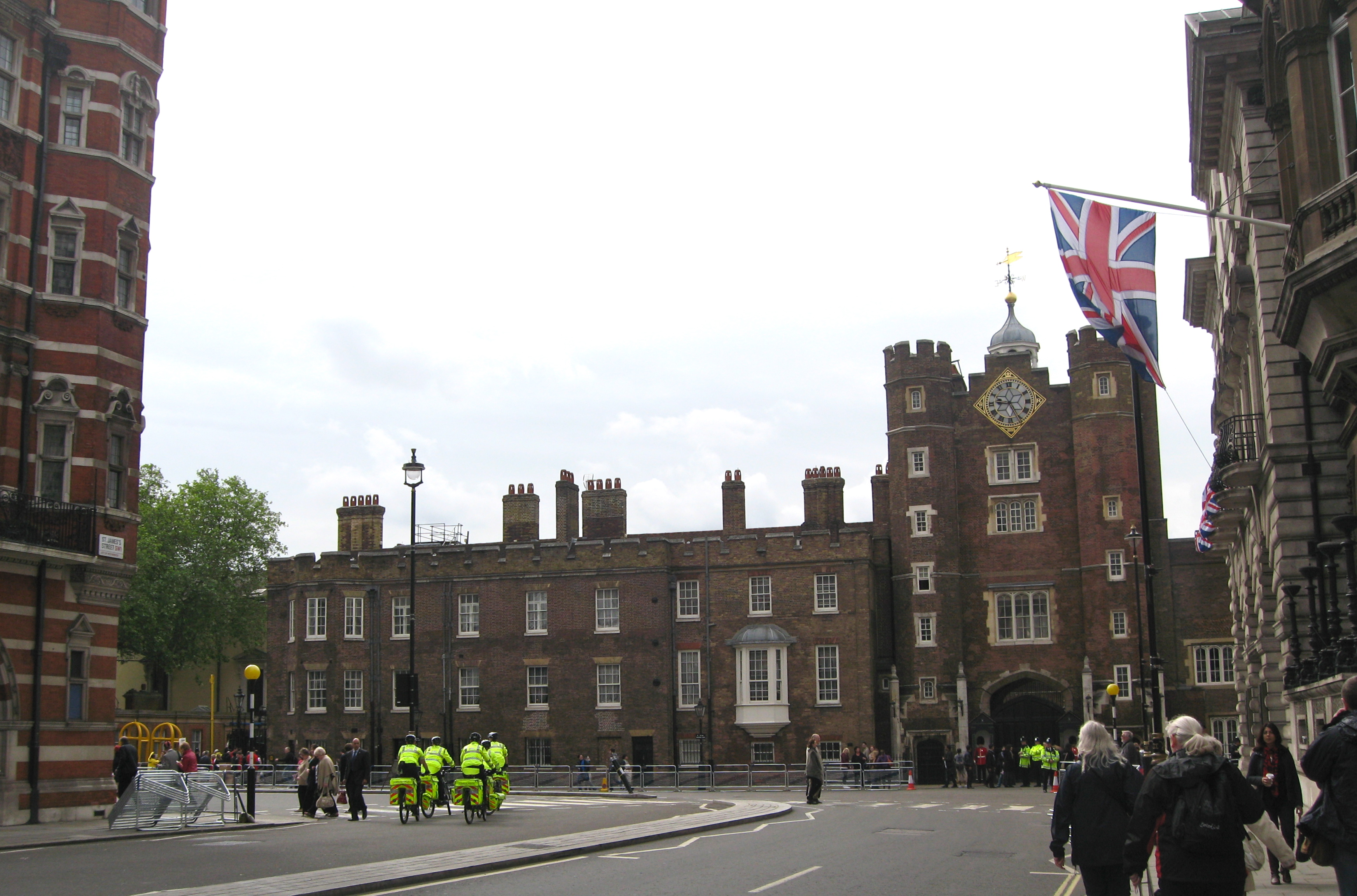
St James's Palace during Jubilee Week. Photo by me.

St James’s Palace during Jubilee Week. Photo by me.

This historic palace is not open to the public, but when we stay in London at My Beloved Brit’s sailing club, we pass it every day on our way to the Mall and other parts of London. It is home to several members of the Royal Family and their household offices. One of London’s oldest palaces, it is just north of St. James’s Park. It was originally commissioned by Henry VIII and constructed between 1531 and 1536 in red-brick Tudor style around four courtyards.

Kensington Palace

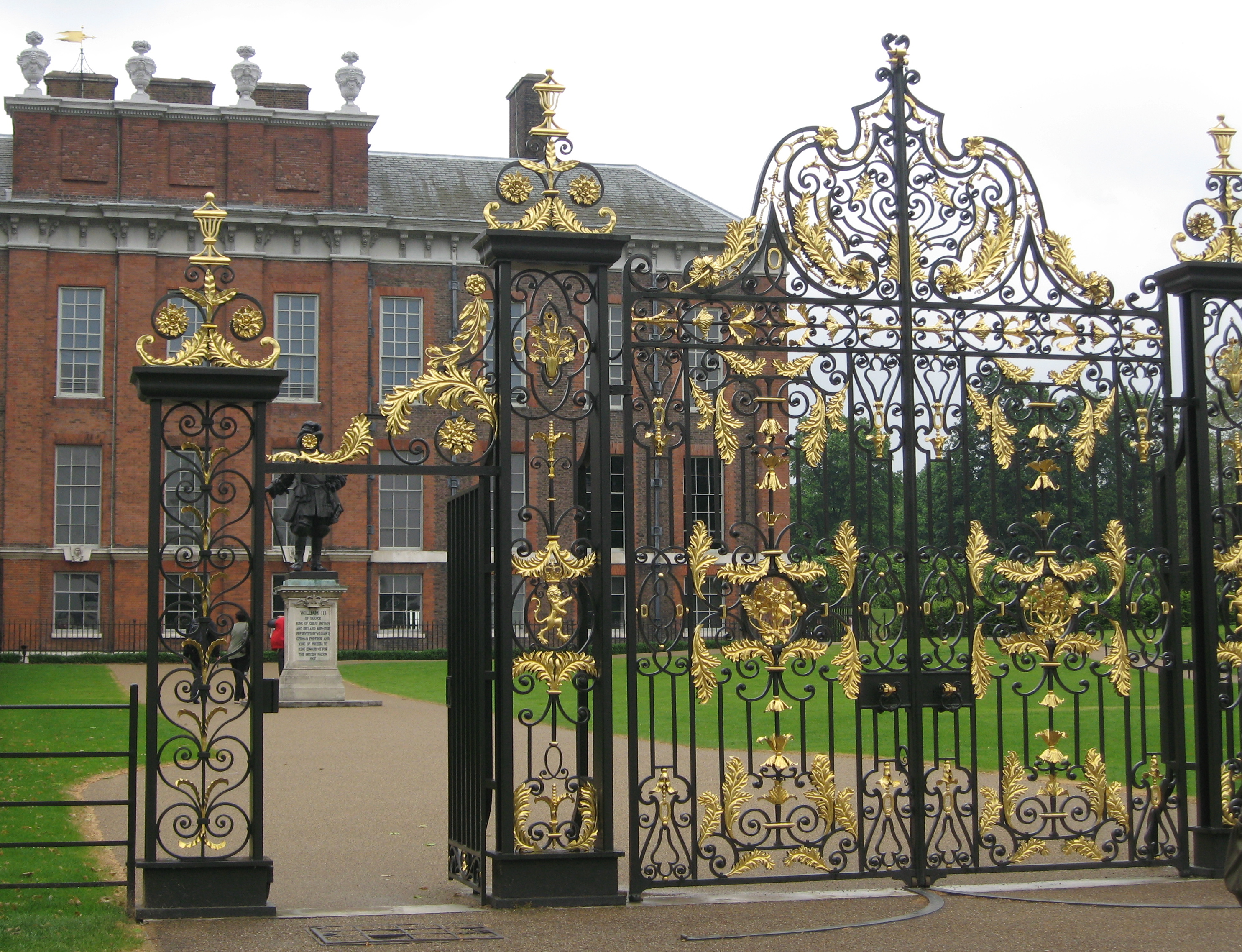
The Gates at Kensington Palace. Photo by me.

The Gates at Kensington Palace. Photo by me.

The home of several members of the Royal Family, one of the most interesting and exciting facts of KP is that the Duke and Duchess of Cambridge (Will & Kate) who currently live there and are in the process of renovating the much larger apartment that used to be Princess Margaret’s.  Hopefully all will be done in time for the arrival of baby Prince or Princess, but word has it the renovation may not be ready until the autumn.  I love Kensington Palace and one section of it reopened to the public just a couple of years ago.  It has incredibly well done exhibitions of Royal Apartments, Queen Victoria’s romance with Prince Albert, and special displays.  It also has a marvelous tea shop attached to the gift shop, where you can find a quiet reprieve from a day of touring.  For information on visiting, check here.

Clarence House

Standing Guard outside of Clarence House. Photo by me.

Standing Guard outside of Clarence House. Photo by me.

I actually saw the Queen Mother exiting through the London gates of Clarence House on my very first visit ever to London…even before I knew My Beloved Brit even existed.  I think that hooked me on GB Royal Tradition. Everyone lining The Mall stopped and waved as she waved back through the car window.  It was her home from 1953 until 2002. Clarence House is still on my list to visit, and I am hoping perhaps this summer I may be able to check it off. It stands right beside St. James’s Palace on The Mall and was built between 1825 and 1827. It is now the Official residence of The Prince of Wales and the Duchess of Cornwall and is open to the public during the summer months each year. Although it was closed last summer, because of the logistics of the Olympic Games in London, it will re-open summer 2013. For information, check here.

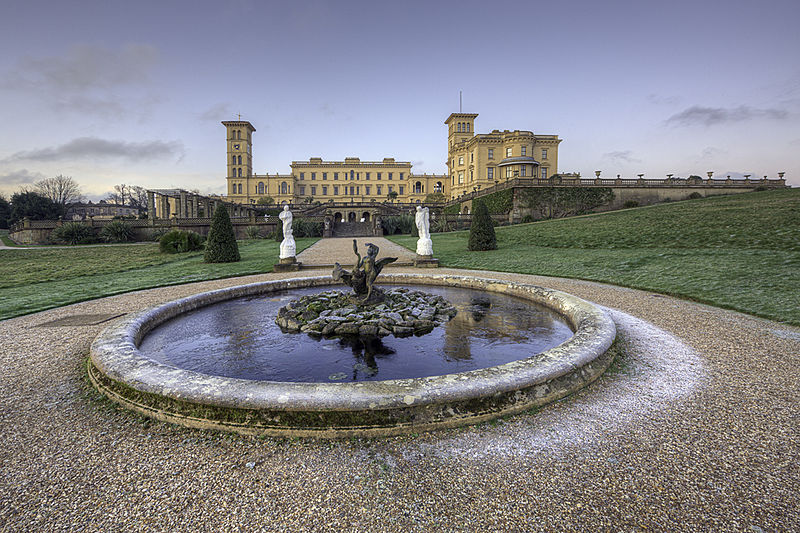
Unoccupied Royal Residences There are many buildings throughout Great Britain that have a Royal connection. Some, like Osborne House, the much-loved home of Queen Victoria and Prince Albert on the Isle of Wight, The Brighton Pavillion, a former residence of George IV when he was Prince Regent, Hampton Court Palace (home of Henry VII), and The Tower of London where the Crown Jewels can be seen. For more information on these, and other unoccupied Royal residences, click here.

Osborne House.  Photo from Wikipedia Commons WyrdLight.com

Osborne House from the lower garden, Isle of Wight. Photo from Wikipedia Commons WyrdLight.com

I won’t go in to any more detail here, but if you have time, explore The Royal Residences of Great Britain preferably in person, but, if nothing else, online.  It gives such a wonderful picture of the United Kingdom’s Monarchy and the rich history of the country.  Happy exploring.

T.C.K. The Culture Gap

20 Wednesday Mar 2013

Posted by pat in Bath, England, London, Travel, Uncategorized

≈ Leave a Comment

Tags

culture, T.C.K.

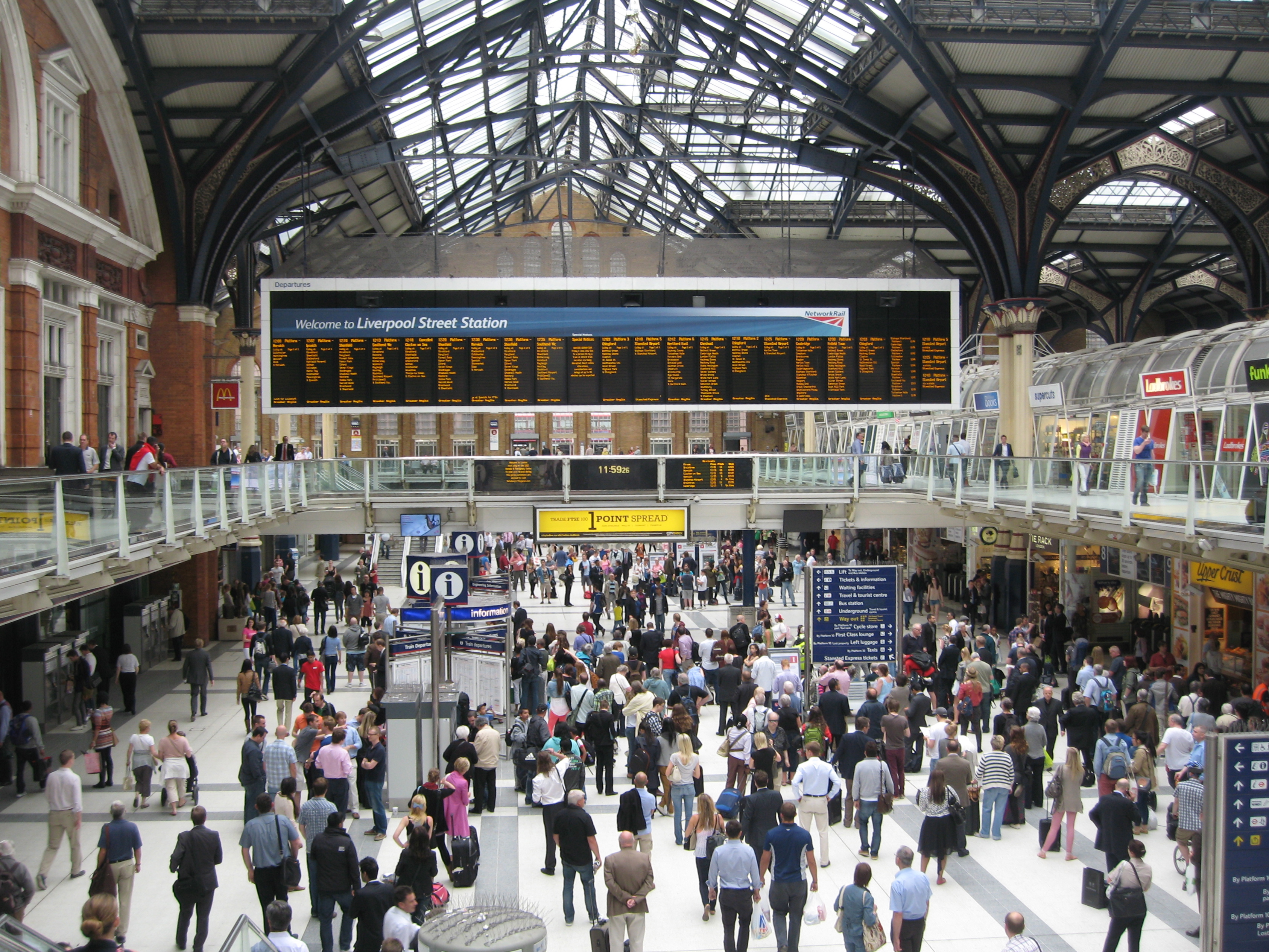
“Third Culture Kids” is a term used to describe kids who have spent their development years outside their parents’ culture…often they have lived in several countries as they have grown up, and never quite feel part of any one culture. When asked “Where are you from?”, they often hesitate while they contemplate the answer.

Liverpool Street Station, London. Photo by me

Liverpool Street Station, London. Photo by me

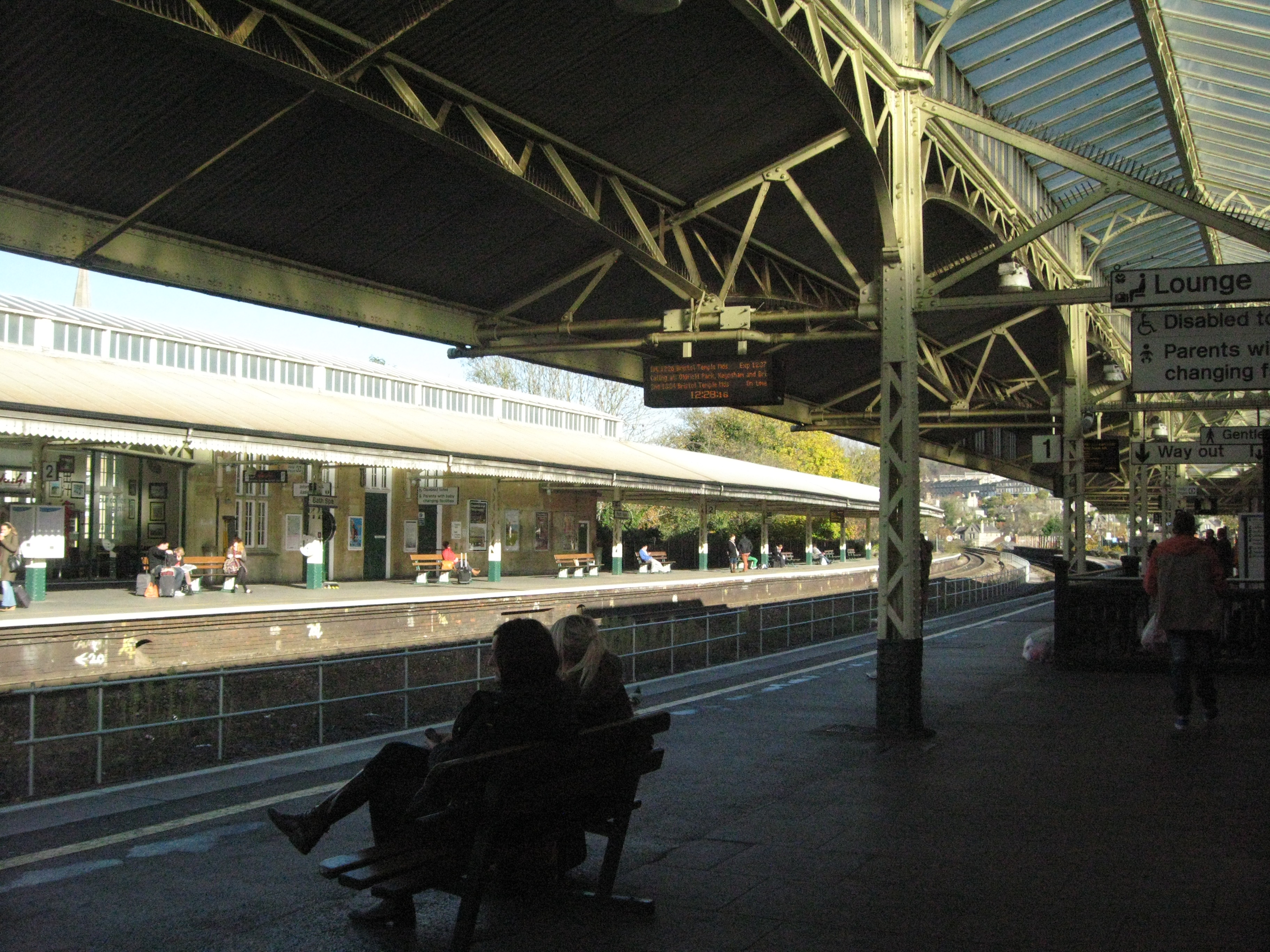
Home is where the heart is—and these children often grow up traveling and living in many different places.  So their “roots” tend to be people, not places.

The train station in Bath, England. photo by me

The train station in Bath, England. photo by me

I can understand this.  I spent my formative years on Long Island and most of my “career” years as a graphic designer going between Washington DC and New York City in the United States. But as I matured, I traveled further and further away from my home shores.

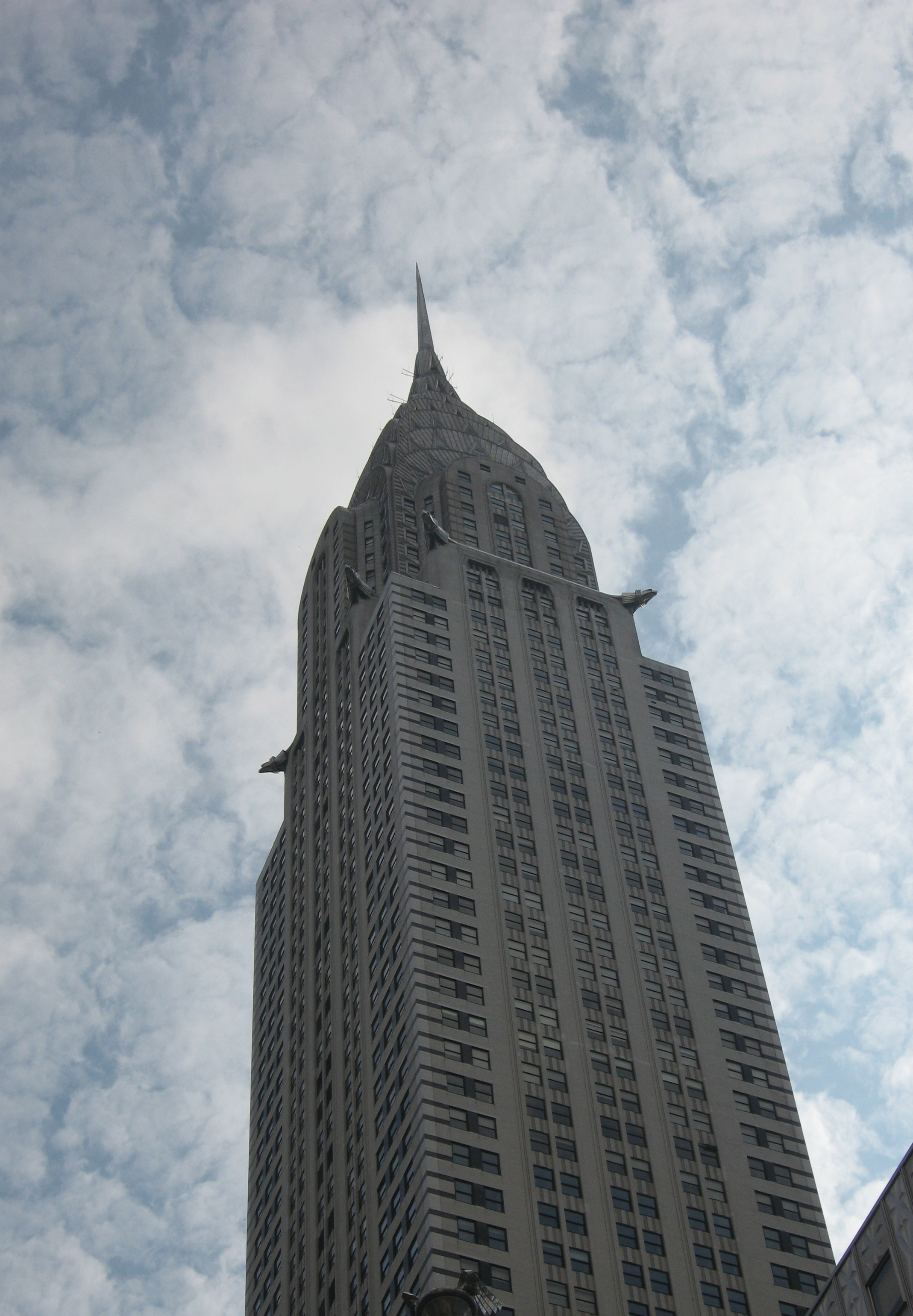
The Chrysler Building, NYC.  Is this home? Photo by me.

The Chrysler Building, NYC. Is this home? Photo by me.

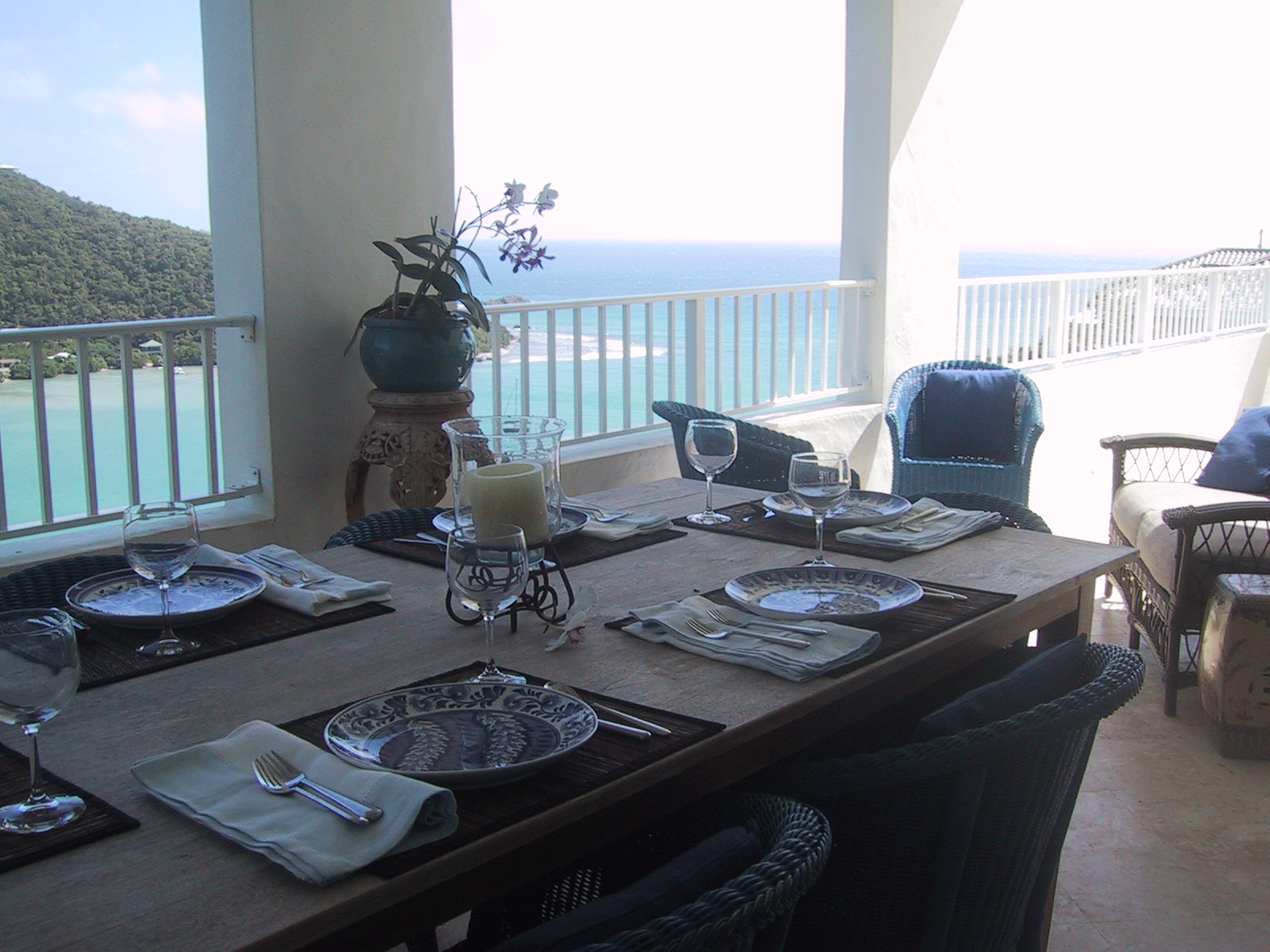
By the time I met My Beloved Brit, I felt comfortable with experiencing cultures in many foreign countries, so when we decided to move lock stock and barrel to the Caribbean (although still technically American–St. John in the U.S. Virgin Islands) for 8 years, it was not nearly as scary as it might sound.

Home in the caribbean on distant shores. Photo by me

Home in the Caribbean, on the distant shores of St. John.

Now, although comfortable back in the US, we do experience wanderlust and never know where we might land in the future.

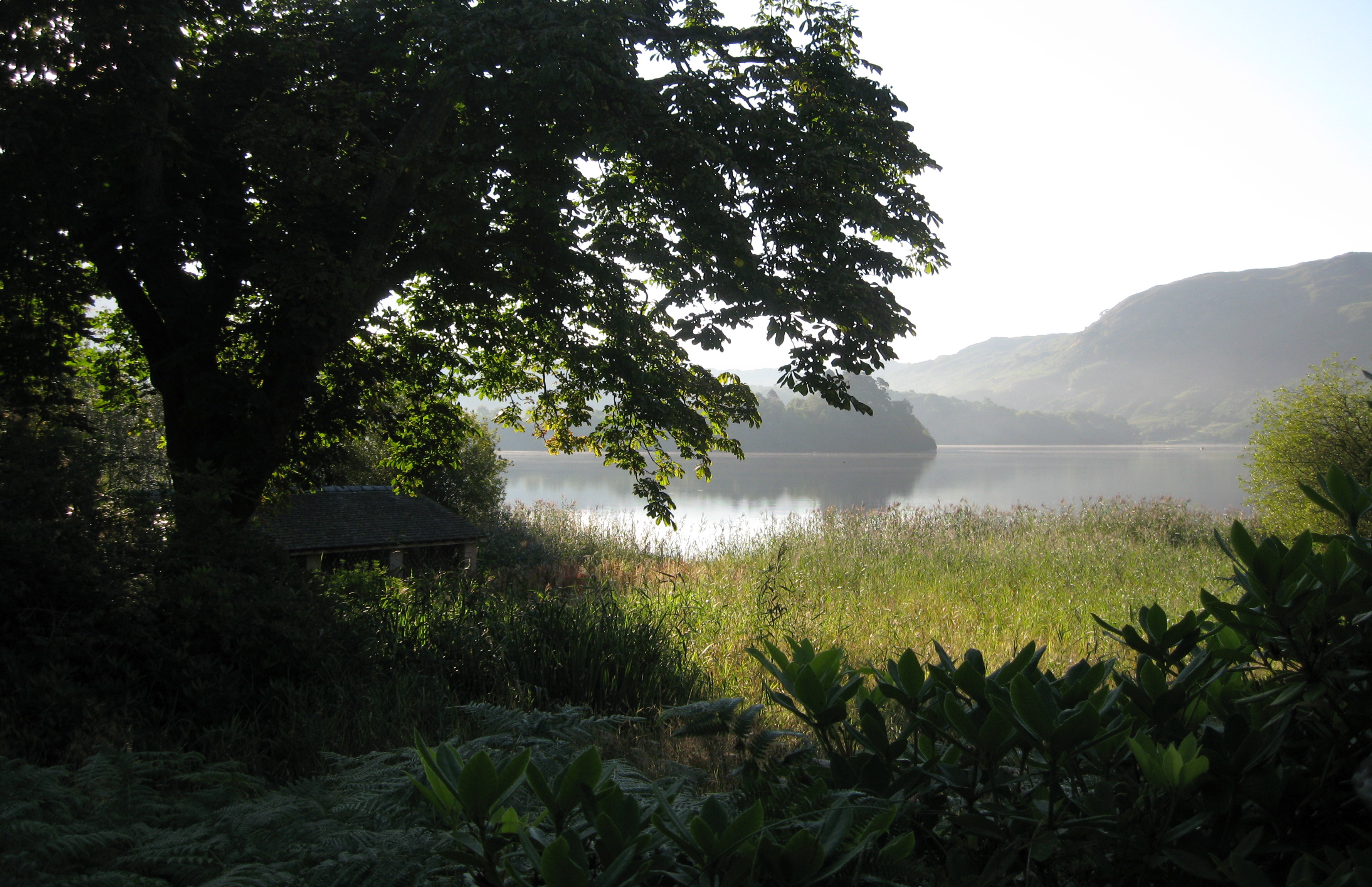
The Lake District, Grasmere, England.  Photo by me.

The Lake District, Grasmere, England. Photo by me.

Thank goodness for Facebook, Twitter and Skype.  We have friends and family as far away as Australia, Portugal and The Philippines, and I can’t imagine what our phone bill would be without these forms of cheap global communication.

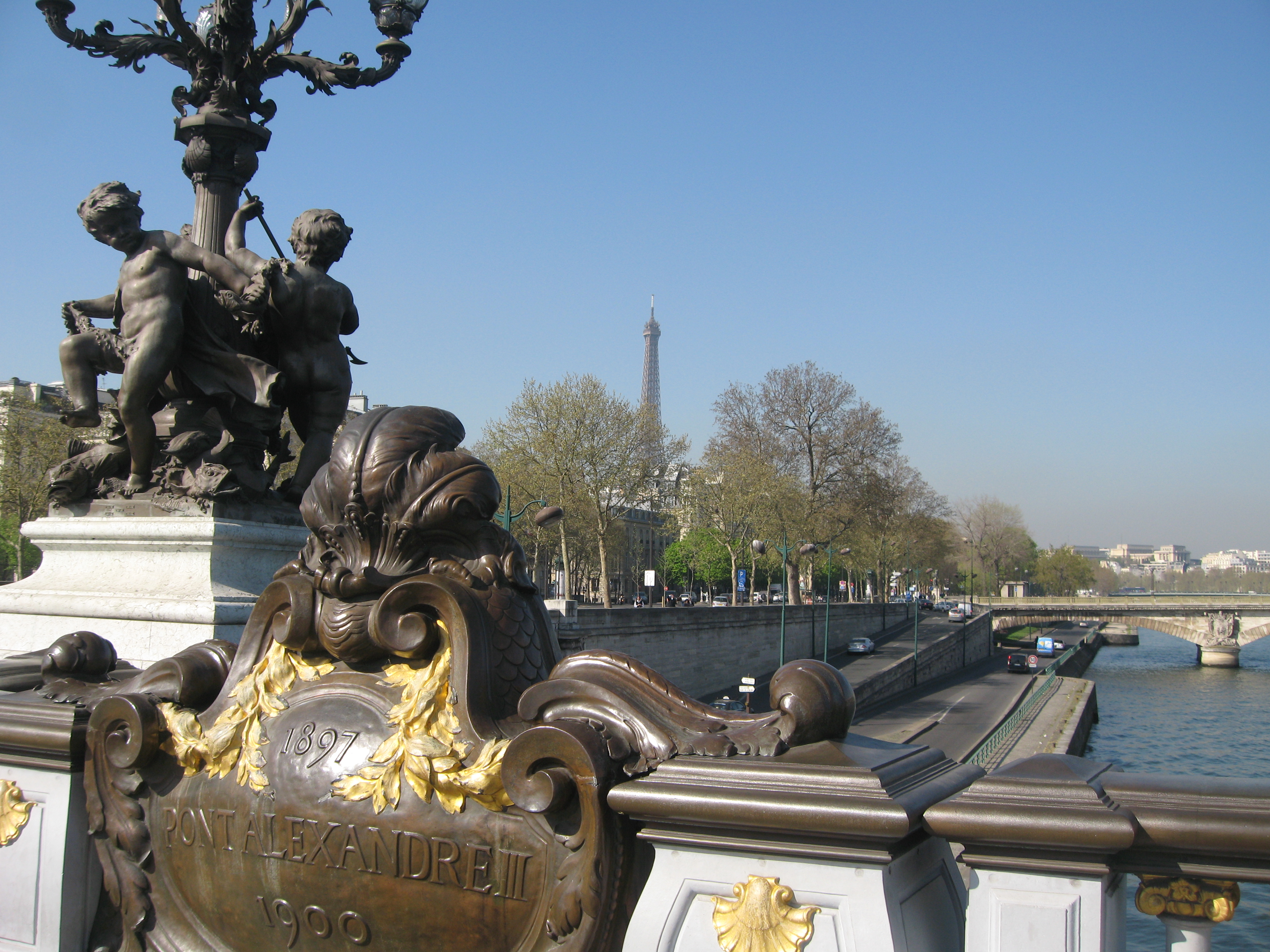
Pont Alexandre Bridge, Paris. Photo by me

Pont Alexandre Bridge, Paris. Photo by me

The world is our home, and like the T.C.K. kids, our home is where our friends and families are, wherever that might be.


Kensington Gardens and an afternoon stroll

27 Wednesday Feb 2013

Posted by pat in Art, England, Gardens, London, paintings, sketching

≈ 1 Comment

Tags

Kensington Gardens, Kensington Palace, parks

There is nothing quite like a stroll in a park with a couple of good friends, especially on a magically sunny day in London’s Kensington Gardens.

In to Kensington Gardens on a lovely fall day. Photo by me

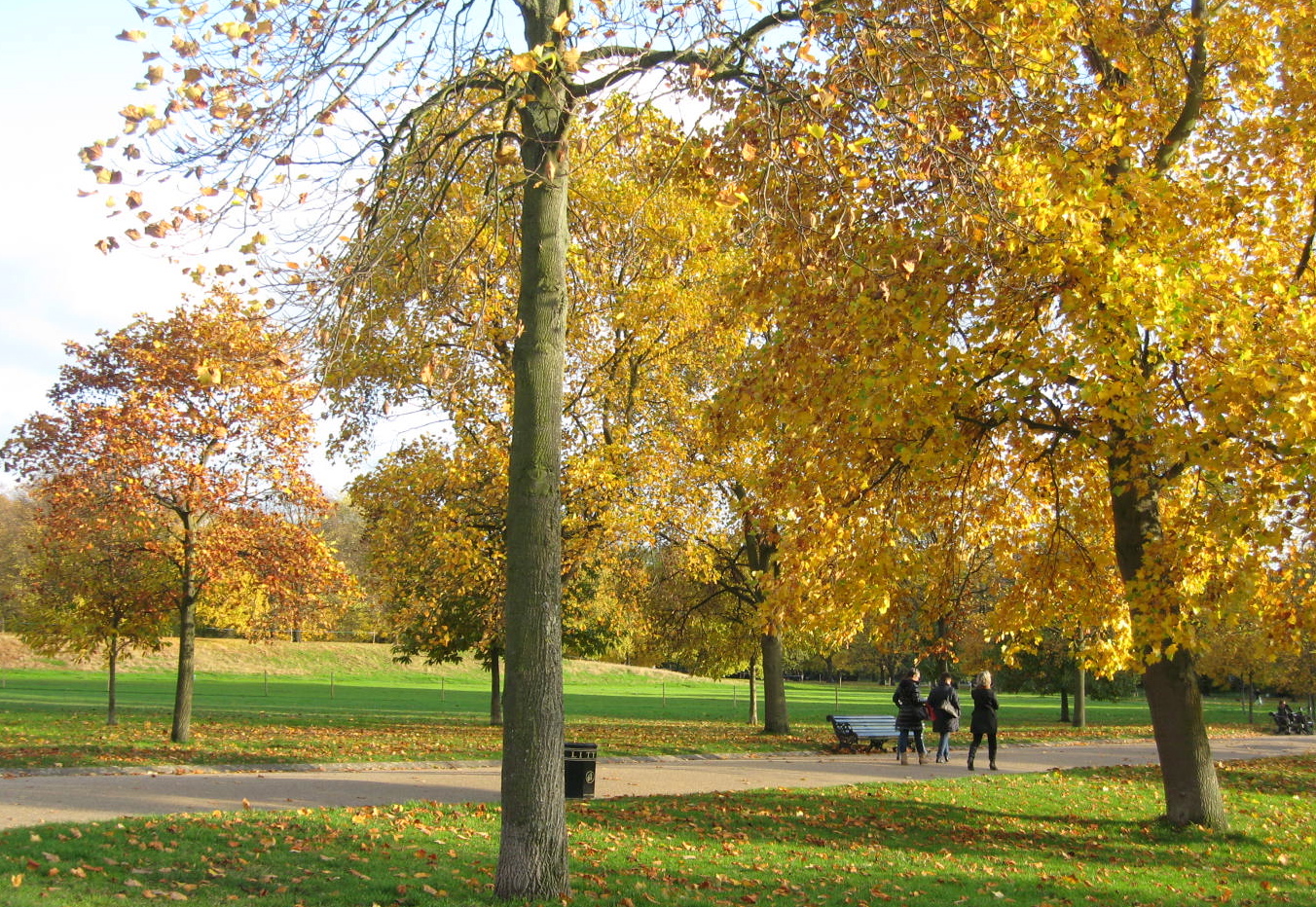
In to Kensington Gardens on a lovely fall day. Photo by me

When I was there last autumn, I couldn’t resist a cup of tea in the nearby Kensington Palace tea shop, and then out in to the park.

The entrance to Kensington Palace where there is a special little tea shop. Photo by me

The entrance to Kensington Palace where there is a special little tea shop. Photo by me

There were people strolling and biking, but these three women caught my attention.  They could just as easily be me and my friends in Central Park.  There is something so universal about the scene.


Just outside the palace gates, friends move down the path. Photo by me

Just outside the palace gates, friends move down the path. Photo by me

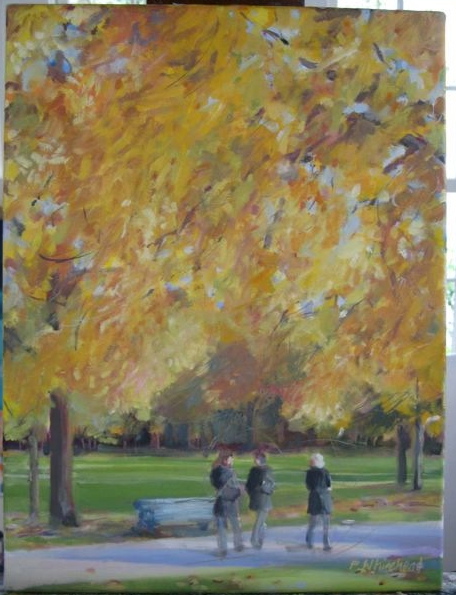
So when I started to paint the scene, I wanted the trees to become almost a halo around the three figures, setting them apart from the world around them. And I cropped it so that the women were the center of our attention.

The three figures become front and center with cropping.

The three figures become front and center with cropping.


As I layered the golden branches, the recollection of mood took over, and the painting definitely took on an aura that was true.

Tones are worked on.

Tones are worked on.


And detail was added that I knew would actually be part of a underpainting.  This is the tricky part.

Bolder strokes are added that I want to show through the haze.

Bolder strokes are added that I want to show through the haze.


It is always quite scary to then brush over the image to create a mood, and decide how much to cover in the haze and where to remove the overlay of color.  This is why I love oils.  They are forgiving in the layering process.  If it doesn’t work out, you can always add more layers.

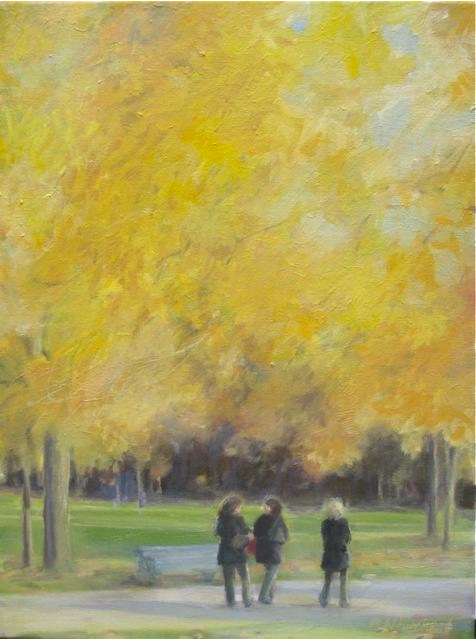
A soft layer of gold is added overall except over the figures.

A soft layer of gold is added overall except over the figures.

Finally, detail is added, some of the haze is gently removed, and I have accomplished the mood I originally hoped for.

The final canvas.

The final canvas.


The friends are lost in their own world but encased in the glow of the autumn leaves. The perfect day  with friends.


← Older posts
Newer posts →

♣ Subscribe to Blog via Email

Enter your email address to subscribe to this blog and receive notifications of new posts by email.

Join 33 other subscribers

♣ Archives

  • October 2025
  • June 2025
  • April 2025
  • November 2024
  • July 2024
  • June 2024
  • March 2024
  • December 2023
  • October 2023
  • September 2023
  • June 2023
  • September 2022
  • May 2022
  • January 2022
  • November 2021
  • August 2021
  • May 2021
  • January 2021
  • September 2020
  • June 2020
  • May 2020
  • March 2020
  • December 2019
  • October 2019
  • July 2019
  • April 2019
  • March 2019
  • December 2018
  • November 2018
  • October 2018
  • August 2018
  • March 2018
  • January 2018
  • July 2017
  • April 2017
  • February 2017
  • November 2016
  • October 2016
  • July 2016
  • May 2016
  • April 2016
  • January 2016
  • July 2015
  • June 2015
  • March 2015
  • January 2015
  • December 2014
  • November 2014
  • October 2014
  • September 2014
  • July 2014
  • June 2014
  • May 2014
  • April 2014
  • March 2014
  • February 2014
  • January 2014
  • December 2013
  • November 2013
  • October 2013
  • September 2013
  • August 2013
  • July 2013
  • June 2013
  • May 2013
  • April 2013
  • March 2013
  • February 2013
  • January 2013
  • December 2012
  • November 2012
  • October 2012
  • September 2012
  • August 2012
  • July 2012
  • June 2012
  • May 2012
  • April 2012
  • March 2012
  • February 2012
  • January 2012
  • December 2011
  • November 2011
  • October 2011
  • September 2011

♣ Recent Posts

  • Autumn on the Towpath
  • Float
  • de Printemps
  • A Change of Season
  • Sky Meadows

♣ Categories

  • Art
  • Art Museums & Exhibitions
  • Bath
  • Books
  • British Virgin Islands
  • Burnham-on-Crouch
  • cars
  • Cornwall
  • Cornwall
  • England
  • entertainment
  • Fashion
  • Food
  • Gardens
  • Grasmere
  • Guana Island
  • History
  • Lake District
  • Lake District
  • London
  • movies
  • Music
  • National Trust
  • Olympics
  • paintings
  • Peak District
  • Sailing
  • Scotland
  • Shopping
  • sketching
  • The New Forest
  • The Royal Family
  • Travel
  • Uncategorized
  • United Kingdom

♣ my button

accentbritain.com
<a href="http://accentbritain.com" target="_blank"><img src="http://accentbritain.com/accentBritainbutton.jpeg" alt="accentBritain.com" width="125" height="125" /></a>
Copyright 2011 accentBritain LLC. All rights reserved. All original photos, text and art is copyright protected.

Proudly powered by WordPress Theme: Chateau by Ignacio Ricci.


Loading Comments...