The Olympic Torch Begins Its Journey

Tags

What a great first day in England, jetlag and all.

We had the usual awful red-eye flight, on a totally packed plane with no sleep at all.  I’ll never get used to those dreadful overnight flights to Europe.

After arriving at Heathrow totally bedraggled, we decided to spend our Saturday driving towards Cornwall where we needed to be by Sunday to meet up with family. With frequent breaks and even a catnap in the car at a rest stop, we hit the really pretty part of Dartmoor Forest in Devon and decided to start looking for an Inn to spend the night. Of course, we had no idea that the Olympic Torch had landed at Lands End to the west of us by helicopter from Greece that morning, and was making its way through the area on the very first day of its journey, and ours, on English soil.

The torch is beginning it's journey through England. Photo by me

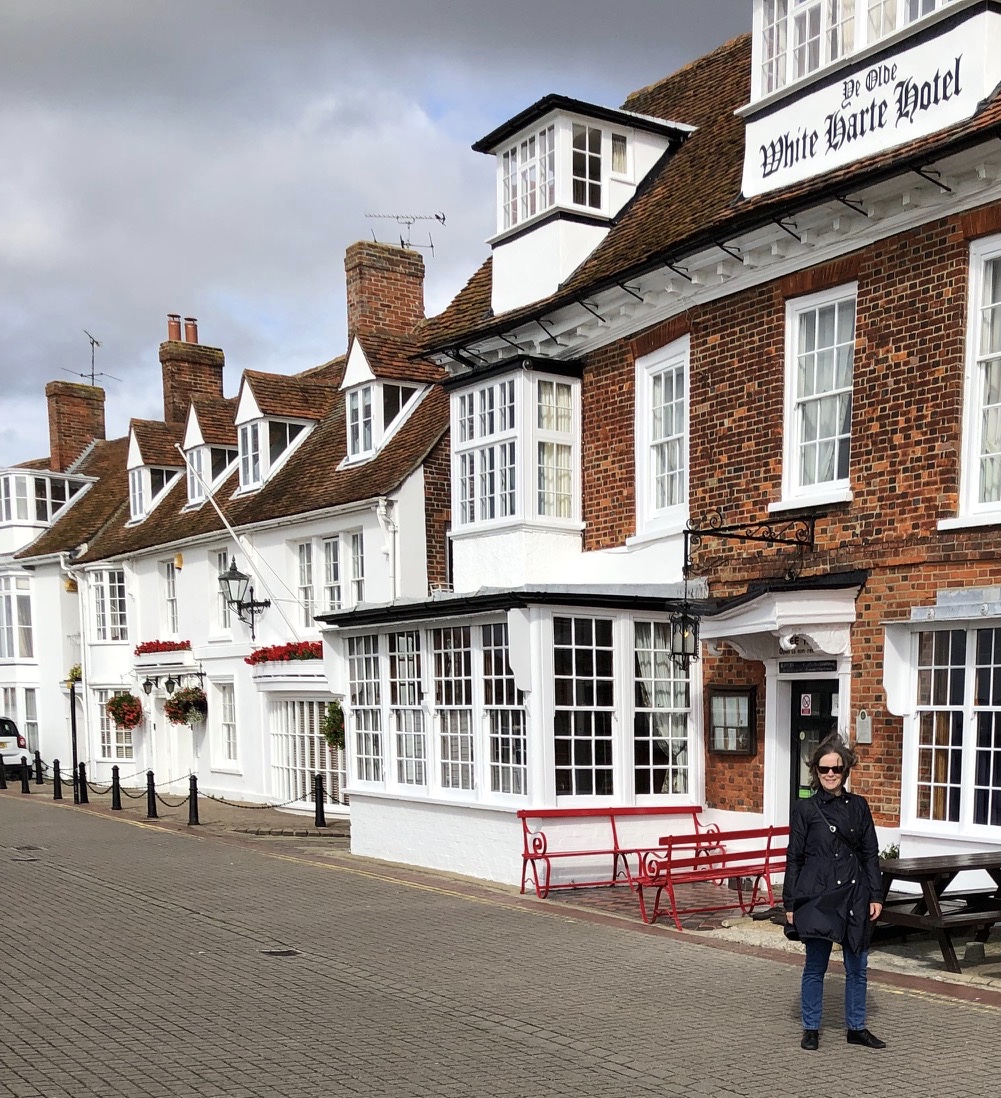
After searching in vain all afternoon for any kind of accommodation on the moors or along the southwest coast, we finally made it to Bodmin in Cornwall and found a great little hotel right in town that MBB had discovered online.  Checking in, we mentioned our trials and tribulations of the day because of the torch’s progress.

A great little hotel in the town of Bodmin in Cornwall. photo by me.

The gentleman behind the desk said he understood, and added that the flame was arriving in front of this hotel at 6pm with great fanfare.  What luck!  A room and the torch, and a great early supper of curry in the dining room watching the street outside as people gathered for the festivities. You couldn’t ask for a sweeter first day, and we even got some true sunshine by evening.

Everyone rushes in to town to see the torch come by. photo by me.

The excitement kept building for an hour waiting for the athlete to come running down the main street. photo by me

Then the church bells started ringing all over town, the police car escort flashed down the hill, and the crowd cheered as the runner came. photo by me

The torch bearer came by in a flash, but the crowd was thrilled. It really was an event of a lifetime. photo by me.

My Beloved Brit of course took full credit for planning such a wonderful day, although I think there was a bit of luck involved. None-the-less, I love him for turning what could have been day of only frustration into a memorable adventure.

UK weather forecast…toughen up

For weeks now My Beloved Brit has been telling me that we need to toughen up for England.  Well, the hour has arrived.  We leave the end of this week for the “Grey Country”, and the forecast is for cold and rainy weather. How English!

And we’ve planned for a week in Scotland at the beginning of the trip before returning to the south so I can witness the Queen’s Diamond Jubilee, which may drive him to the edge of his sanity.  He always says he had enough of being chilled to the bone in his youth.  He never wants to be cold again and we stand a good chance of it in Scotland.  They predicted snow flurries earlier this week.

Sunny Cornish hills. Pastel by me.

Luckily our first stop is Cornwall to visit with his cousins.  A good thing.  If there is one place in England that has a chance of sun and warmth in the spring, it’s Cornwall.  And it doesn’t hurt that he gets to reconnect with family.

So until we get a bit settled and un-jetlagged, I may miss a few posts.  But then I’ll report to you from across the pond.  And hopefully the sun will shine.

Portraits of the Queen at the National Portrait Gallery

Tags

,

In honor of the Queen’s Diamond Jubilee, the National Portrait Gallery in London is mounting a stellar exhibition of over sixty of the “most remarkable and resonant portraits of the Queen made during her 60 year reign”. The show runs from May 17 – October 21, 2012.

I am thrilled that I will be in London in a couple of weeks, and this is on my list of things to see in the midst of all the Diamond Jubilee excitement of that weekend. It is fascinating to have one figure that has been interpreted by so many artists over such a large span of years. Artists include Cecil Beaton, Andy Warhol and Lucien Freud to name just a few.

Queen Elizabeth II by Dorothy Wilding 1952, copyright William Hustler and Georgina Hustler, National Portrait Gallery, London


Bond, James Bond, meets the Queen?

Tags

, ,

A new Bond movie is in the works, Skyfall, with Daniel Craig once again playing Bond. The new film will be released October 26th in the UK, November 9th, 2012 in the US.  Judi Dench returns as M, and the new plot revolves around her character as “her past comes back to haunt her”. Javier Bardem joins the cast as the “villain”, and the new Bond Girl is Berenice Marlohe as Severine. Sounds intriguing.

From the new James Bond film, Skyfall, Photo: Francois Duhamel/Sony Pictures

According to speculation in an article in The Telegraph, The Queen  agreed to make a cameo appearance in the film.  James Bond 007 is to have knighthood bestowed on him by the Queen, and the scene will reportedly be beamed around the world during the opening ceremony at the Olympic Games.

Bond, of course, cannot comment.  His future missions are top secret, after all.

Garden Update…May

The warmth of May has finally brought the first waxy white gardenias with their gorgeous green leaves.  The small star gardenias out front have bloomed but they barely last.  Now the real things are getting ready to go in to full bloom, filling the path to the studio with their scent, and they will go on for weeks.


The first buds appear, and there are so many of them!

Pure white

I love how these pop up overnight.

Full bloom. Let the party begin. And the scent...

...even the garden statue is ecstatic.


Hail to the Sandwich

Tags

My Beloved Brit is a devoted sandwich fan.  And you will be happy to know that this year England will celebrate the 250th anniversary of the sandwich.  People were probably slapping something between two pieces of bread before that, but that is when it “officially” got its name.

wikimedia, photo by Jon Sullivan

The 4th Earl of Sandwich, John Montague, was playing a game of cards one day in 1762, when he asked his manservant for some meat to be served up to him between two slices of bread so he could continue playing uninterrupted. Soon, his friends, were asking for a light repast “same as Sandwich” and, voila, the meal of infinite variety was born.

The Earl, who was also First Lord of the Admiralty, also funded Captain Cook’s exploration of the Pacific and was rewarded when Cook named the first land he discovered the Sandwich Islands (now known as Hawaii).

Sandwich, which is located in Kent, will be celebrating this anniversary in high style along with the rest of the UK this May12-19 which is British Sandwich Week.  An astounding 11.5 billion sandwiches are eaten in Britain every year. The nation’s favorite is chicken, but egg and ham are nipping at the chicken’s feet, so to speak.

Keep you posted on fast breaking sandwich news.


Queen Victoria’s Diamond Jubilee Scrapbook Launched

Tags

I was browsing on the official website of the British Monarchy the other afternoon (I know, I know…doesn’t she have anything better to do) and I discovered a new website about Queen Victoria’s life which has been launched by Buckingham Palace, as an educational and public resource to mark the Diamond Jubilee.

From the Queen Victoria's Scrapbook. Thank you Buckingham Palace.

“Queen Victoria’s Diamond Jubilee Scrapbook” is an incredibly well done collection of documents from the Royal Archives, paintings and photographs from the Royal Collection, as well as audio and film clips.  Her Diamond Jubilee was in 1897.  It is the perfect year to look back with Queen Elizabeth’s own Diamond Jubilee kicking off this spring.


Those fascinating fascinators

Tags

A friend was visiting a couple of weeks ago, and we were chatting about this blog and the difference in traditions between the UK and America.  He asked a question that must be on many American men’s minds…what is with those fascinators?


by Lukesong, Wikimedia Commons


It got me thinking.  How did this new fashion favorite start, and is it getting out of control?  Love it or hate it, it is …well…fascinating. At the moment it is a fashion trend that crosses all classes and age groups in England.

I tend to think it started from those little girls who first put a feather or flower in their hair, and have now found a way to relive that fantasy moment of their youth. I mean, really, this headwear is purely decorative.  Not a practical thing to wear to keep the head warm on those chilly English days.

The headpiece known as the fascinator is a millinery style that originally referred to a fine, frothy head covering made from wool or lace, but mostly feathers.  Now they can be made of lace, flowers, beads and fabric as well as feathers.

Towards the end of the 16th century, feather plumes made their way to female hats from the fashion that started with the extravagantly plumed hats of the male English Cavaliers (just envision those Three Muskateers).

In the 18th century, wigs for both sexes were the popular fashion, and many were decorated with anything from miniature ships (Marie Antoinette who reigned from 1774-1792) to gorgeous feathers. How could they stand it!


Portrait of Marie Antoinette (1755-1793), artist probably Jean-Baptiste Dagoty, wikimedia commons


In England, it was during the reign of George III that the Duchess Georgiana Spencer of Devonshire wore magnificent Ostrich plumes in her hair. Of course other women of the late 1700s wanted to follow suit. British women began wearing “pompoms”, made of ribbons, small feathers, butterflies and jewels.

Georgiana, Duchess of Devonshire by Sir Joshua Reynolds, c.1775


As women, and countries, gained more independence, and flaunting ones wealth and class was more subdued, the massive wigs disappeared, and by the Empire period (early 1800s) hair styles became much simpler, with smaller ornaments, a simple spray of feathers or some pearls.  Just think Jane Austen, and you get the idea.

Francois Gerard, Portrait of Caroline Murat descending the staircase of Elysee Palace, 1810, oil on canvas


During the Victorian era (1837-1901) more somber head wear reflected the less flamboyant period, but feathers and fascinators were still used for special occasions such as a night at the opera. By the early 1900s all bets were off. Fascinators exploded on the fashion scene, with tail feathers added along with ribbons and flowers.
Edna May, circa 1905


After World War I, things calmed down, but fascinators still appeared occasionally until the 1950s (think of the little bits of net tulle of the Mad Men era).  The head decoration wained for awhile, and hats were associated with middle aged or matronly fashion…that wouldn’t do for the youth culture of the 1960s.

But then, with the decline of the hat, the more comfortable fascinator made a stunning re-appearance on the head of the Duchess of Cornwall (Camilla) when she married Prince Charles (2005). I remember seeing it, and wondering what this gorgeous confection of feathers was on her head.  It was rather a fantasy piece.

The official photo from Clarence House of the Wedding of Prince Charles and Camilla, Duchess of Cambridge


Lady Gaga, of course, has taken the whole idea to a new extreme with her steak fascinator at the 2010 MTV Video Music Awards. Women were willing to take big fashion risks. And of course, there are the horse races, Royal Ascot to be specific, where the more fanciful the better. The fascinator was back in fashion. (For couture millinery Ascot Fashion click here)

Ilda Di Vico Royal Ascot 2011, from Ilda Di Vico Couture Millinery website

Generally worn with fairly formal attire, it is especially loved at weddings. The general consensus seems to be that Kate Middleton, before she became the Duchess of Cambridge she is today, helped spark the great return popularity of the trend. And then there was the Royal Wedding (Catherine & William) which set the bar high for the most creative extremes of the style as worn by their guests.

Two of the most famous fascinators of our time, from the Royal Monarchy Flickr


In 2012 Royal Ascot announced that women will have to wear hats, not fascinators, as one aspect of the tightening dress code, in the Royal Enclosure this summer.  Will this be the beginning of the end for the trend? Only time will tell.

The New Royal Ascot Dress Code

Tags

,

For those of you planning on being in the Royal Enclosure at Royal Ascot this June, or not, here are the new dress code rules as reprinted from The Daily Mail. Obviously they are cracking down a bit.  Kind of fun to retain a formal event that you have to dress up for, especially if you own a dress with built in gloves.

The perfect attire for Ascot, according to The Daily Mail article. Dress with built in gloves by Nicholas Oakwell, hat by Stephen Jones and pale blue and white sandals with ankle straps by Bally.


ROYAL ENCLOSURE DRESS CODE

  • Dresses and skirts should be of modest length defined as falling just above the knee or longer
  • Dresses and tops should have straps of one inch or greater
  • Jackets and pashminas may be worn but dresses and tops underneath should still comply with the Royal Enclosure dress code
  • Trouser suits are welcome. They should be of full length and of matching material and colour
  • Hats should be worn; a headpiece which has a base of 4 inches (10cm) or more in diameter is acceptable as an alternative to a hat
  • Strapless, off the shoulder, halter neck, spaghetti straps and dresses with a strap of less than one inch (2.5cm) are not permitted
  • Midriffs must be covered
  • Fascinators are no longer permitted in the Royal Enclosure; neither are headpieces which do not have a base covering a sufficient area of the head (4 inches / 10cm)

GRANDSTAND DRESS CODE

  • A hat, headpiece or fascinator should be worn at all times
  • Strapless or sheer strap dresses and tops are not permitted
  • Trousers must be full length and worn with a top that adheres to the guidelines above (i.e. strapless or sheer strap tops are not permitted)
  • Jackets and pashminas may be worn but dresses and tops underneath should still comply with the Grandstand Admission dress code
  • Midriffs must be covered
  • Shorts are not permitted

To read the entire Daily Mail article: http://www.dailymail.co.uk/femail/article-2128292/No-cravats-fascinators-miniskirts-Ascot-sends-racegoers-strict-new-dress-code-complete-style-guide.html#ixzz1rq8ooBOx

And if you want to go straight to the horses mouth, so to speak, here is the link to Royal Ascot’s site.