London’s Serpentine Gallery unveils new structure in Kensington Gardens

Tags

, ,

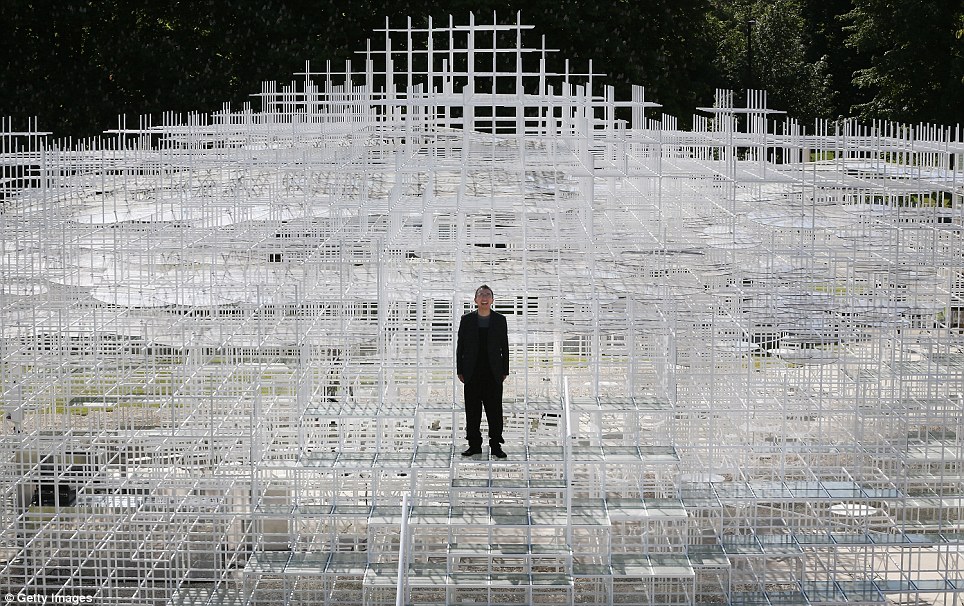
I found this article in The Daily Mail announcing the latest temporary pavilion for London’s Serpentine Gallery created by Japanese architect Sou Fujimoto.  See the whole article here!

Cloud-like: Sou Fujimoto stands upon his giant creation at the Serpentine Gallery, the latest temporary installation for the gallery's pavilion

Cloud-like: Sou Fujimoto stands upon his giant creation at the Serpentine Gallery, the latest temporary installation for the gallery’s pavilion

A Walk in Central Park

Tags

,

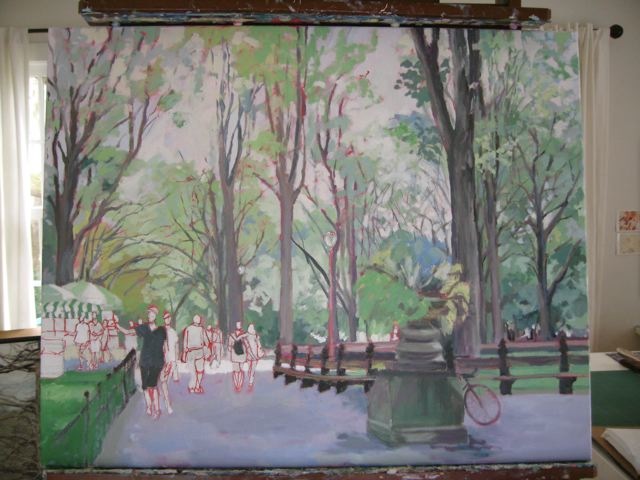
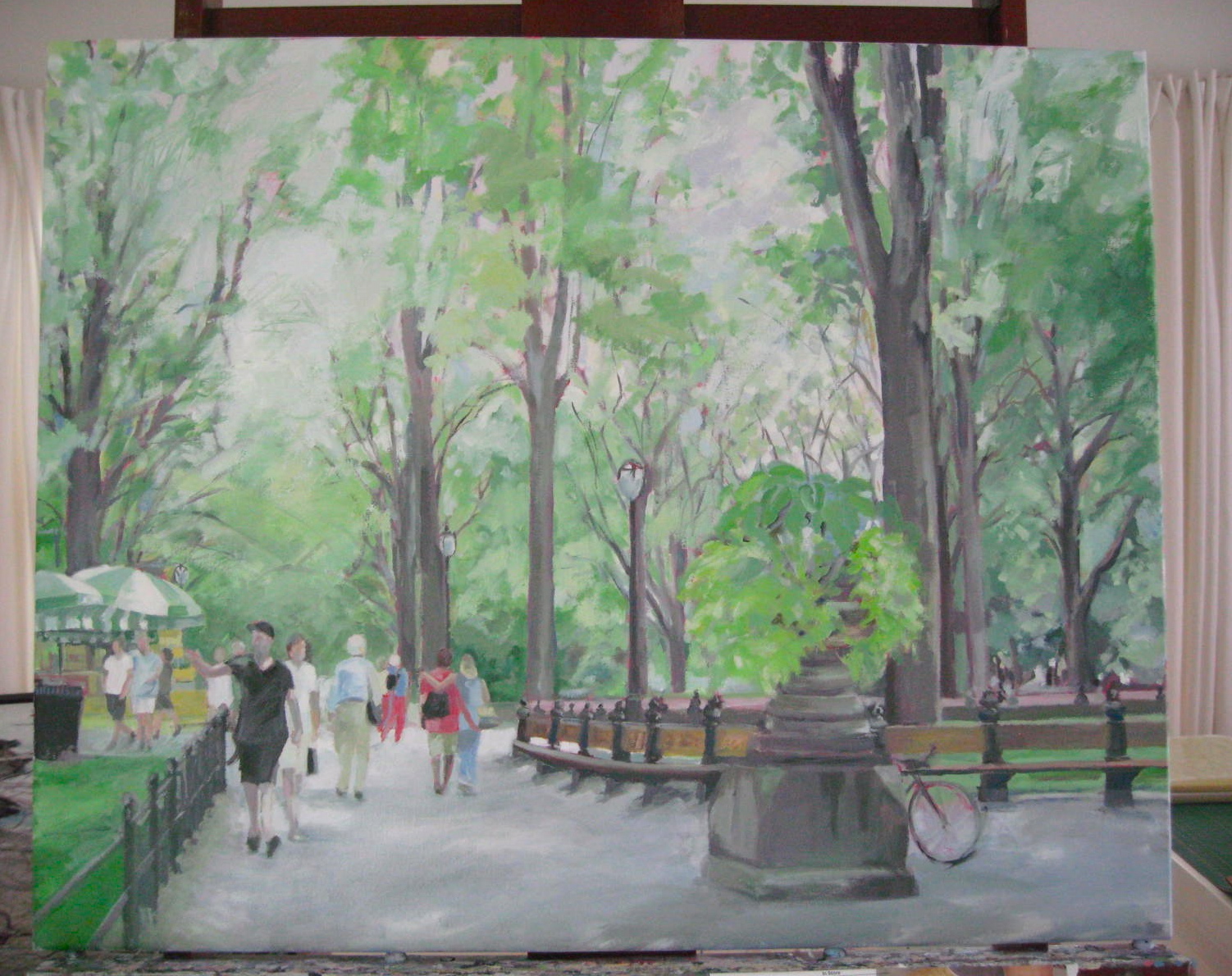
I finally finished “Summer Afternoon in Central Park”, another painting in my Cities Series. The 30 x 24 canvas went through many stages before I was finally satisfied with the results.

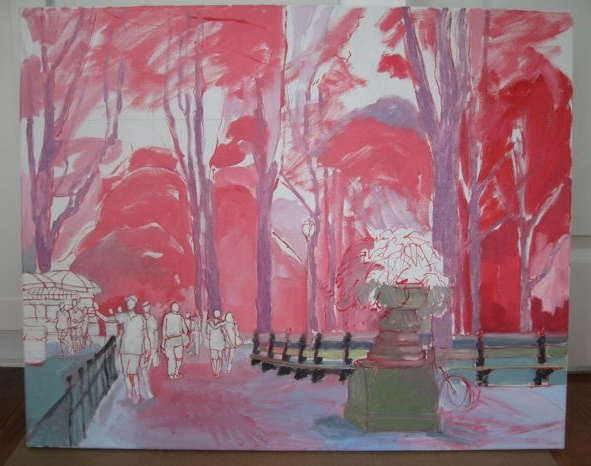
It started with a bright undertone of pinks and lavender.

A warm glow of pink under it all.

A warm glow of rose madder pigment under it all.

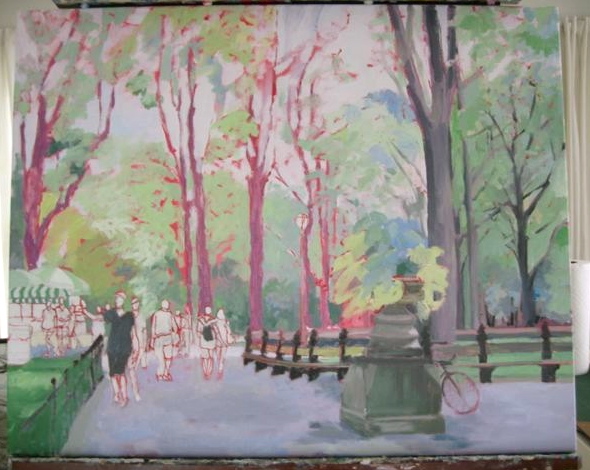
I slowly built up the cathedral-like canopy of the trees.  It was important for me to show the magnificent height of the huge, old trees without losing the city dwellers below. You enter this alley of trees and feel instantly at peace.  I love this part of the park. It is in the area called “The Mall” and the trees are incredible.

Image 2

The stone pedestal and plant in the foreground anchors the scene

The park is always busy, but somehow the trees and green space make it seem calm and renewing. The trees are American Elm trees, and are unbelievably magnificent. This is one of the the largest and last remaining stands of these trees in North America.

Image 3

I wanted to fill in the tree trunks without losing the delicacy

The sunlight coming through the branches almost makes it look like stained glass.

Image 4

More green

When you walk down the wide promenade, you focus on the sky.  I wanted the painting to make you look up even though all the activity is on the path.

Image 5

Central Park benches and lampposts are unique.

I love Central Park.  From the first moment I was allowed to go in to NYC by myself or with friends my age, I found my way to the park.  And then in my 40s, I had a small studio apartment right off the park on Central Park West, an easy escape into tranquility that I took full advantage of.

I think this picture captures that peace…

Finally

Finally, the painting is finished

London Bridges

Tags

, ,

The River Thames winds through London, and even on the dreariest day the bridges crossing from one bank to the other are beautiful and varied.  I love crossing from end to end, often traveling from one very different neighborhood to another.

Tower Bridge
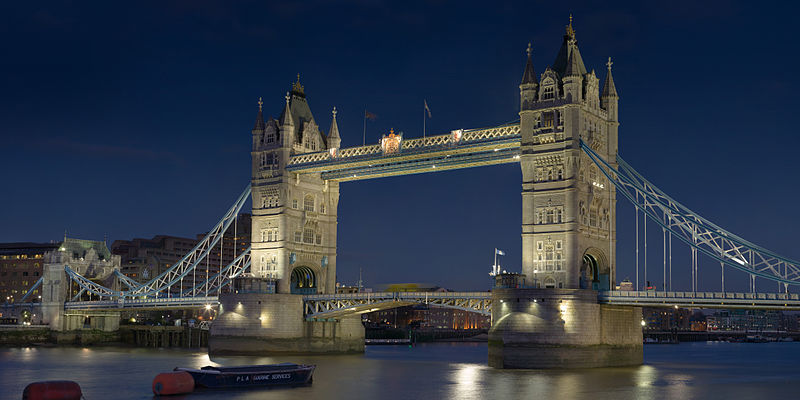
Tower Bridge. Photo: Photo by DAVID ILIFF. License: CC-BY-SA 3.0

Tower Bridge. Photo: Photo by DAVID ILIFF. License: CC-BY-SA 3.0

Tower Bridge is relatively young by London Bridge standards.  It was opened in June 1894 after years of discussion and eight years of construction. Tower Bridge is a combined bascule bridge (the word means see-saw or rocker in French) and suspension bridge.
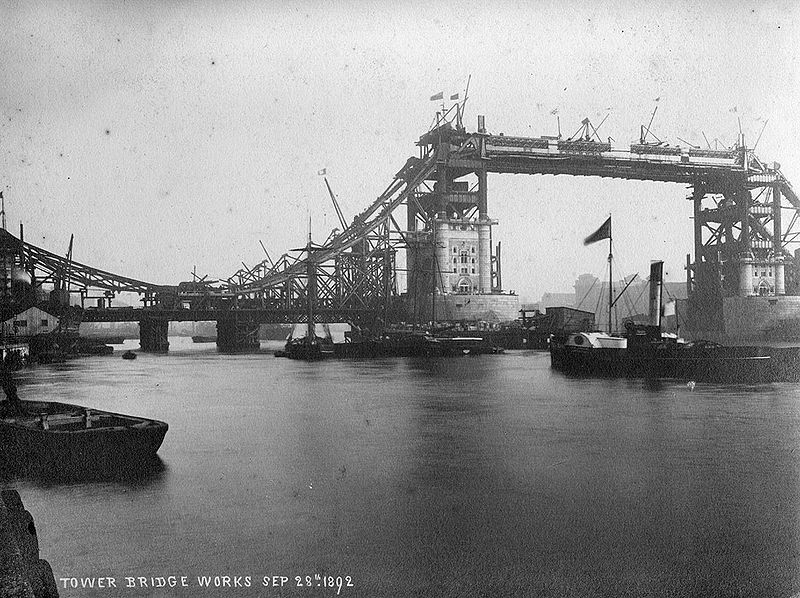
View of Tower Bridge construction works, September 28th, 1892. Photo is in public domain.

View of Tower Bridge construction works, September 28th, 1892. Photo is in public domain.

This allows it to be raised quickly for passing ships. Visitors can walk across the high walkways and enjoy spectacular views of London, and it is close to The Tower of London, from which it takes its name.
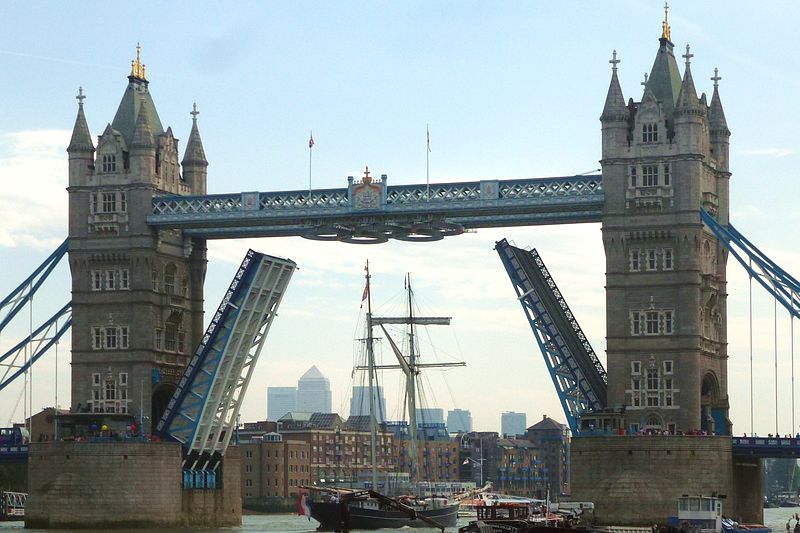
A tall ship passing under Tower Bridge decorated for the London Olympics in August 2012. Photo by Cmglee

A tall ship passing under Tower Bridge decorated for the London Olympics in August 2012. Photo by Cmglee

The bridge’s current color scheme of red white and blue dates from 1977 in honor of Queen Elizabeth II’s silver jubilee. Originally it was painted a greenish-blue color.

London Bridge

The London Bridge, in one form or another, has existed on this spot for over 2000 years. The Romans were the first to put one up when they first came to London in 46 AD. Originally built of wood, the bridge was prone to falling down from fires, storms or invading armies.  Thus the nursery song.
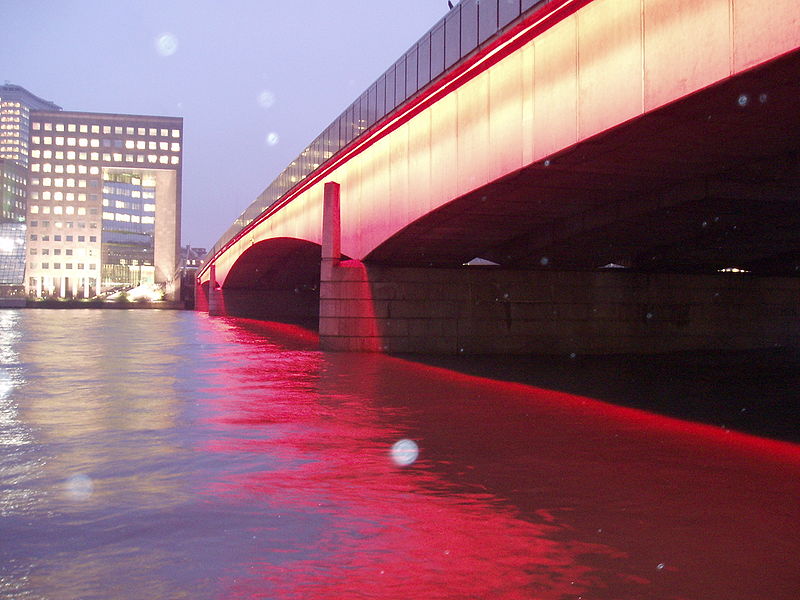
London Bridge, photo by Peter Burgess

London Bridge, photo by Peter Burgess

The first stone bridge was constructed in 1209 when King John was on the throne, and he permitted houses and shops to be placed on the span which took 33 years to build. There was a drawbridge to allow ships traffic to pass, and gates at either end.
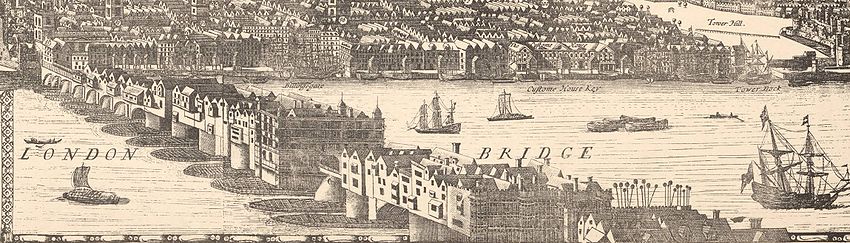
Drawing of London Bridge from 1682 London Map.

Drawing of London Bridge from 1682 London Map.

It lasted until 1831, and was replaced with a bridge that had foundation problems. The current London Bridge was opened by Queen Elizabeth II in 1973 and both vehicles and pedestrians now use the bridge.

Cannon Street Rail Bridge

Originally called the Alexandria Bridge after the wife of King Edward VII when it was opened in 1866, the Cannon Street Station Bridge has taken on the name of the terminal station of the National Rail at the end of the bridge.
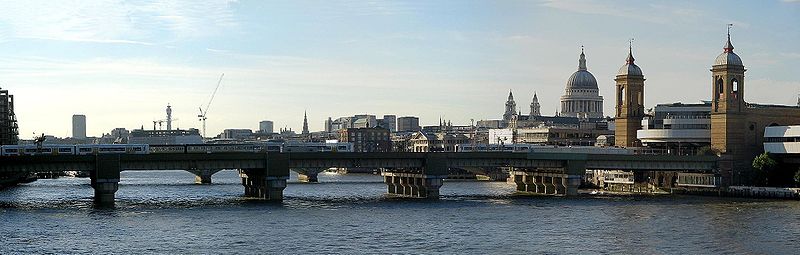
Cannon Street railway bridge. Photo taken by Will Fox 2005.

Cannon Street railway bridge. Photo taken by Will Fox 2005.

Southwark Bridge

Originally known as the Queen Street Bridge or “Iron Bridge”, it opened in 1819. It was demolished in 1913.
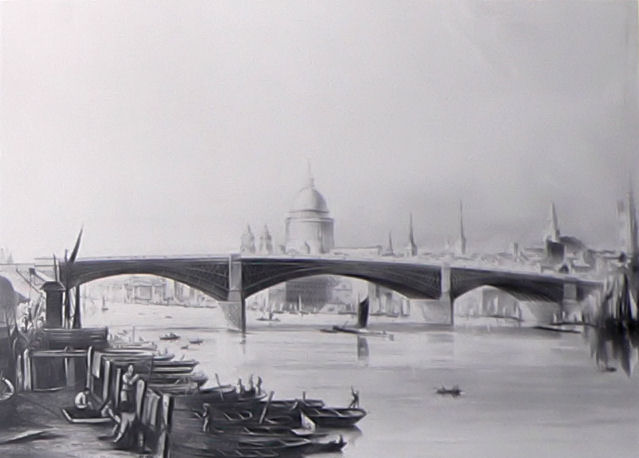
Southwark Iron Bridge. Wikimedia Commons.

Southwark Iron Bridge. Wikimedia Commons.

The new arch bridge opened in 1921, having been delayed by WWI, linking Southwark and the city across the Rivers Thames.
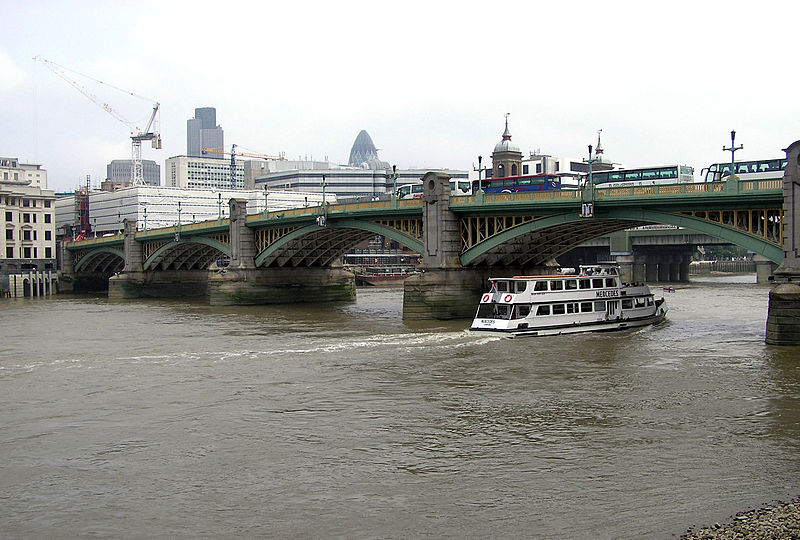
Southwark Bridge from the south bank of the Thames.  Photo: released to public domain by Arpingstone.

Southwark Bridge from the south bank of the Thames. Photo: released to public domain by Arpingstone.

In the past, watermen would transport people from one side of the river to the other, and the stone steps to the water under the south side are still visible. It has the reputation for being the least used bridge in central London. The south end is near the Tate Modern.

Millennium Bridge

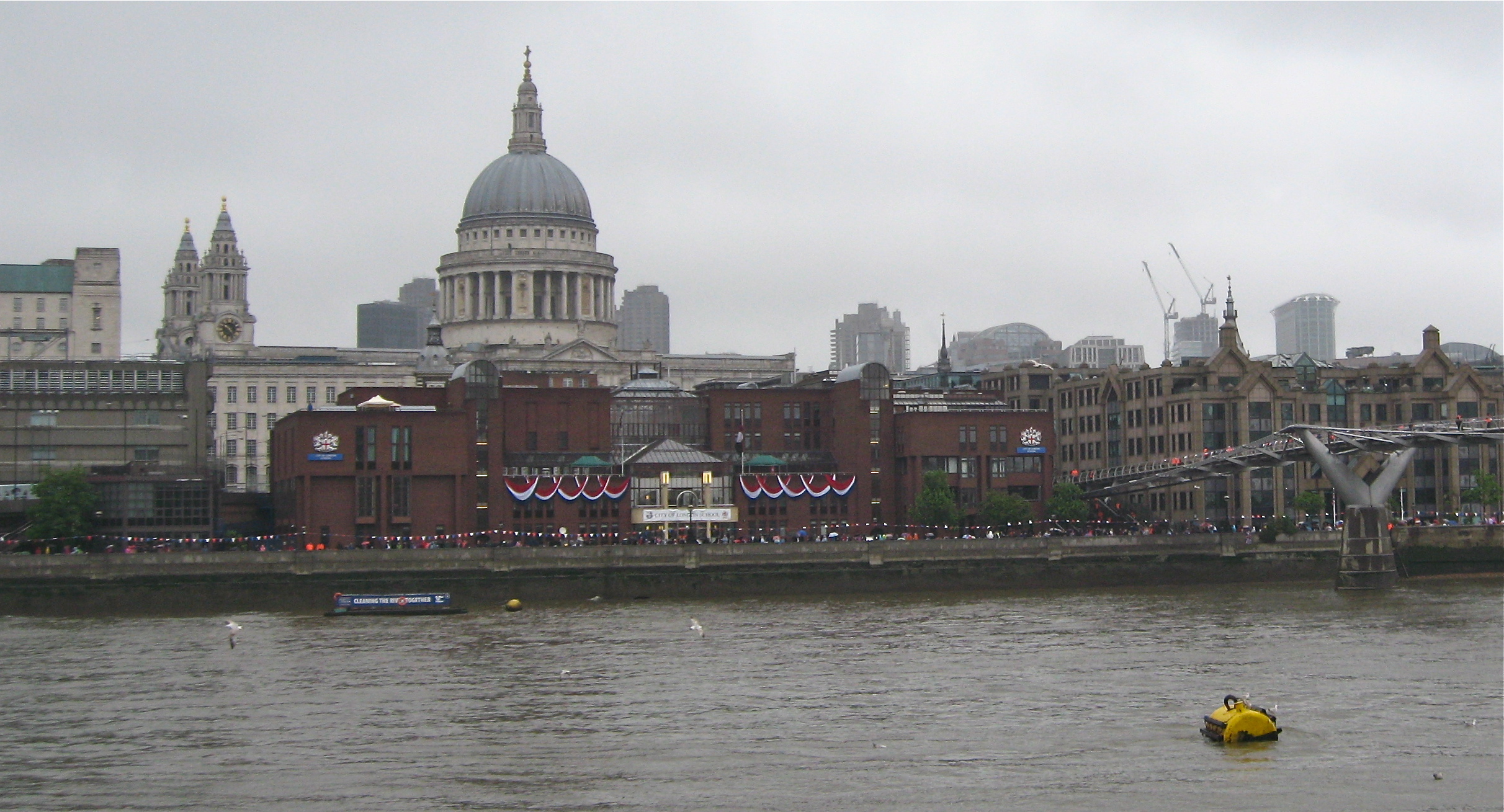
I love the Millennium Bridge–a pedestrian-only bridge that crosses over the river from St. Paul’s Cathedral to The Tate Modern Art Museum on Bank Side.
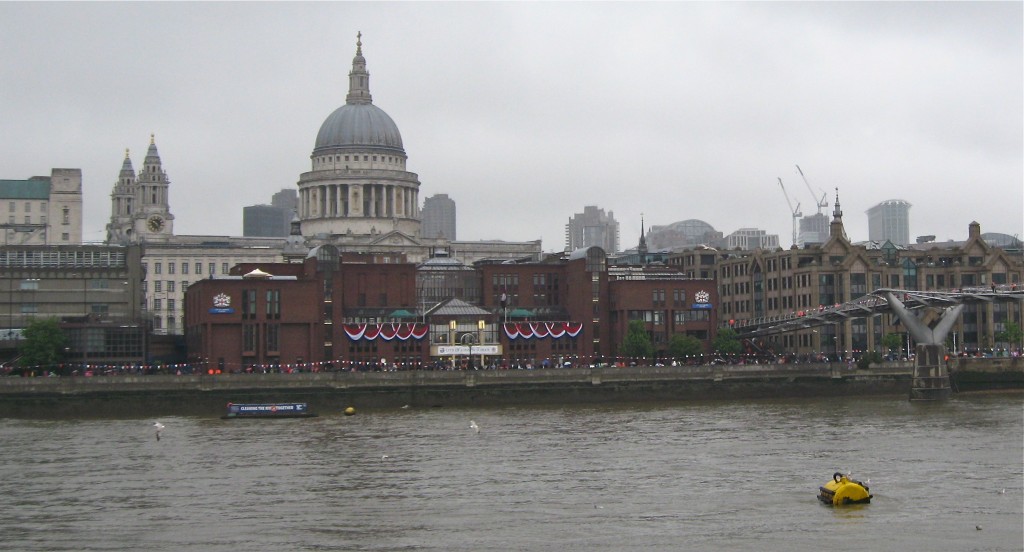
The Millennium Bridge on a grey English morning. Photo by me.

The Millennium Bridge on the right and St. Paul’s cathedral in the center on a grey English morning. Photo by me.

It opened in 2000, but closed a few days later.  There was a problem with a wobble, not something you want when crossing a river on foot. They had not counted on the effect of the many people walking across at the same time.
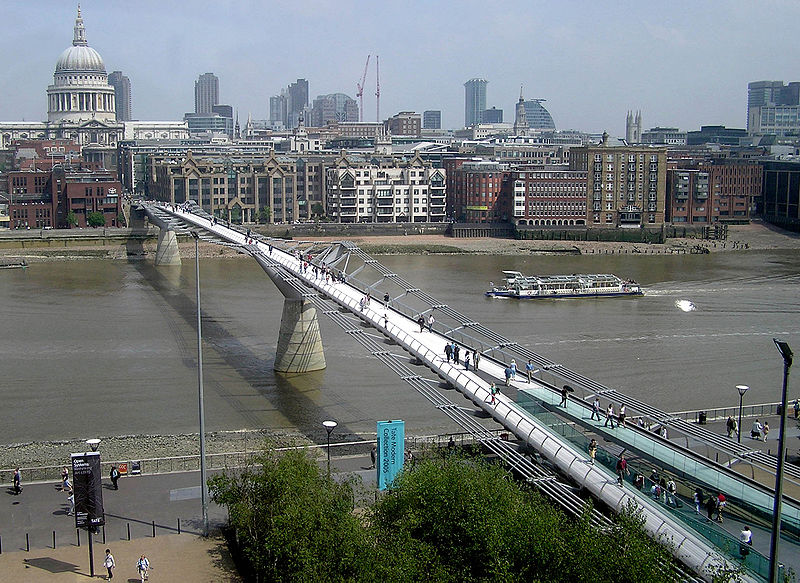
The Millennium Bridge from the Tate Modern. Wikimedia Commons

The Millennium Bridge from the Tate Modern. Wikimedia Commons

A few million pounds, and a couple of years later and it re-opened.  No wobble at all.  The Southern end of the bridge is near the Globe Theatre, the Bankside Gallery (home to the Royal Watercolour Society and the Royal Society of Painter Printmakers. and Tate Modern.

Blackfriars Rail Bridge

The new bridge which opened in 1864 replaced  a less strong bridge that had opened in 1864.
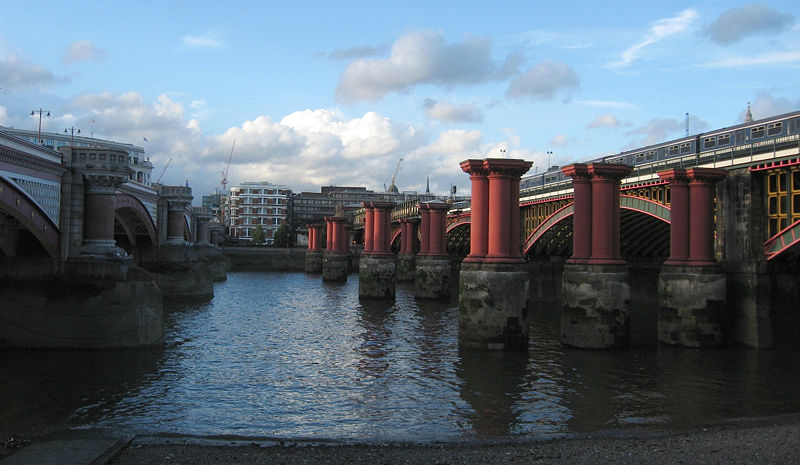
View from South Bank between Blackfriars and Blackfriars Railway bridges, showing train. Photo by Alethe, Creative Commons

View from South Bank between Blackfriars and Blackfriars Railway bridges, showing train. Photo by Alethe, Creative Commons

The new bridge could handle the “modern” trains.  It is named for Blackfriars’ Station.

Blackfriars Bridge

Blackfriars was named for a 13th century Dominican Monastery that had provided the name for that section of London near Ludgate Hill, and is both a vehicle and pedestrian bridge.
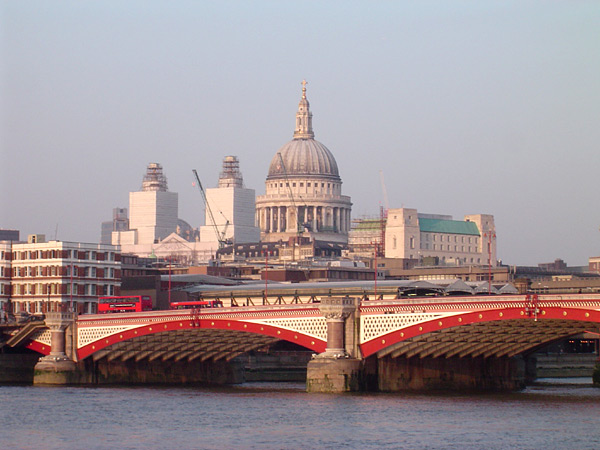
Blackfriars Bridge, London, with St. Pauls Cathedral behind. Photo Wikimedia Commons

Blackfriars Bridge, London, with St. Paul’s Cathedral behind. Photo Wikimedia Commons

The first bridge at this spot was opened in 1769 as a toll bridge, and was replaced by the current bridge which was opened by Queen Victoria in 1869.

Waterloo Bridge

This bridge leads to the South Bank where you will find the Royal Festival Hall, Waterloo Station and the Royal National Theater.  You can walk this one, or ride across.

Waterloo Bridge, London.Photo: Colin, Wikimedia Commons

Waterloo Bridge, London.Photo: Colin, Wikimedia Commons

The first bridge on this site opened in 1817 as a toll bridge and is named for the Napoleonic War’s Battle of Waterloo. The current bridge was completed in 1945.
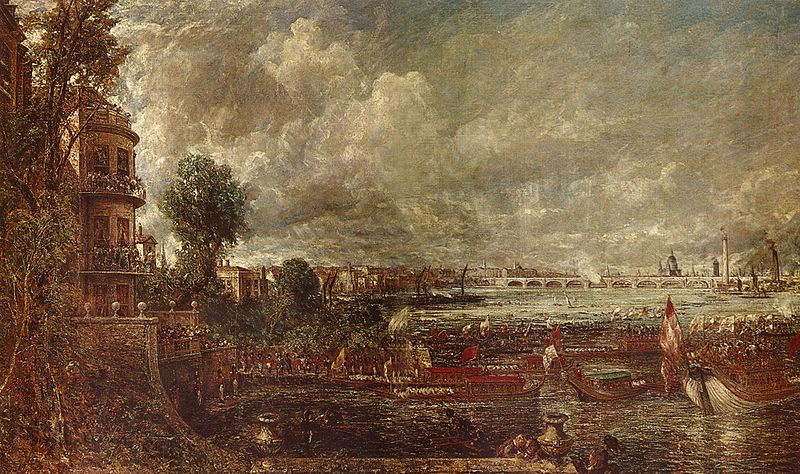
John Constable, View of the old Waterloo Bridge from Whitehall stairs, 1817.
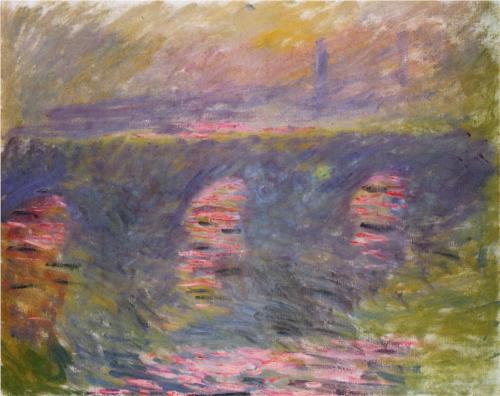
John Constable, View of the old Waterloo Bridge from Whitehall stairs, 1817.

Waterloo Bridge, Claude Monet 1899

Waterloo Bridge, Claude Monet 1899


Hungerford Bridge/Golden Jubilee Bridge

A railway bridge, sometimes known as the Charing Cross Bridge.
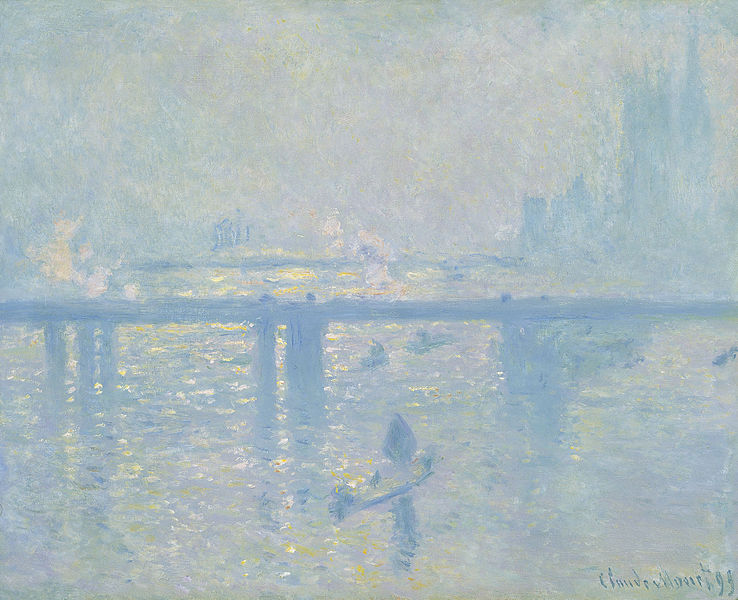
Charing cross Bridge, Claude Monet

Charing Cross Bridge, Claude Monet

The bridge is now a vehicle bridge bordered by two pedestrian walkways. The first bridge on this site was a suspension foot bridge in 1845.

Hungerford Bridge from the London Eye. Creative Commons

Hungerford Bridge from the London Eye. Creative Commons

Less than 20 years later it was replaced to accommodate the railroad.

Westminster Bridge

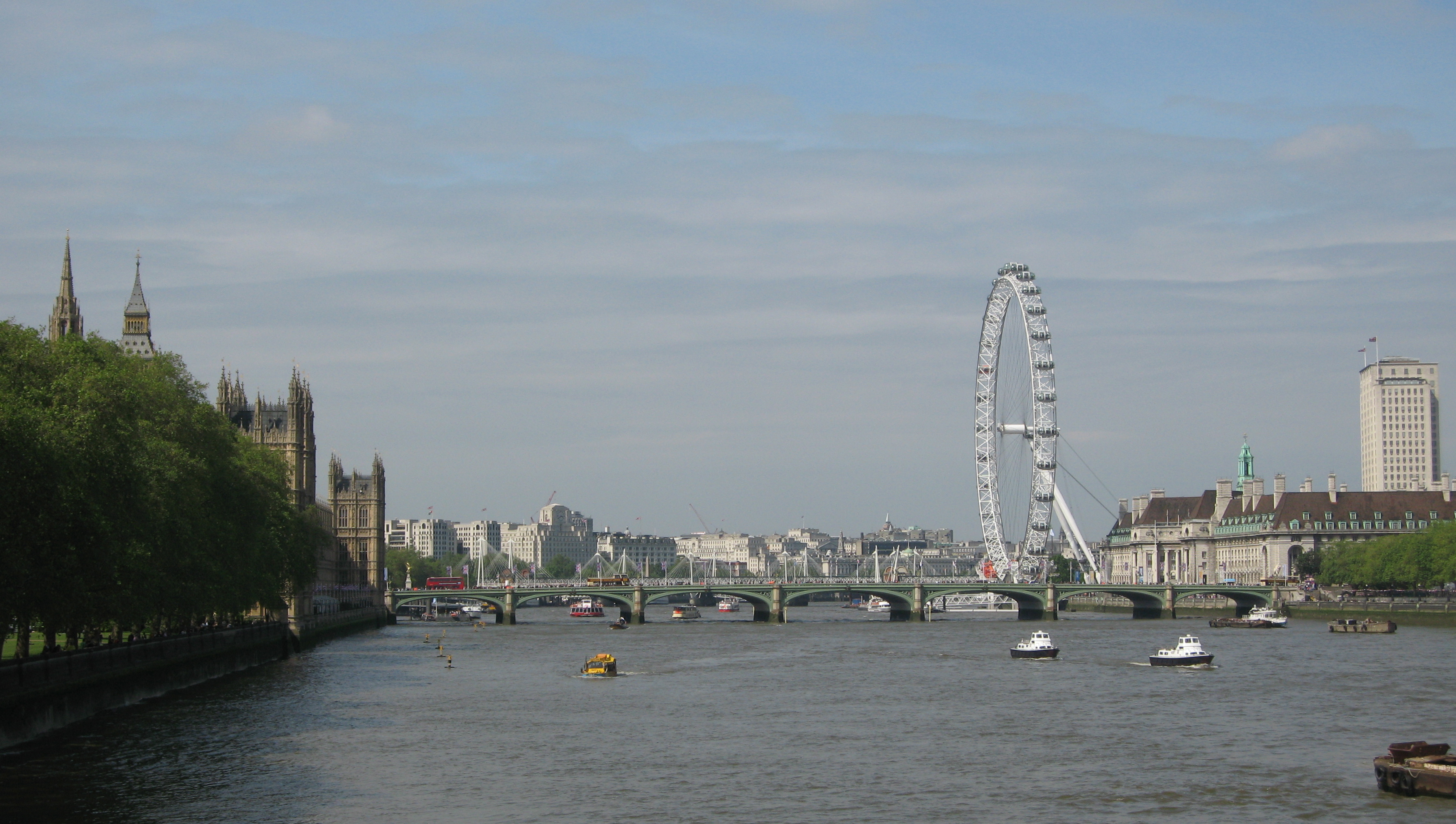
Made of wrought iron, the current bridge opened in 1862 and is London’s oldest bridge, connecting Westminster and Lambeth.
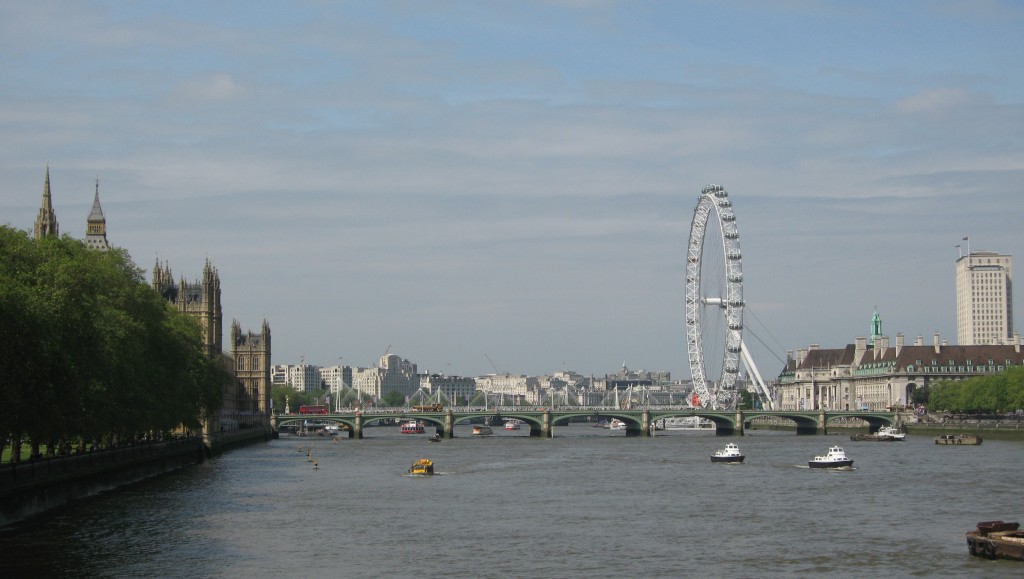
Westminster Bridge. Photo by me.

Westminster Bridge. Photo by me.

The Gothic Detail reflects the nearby Houses of Parliament and can handle both vehicles and pedestrians. The bridge is painted predominantly green, the same color as the leather seats in the House of Commons which is on the side of the Palace of the Westminster nearest the bridge.

Lambeth Bridge

The next bridge is painted predominantly red for the House of Lords, in fair play since the Westminster is green for the House of Commons.
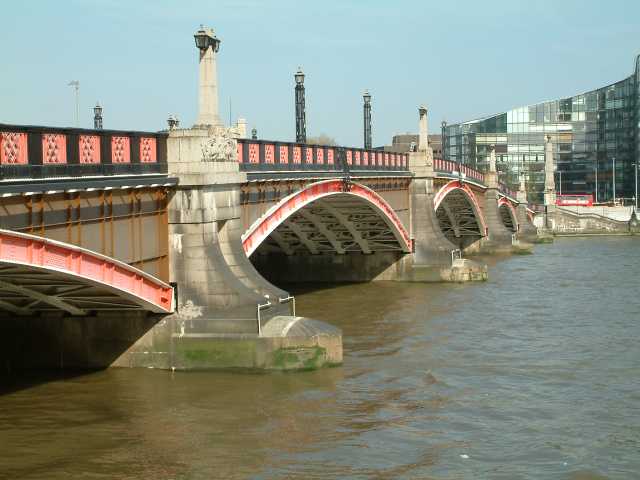
Lambeth Bridge, London. Wikimedia Commons.

Lambeth Bridge, London. Wikimedia Commons.

The vehicle and pedestrian bridge was opened in 1932 by King George V. The bridge was used for the 2004 film Harry Potter and the Prisoner of Azkaban for a scene where the Knight Bus must pass between two Leyland Titans.

Vauxhall Bridge

The original bridge was built on the site of a former ferry between 1809 and 1816, and was the first iron bridge over the Thames.
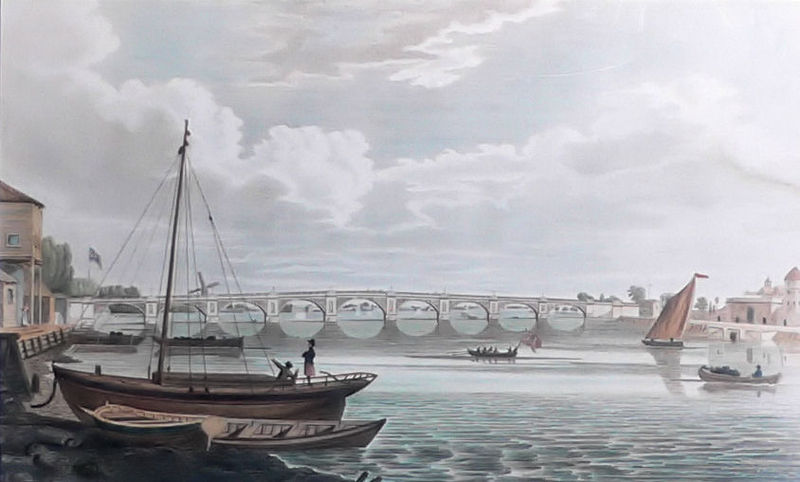
A view of James Walker's Regent's Bridge of 1816. Artist Unknown.

A view of James Walker’s Regent’s Bridge of 1816. Artist Unknown.

The current bridge, originally known as Regent Bridge, was opened in 1906, and now connects Vauxhall on the south bank and Pimlico on the north bank. The bridge carried electric trams until service ended in 1951.
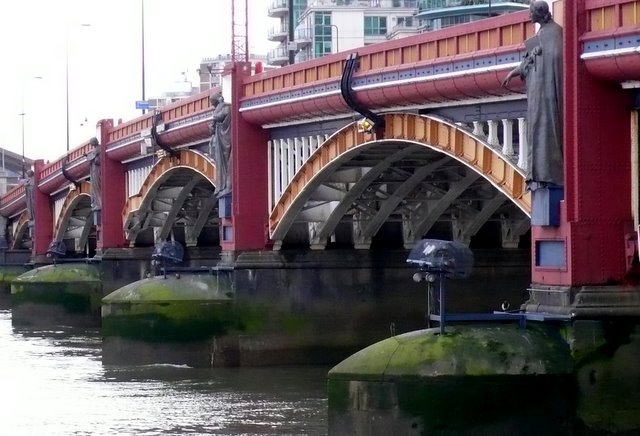
Vauxhall Bridge, London. View of the downstream side (NE) of the bridge from Millbank on the north bank of the Thames River.Photo Nigel Mykura

Vauxhall Bridge, London. View of the downstream side (NE) of the bridge from Millbank on the north bank of the Thames River.Photo Nigel Mykura

Grosvenor Bridge

Originally known as Victoria Railway Bridge, Grosvenor Bridge is an arched railway bridge  originally constructed in 1860.  The bridge was rebuilt and widened again in the 1960s.
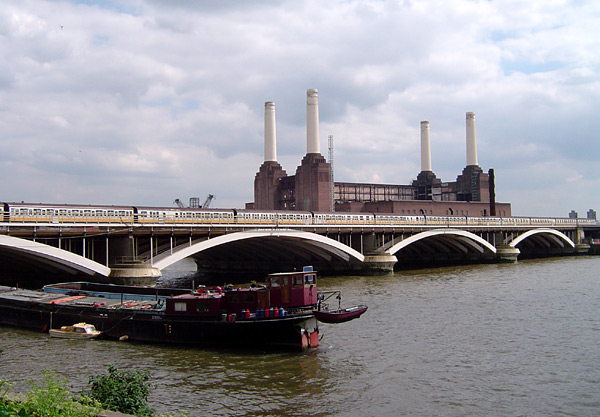
Grosvenor Bridge. Photo: ChrisO Wikimedia Commons

Grosvenor Bridge. Photo: ChrisO Wikimedia Commons

It was the first railway bridge across the Thames in central London, and carries trains into Victoria Station. On the South Bank is Nine Elms to the east and Battersea to the west.

Chelsea Bridge

Chelsea Bridge in west London connects Chelsea on the north bank to Battersea on the south bank.
Vauxhall Bridge, Victoria (now Chelsea) Bridge and Battersea Bridge, London 1859

Vauxhall Bridge, Victoria (now Chelsea) Bridge and Battersea Bridge, London 1859

There was a natural ford on the site, a shallow crossing of the Thames where you were able to cross by wading or in a vehicle.


The first Chelsea Bridge did not open until 1857, and was built to provide convenient access to the new Battersea Park. The suspension Bridge was narrow and structurally unsound. Between 1934 and 1937 it was demolished  and replaced by its current structure, the first self-anchored suspension bridge in Britain.
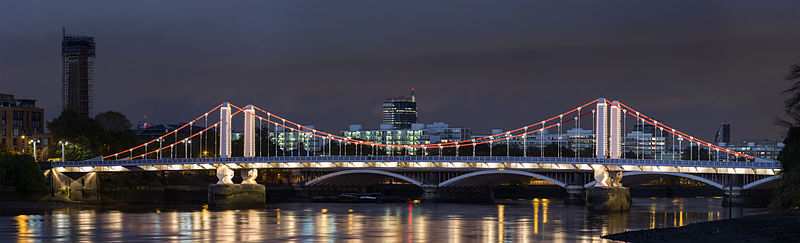
800px-Chelsea_Bridge,_London_-_Oct_2012

Panoramic view of Chelsea Bridge at night in London. Photo: David Diliff. License: CC-by-SA 3.0

The bridge is floodlit from below during the hours of darkness.  The towers and cables are illuminated by 936 feet of light-emitting diodes. In 2004 a smaller bridge perpendicular to the main bridge Battersea Footbridge was opened beneath the southern span.

Who would have thought bridges could have such rich histories…only in London.
Moving Day

Tags

,

William and Kate, otherwise known as The Duke and Duchess of Cambridge, move in to their new quarters at Kensington Palace sometime before the end of this year.  It is the beginning of a new and more visible royal role for the couple, as they ease ever more quickly into a very public life.  They must have mixed feelings about the move, but excited especially with the new baby due in the next month.

Kensington Palace from the more public East side. Photo by me

Kensington Palace from the more public East side. Photo by me

They will soon live in Apartment 1A, formerly the home of Princess Margaret. Up to now the apartment has remained unused since Princess Margaret’s death in 2002. They currently have a small, two-bedroom apartment residence at the palace.

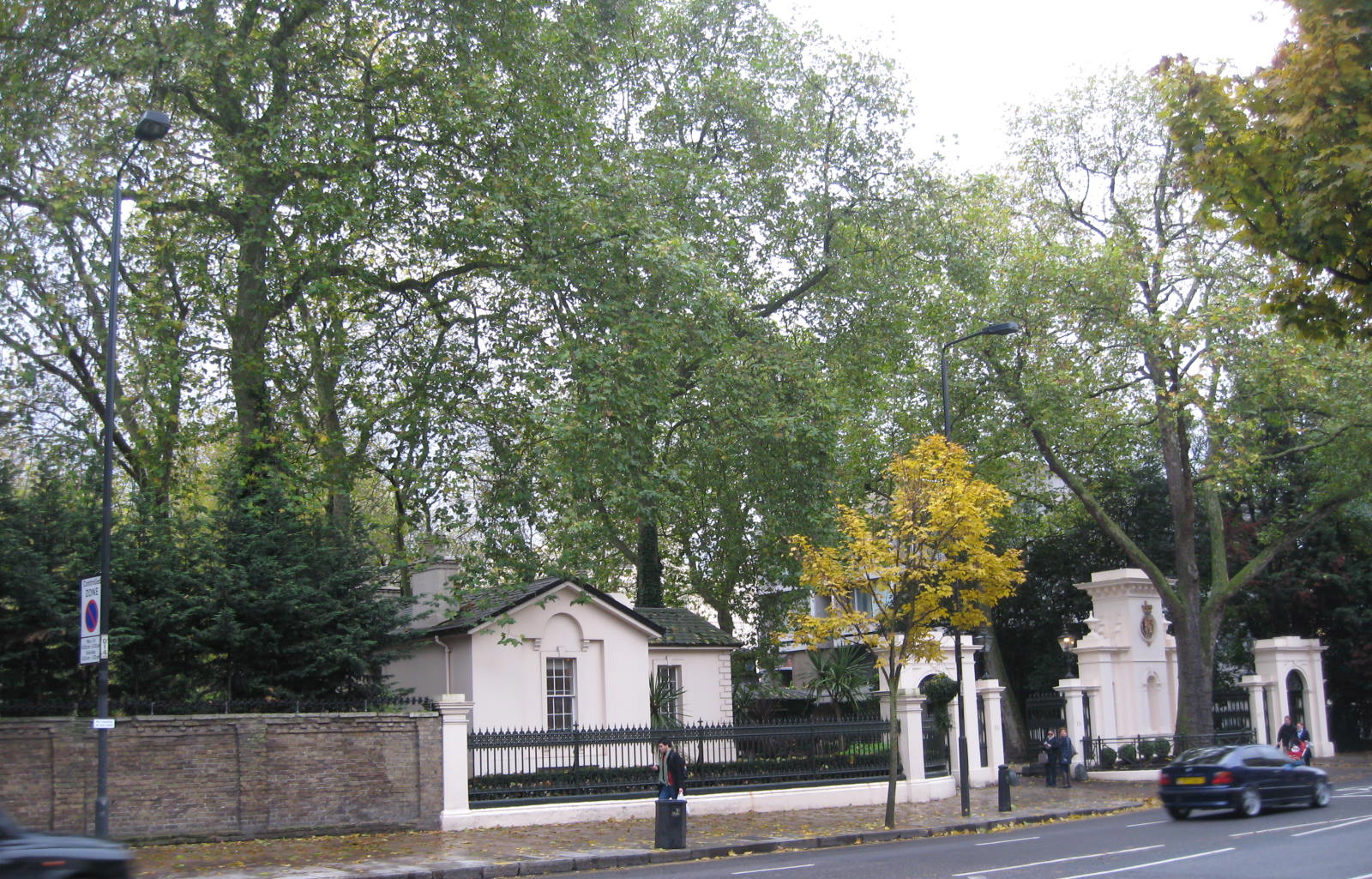
The entrance to the beautiful street that Kensington Palace is on, as well as many embassies. Photography is not allowed on this street once you get past these white walls. Photo by me

When I walked by Kensington Palace this past November, I noticed workers busily installing great black iron spikes along the top of this lovely garden wall.  Increased security I’m sure.  A strange world we now live in.

There was also extensive rewiring, new plumbing and the removal of asbestos. What fun to decorate all 20 rooms, including a nursery. The Duchess has had her last public royal appearance before the birth of the baby, and I am sure she will use some of that quiet time to finish furnishing her new home.

The beautiful walls around Kensington Palace, before the addition of spikes. Photo by me

I can only wish them years of happiness raising a family is this idyllic place.

Royal Yacht Britannia’s Interior Design Sketches

Tags

, , ,

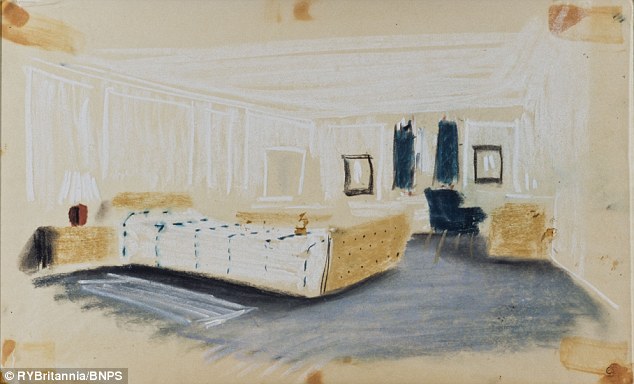
For the first time in 60 years, the Royal Yacht Britannia’s interior state rooms’ sketches by architect Sir Hugh Casson have been handed over to a trust by his daughter, according to an article in the Daily Mail. To see all the glorious details in the article, click here! The yacht was used by Queen Elizabeth II and Prince Philip from 1953 until 1997, 44 years in service.

From the Daily Mail article, the original rendering of the Duke of Edinburgh's stateroom on the Royal Yacht Britannia.

From the Daily Mail article, the original rendering of the Duke of Edinburgh’s stateroom on the Royal Yacht Britannia.

We toured the yacht when we were in Scotland a few years ago, and it is magical.  I could only dream of touring the empire on such a floating palace.

A June Day in St. James’s

Tags

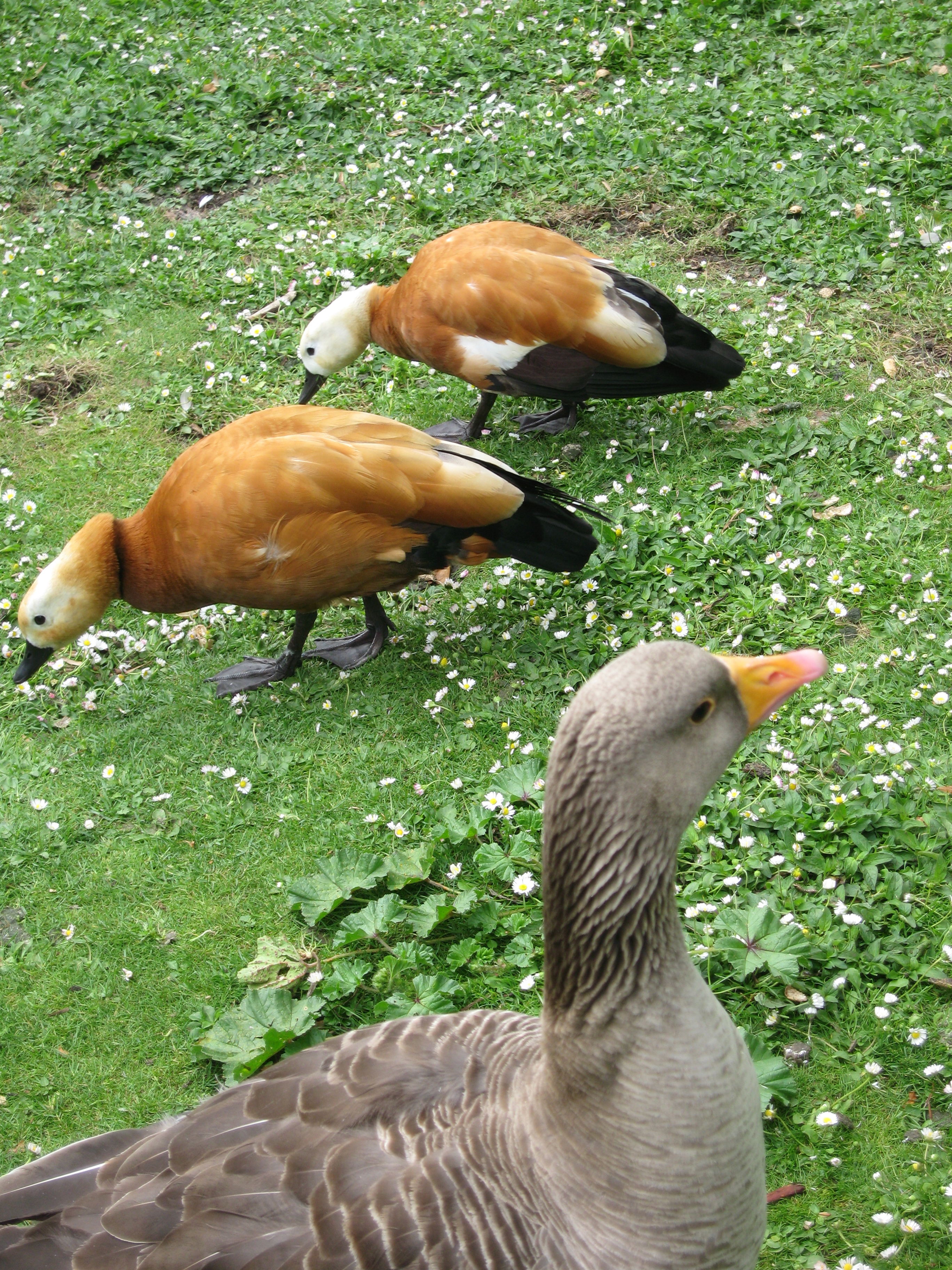
It has been a long time coming this year, but summer is finally here.  Even England is slowly getting warm.  In honor of the occasion, I thought I’d share with you an image I took in London last June of some very happy residents of St. James’s Park. Happy summer to all.

Photo by me.

Photo by me.

Study of a Queen

Tags

, , ,

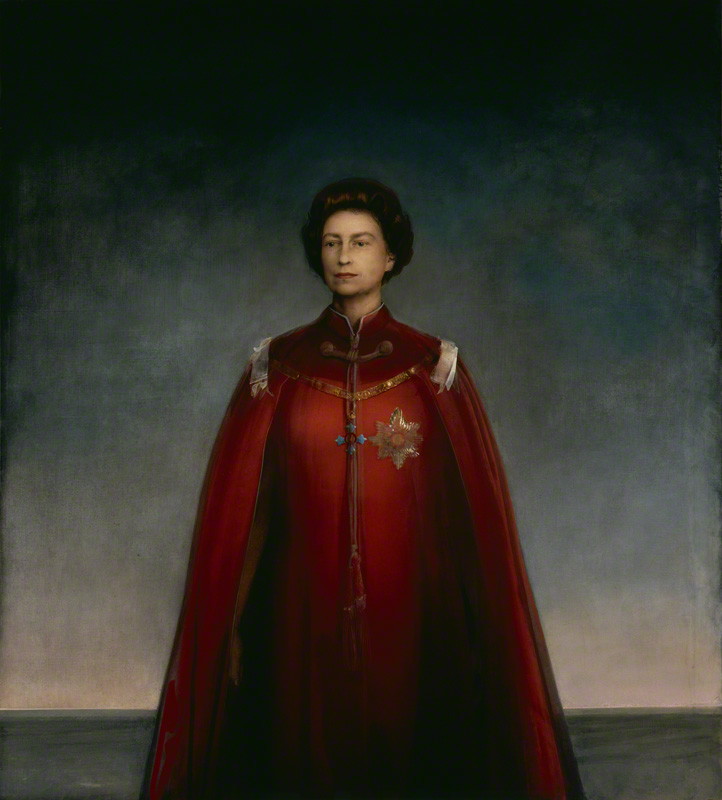
With the celebration of the Queen’s 60th Anniversary of her coronation this week, there is an opportunity to see some amazing portraits circulating. One that caught my attention is  Study for the portrait ‘Her Majesty in Robes of the British Empire’  by Pietro Annigoni in 1969.

© Royal Collection Trust/ © Her Majesty Queen Elizabeth II 2012.

© Royal Collection Trust/ © Her Majesty Queen Elizabeth II 2012.


The study, done in oil distemper and pastel and measuring  more than life-size at about 16 x 24″, was commissioned by the Trustees of the National Portrait Gallery. The Queen is wearing the red cloak of the British Empire.

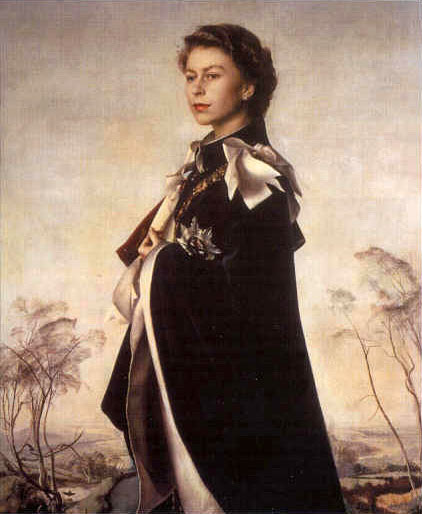
Fifteen years earlier, Annigoni had painted the young Queen for the Worshipful Company of Fishmongers, in a romantic rendering of her wrapped in the dark blue cloak of the Order of the Garter.

HM Queen Elizabeth II by Pietro Annigoni, 1955

HM Queen Elizabeth II by Pietro Annigoni, 1955


What I love about the study for the second portrait in red, is how the artist seems to have captured her strength and…well… her majesty so effortlessly. His concentration in the sketch is totally on her face.

For the 1969 portrait Annigoni was granted 18 sitting over a period of eight months.  The result of his first 8 sittings was this study in oil and pastel of the head and shoulders of Her Majesty against a dark night sky.

The final portrait can be seen at the National Portrait Gallery in London.
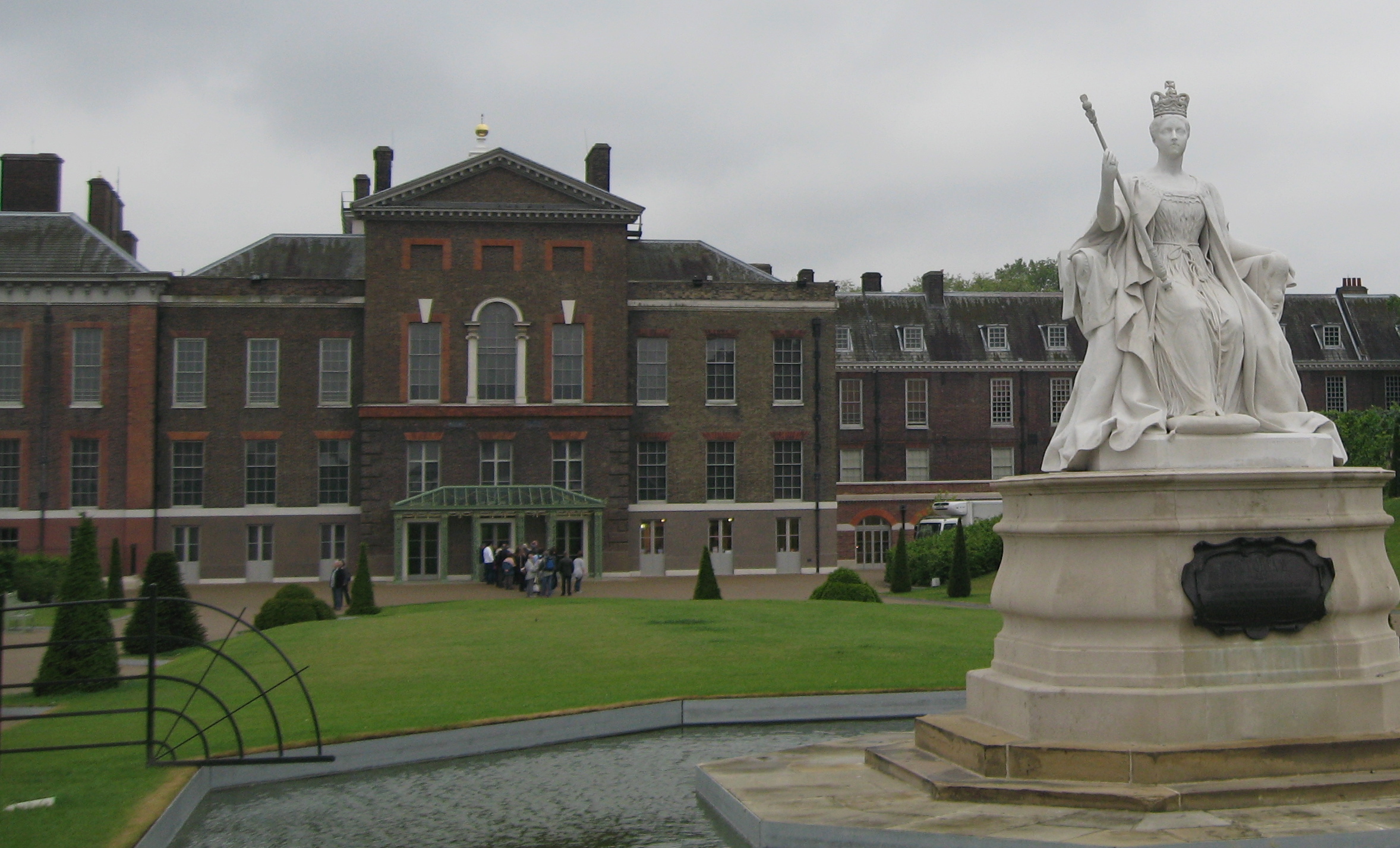
Queen Elizabeth II by Pietro Annigoni, tempera grassa on paper panel, 1969, 78 x 70 inches, © National Portrait Gallery, London

Queen Elizabeth II by Pietro Annigoni, tempera grassa on paper panel, 1969, 78 x 70 inches, © National Portrait Gallery, London


Thatched Cottages

Tags

, , ,

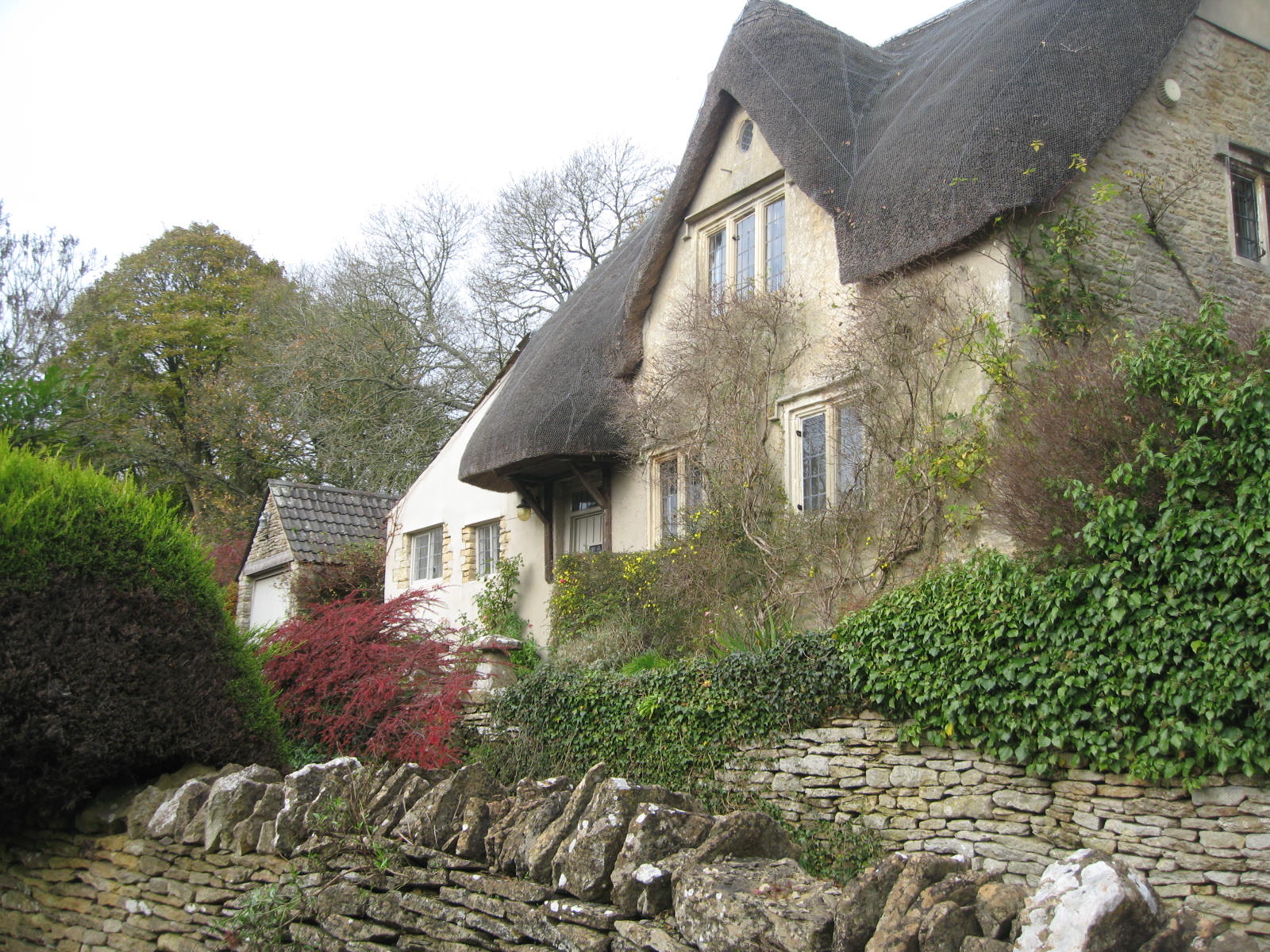
A picture of a traditionally built English cottage from an American point of view may include a thatched roof.  What could be more like a fairy tale than that.

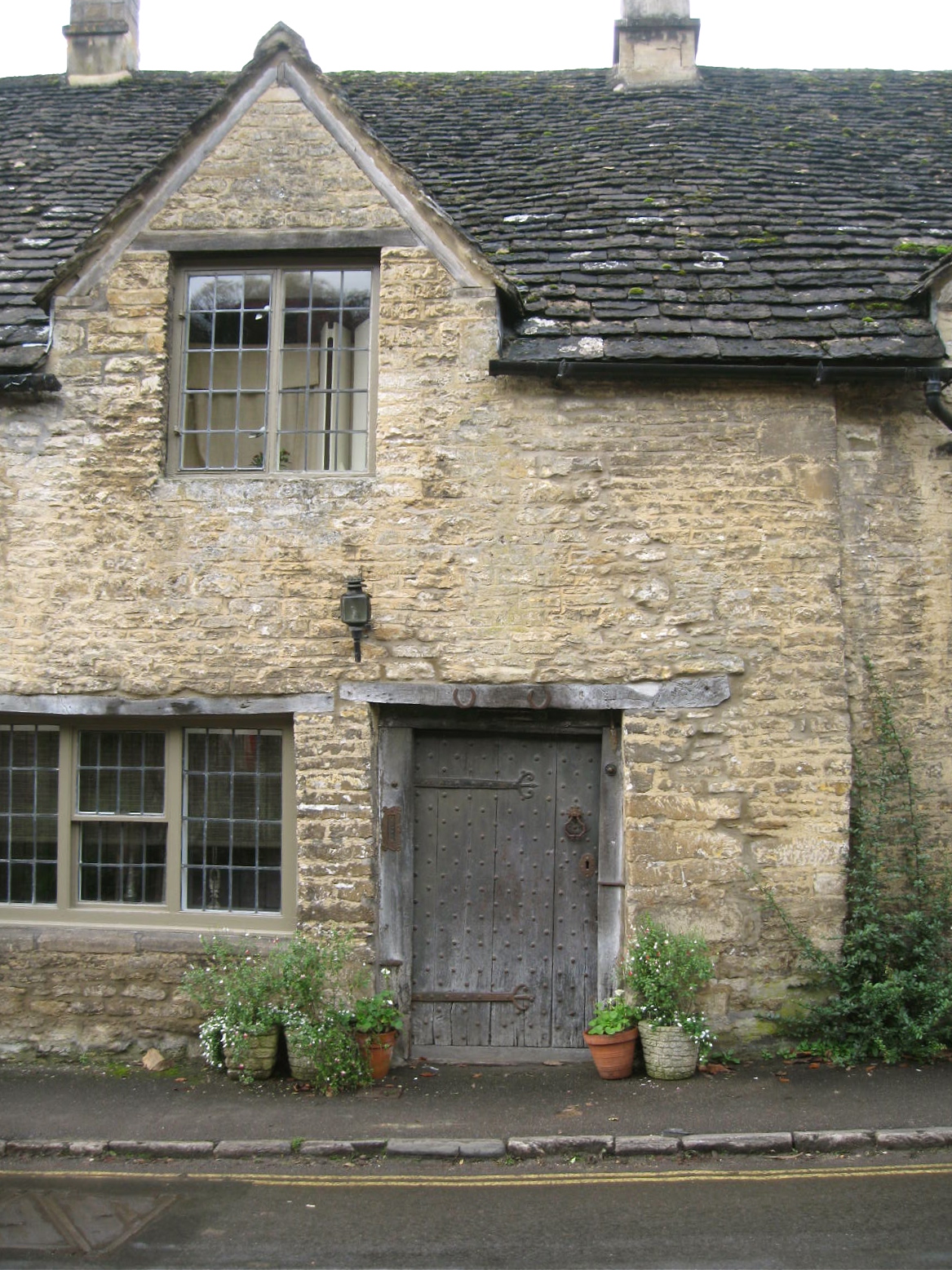
A thatched Cottage walking in to Castle Combe in the Cotswolds. Photo by me

A thatched Cottage walking in to Castle Combe in the Cotswolds. Photo by me

Generally, you see a lot more of the slate shingles on older cottages today in England, but a thatched roof is a real treat.

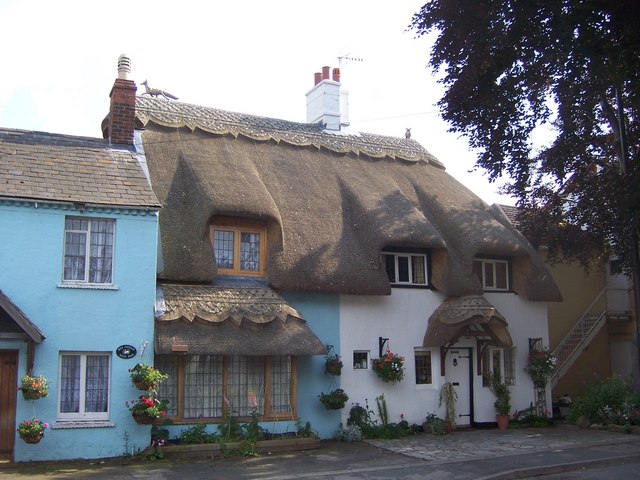
Thatched Cottages, Wyre Piddle. Photo by Terry Robinson, Creative Commons

Thatched Cottages, Wyre Piddle. Photo by Terry Robinson, Creative Commons

Thatching is the traditional craft of building a roof with dry vegetation such as straw.  The bundles of straw are thickly layered to shed water away from the inner roof. Thatch was used by the majority of homeowners in the countryside and in many towns and villages until the late 1800s.

And then came slate.

A more prominent shingle roof in Castle Combe. Photo by me.

A more prominent shingle roof in Castle Combe. Photo by me.

The real commercial production of Welsh slate began in 1820, and along with the innovative building of canals and railways to transport it, it gave builders an alternative material for many English roofs.

Anne Hathaway's cottage being rethatched. Photo by Michael Zawadzki from geography.org

Anne Hathaway’s cottage being re-thatched. Photo by Michael Zawadzki from geography.org

Gradually the use of thatch declined, and with it the craftsmen who were professional thatchers.  There are approximately 1,000 full-time thatchers at work in the UK now, and it has been growing in popularity again with the interest in historic preservation and using sustainable materials.

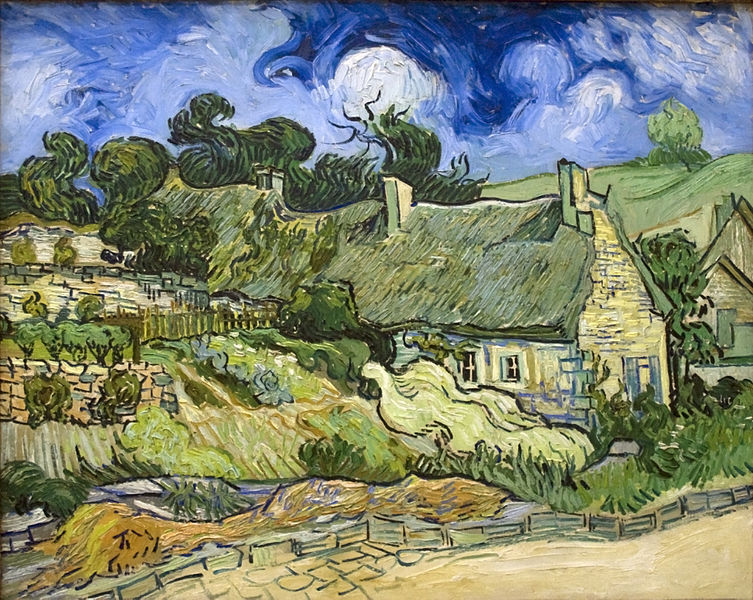
Thatched cottages were popular throughout Europe, although England still has the most. "Thatched Cottage at Cordeville" Vincent Van Gogh

Thatched cottages were popular throughout Europe, although England still has the most. “Thatched Cottage at Cordeville” Vincent Van Gogh

A good thatched roof can last over 50 years, and a new layer of straw can be applied over the weathered surface. This is called a “spar coating”. Over 250 roofs in southern England have base coats of thatch that were applied over 500 years ago! Since the 1980s there has been a movement to grow the older varieties of wheat which are tall-stemmed and better for thatching. This has helped renew the feasibility of thatching.

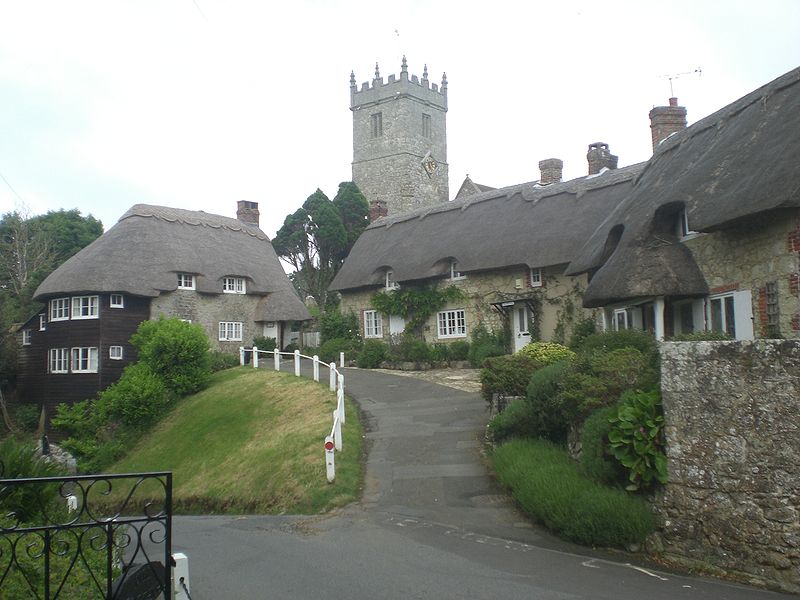
Thatched Cottages in Godshill. Wikipedia.

Thatched Cottages in Godshill. Wikipedia.

It’s nice to see a traditional craft becoming popular again.  I do just love to see a thatched roof in the English countryside.
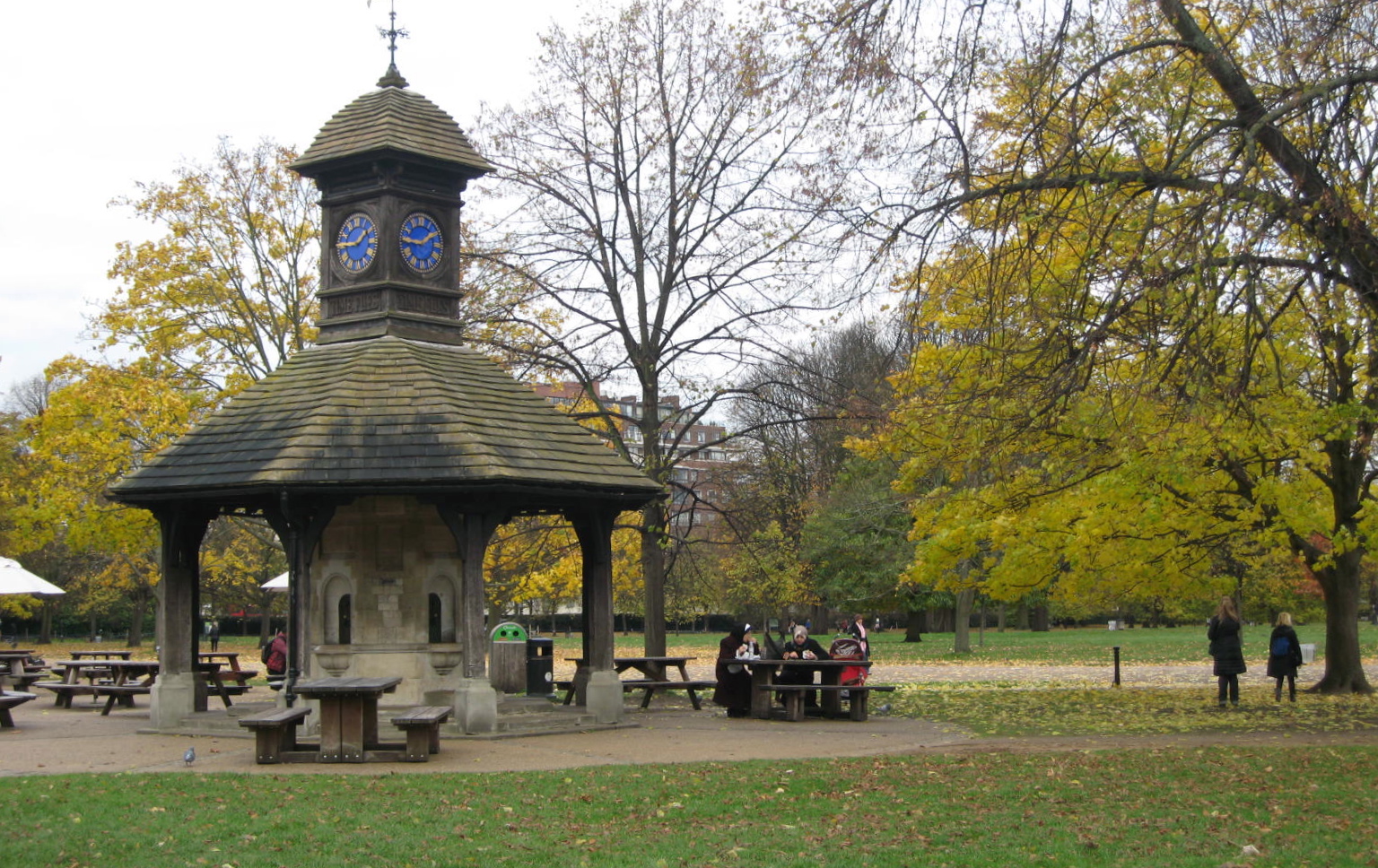
Thatched Cottage near Wortham, Suffolk.Photo by Keith Evans, Wikimedia.

Thatched Cottage near Wortham, Suffolk. Photo by Keith Evans, Wikimedia.

Kensington Gardens

Tags

,

One of my favorite parks in London is Kensington Gardens.

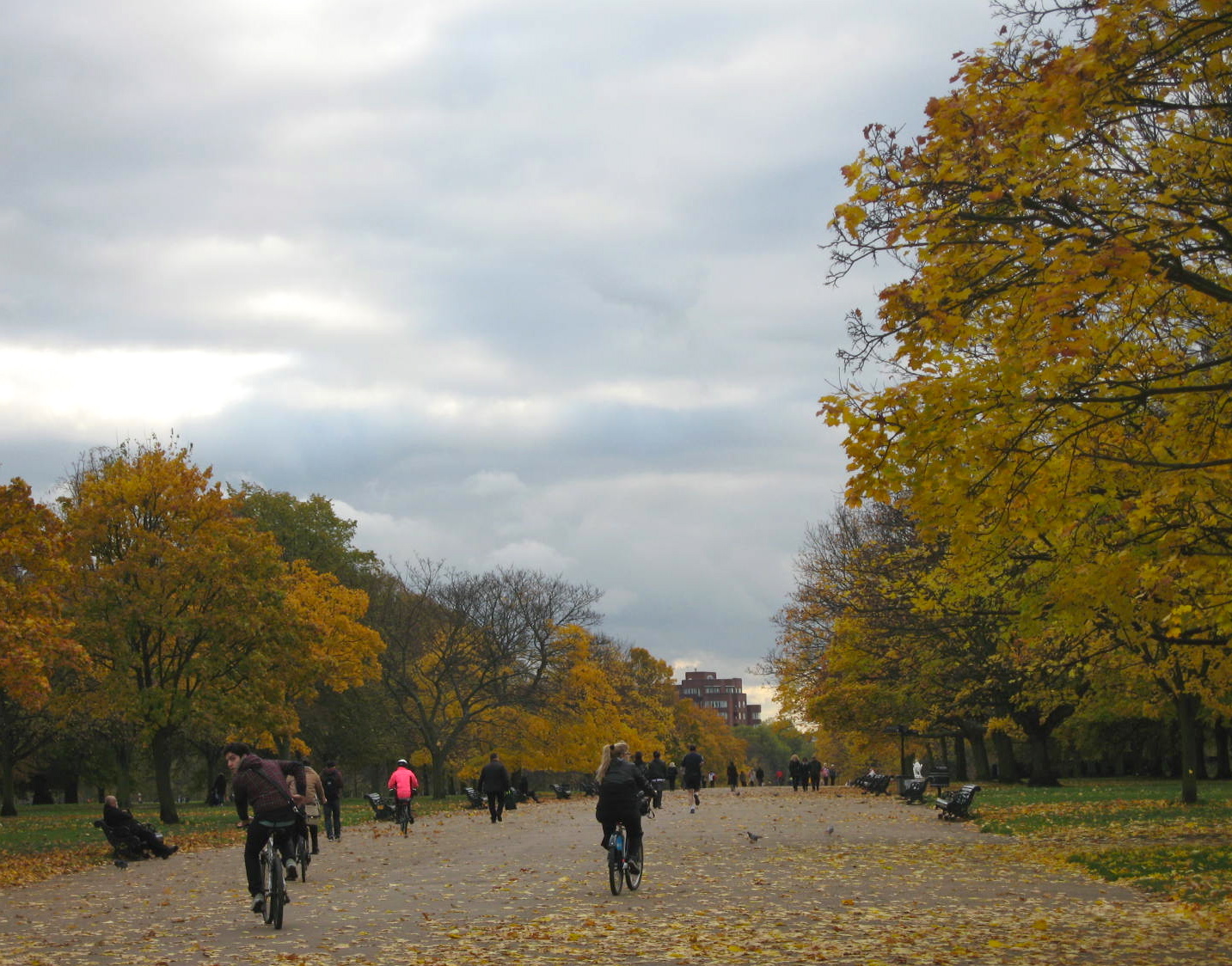
Entering Kensington Gardens from the Notting Hill side. Photo by me.

Entering Kensington Gardens from the Notting Hill side in autumn. Photo by me.

I discovered it last year, and since then I can’t stay away.

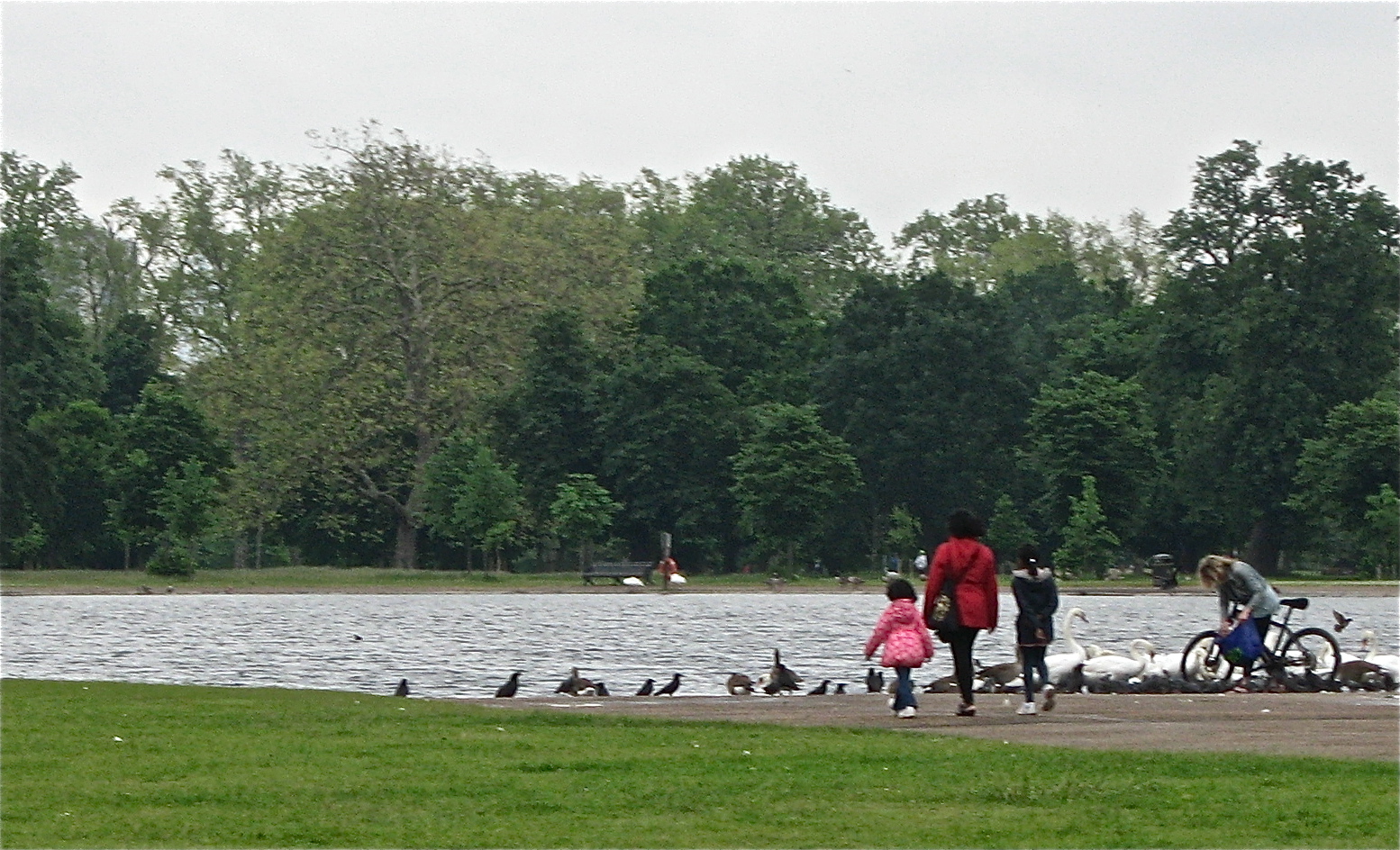
Kensington Gardens'  Round Pond.  The perfect spot on a summer's day. Photo by me.

Kensington Gardens’ Round Pond. The perfect spot on a summer’s day. Photo by me.

One of London’s Royal Parks, it flows out from behind Kensington Palace…

Kensington Palace. Photo by me

Kensington Palace. Photo by me

…to join with Hyde Park on its eastern border. 

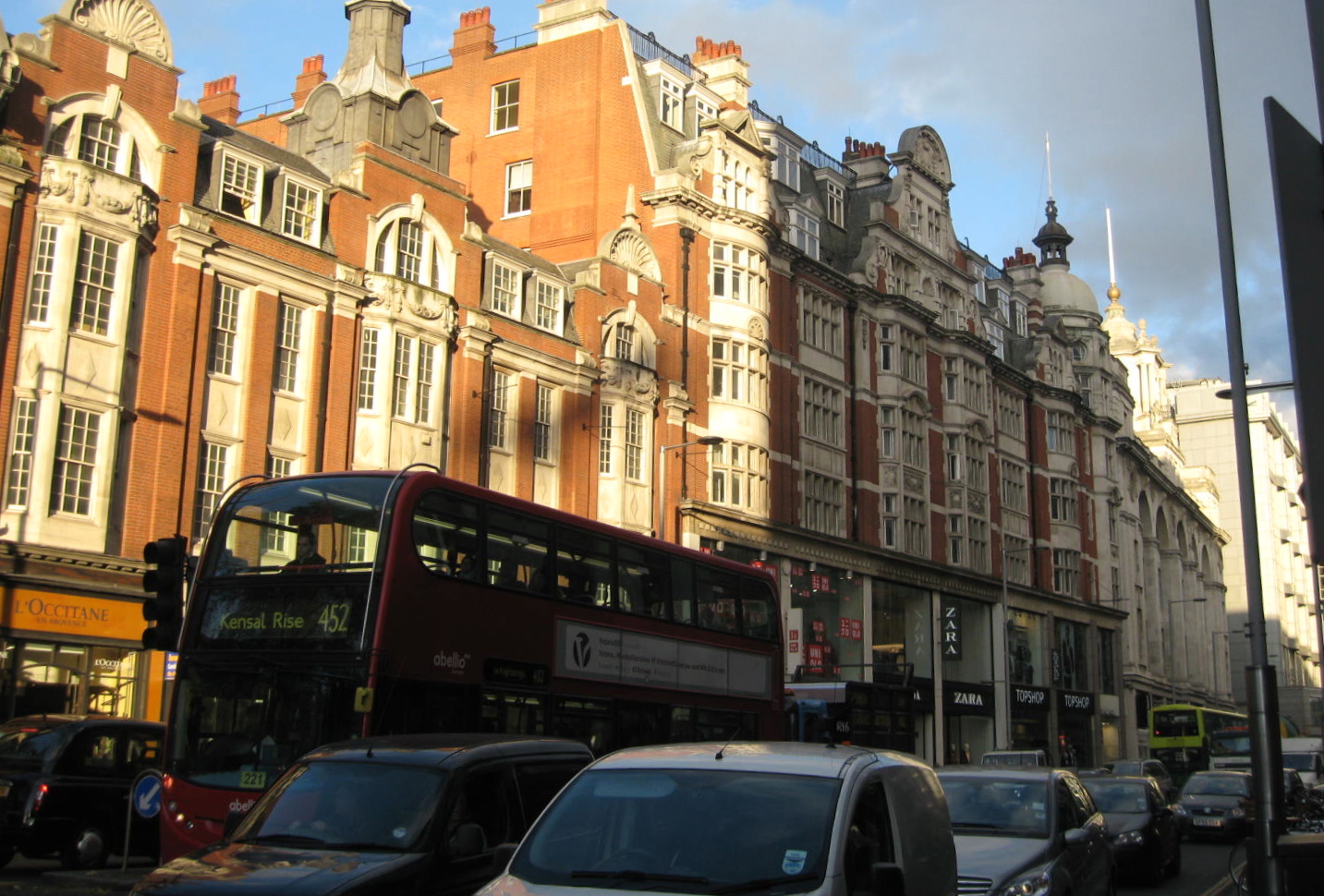
On the western side of London, Kensington Gardens is next to one of the most desirable areas in London– Kensington–known for some of the best shopping in the city.

Kensington High Street. Photo by me

Kensington High Street, just a few blocks from Kensington Gardens. Photo by me

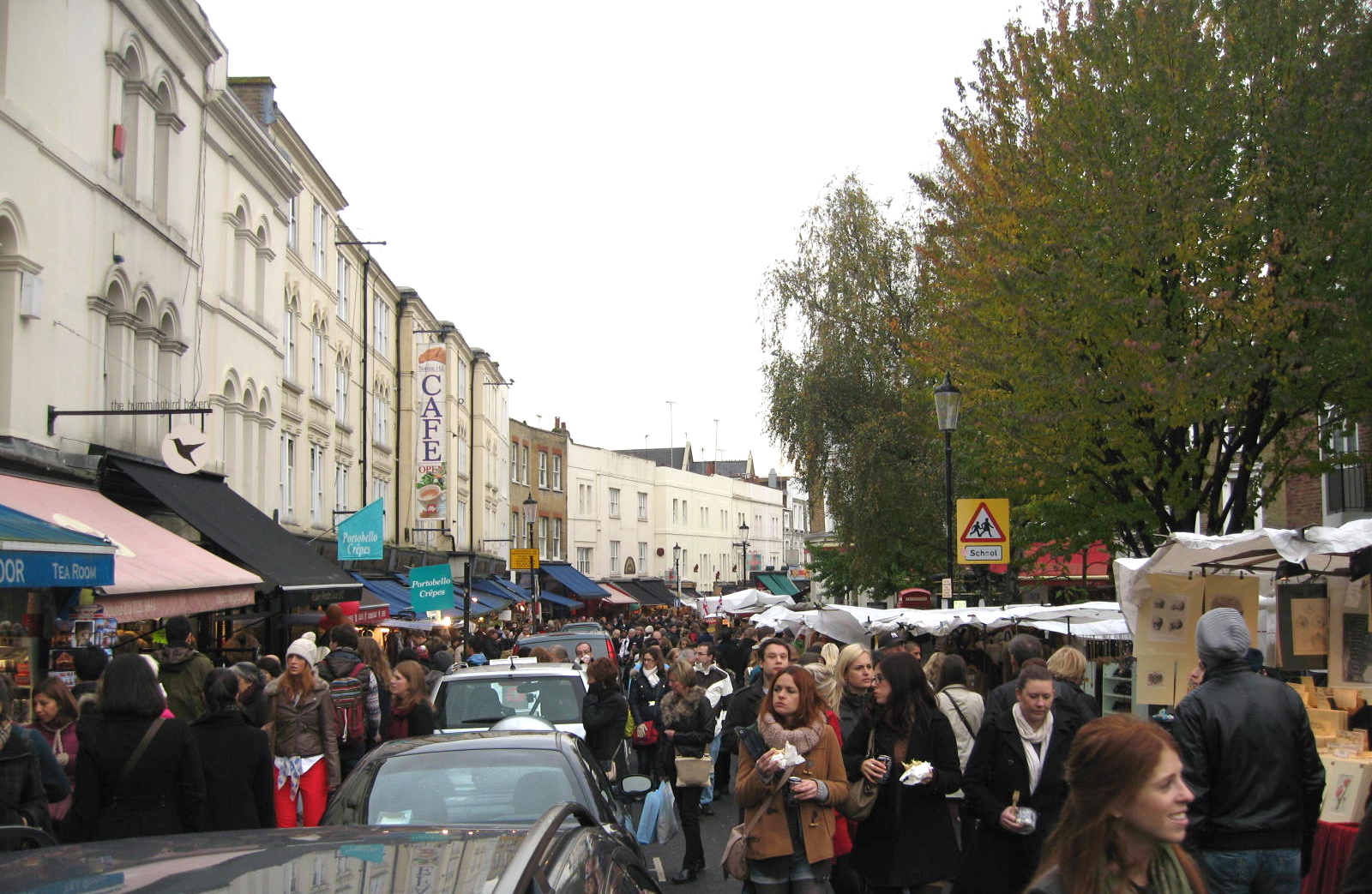
It is also very near the popular Notting Hill neighborhood and the famous Portobello market.

Sunday afternoon on Portobello Road at the market. Photo by me.

A crowded Sunday afternoon shopping on Portobello Road at the market. Photo by me.

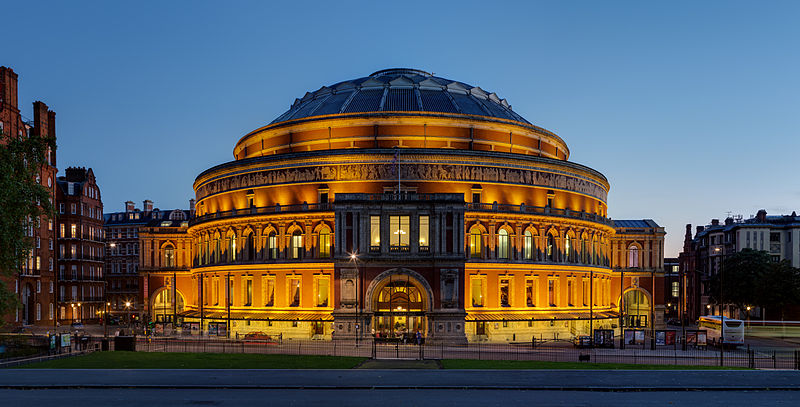
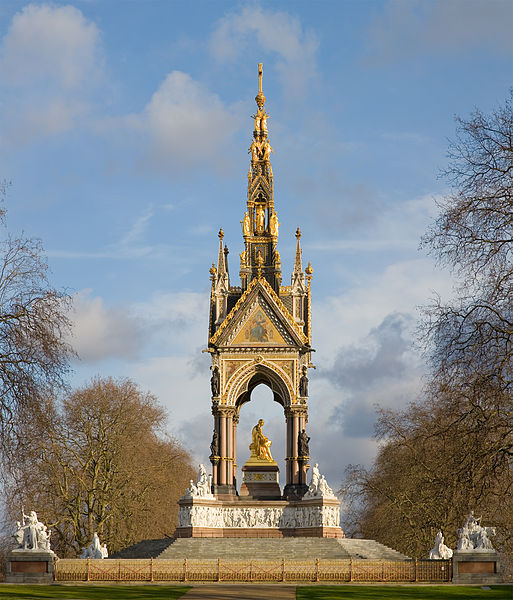
To the south of the park is the famous concert hall, The Royal Albert Hall, best known for holding the annual summer Proms concert since 1941. It is right across from the Albert Memorial Gate entrance to the park and the Albert Memorial on Kensington Road.

Royal Albert Hall viewed from Kensington Gardens. Photo by David Iliff, Creative Commons

Royal Albert Hall viewed from Kensington Gardens. Photo by David Iliff, Creative Commons


The Albert Memorial.

The Albert Memorial. Photo Wikimedia Commons by D. Iliff

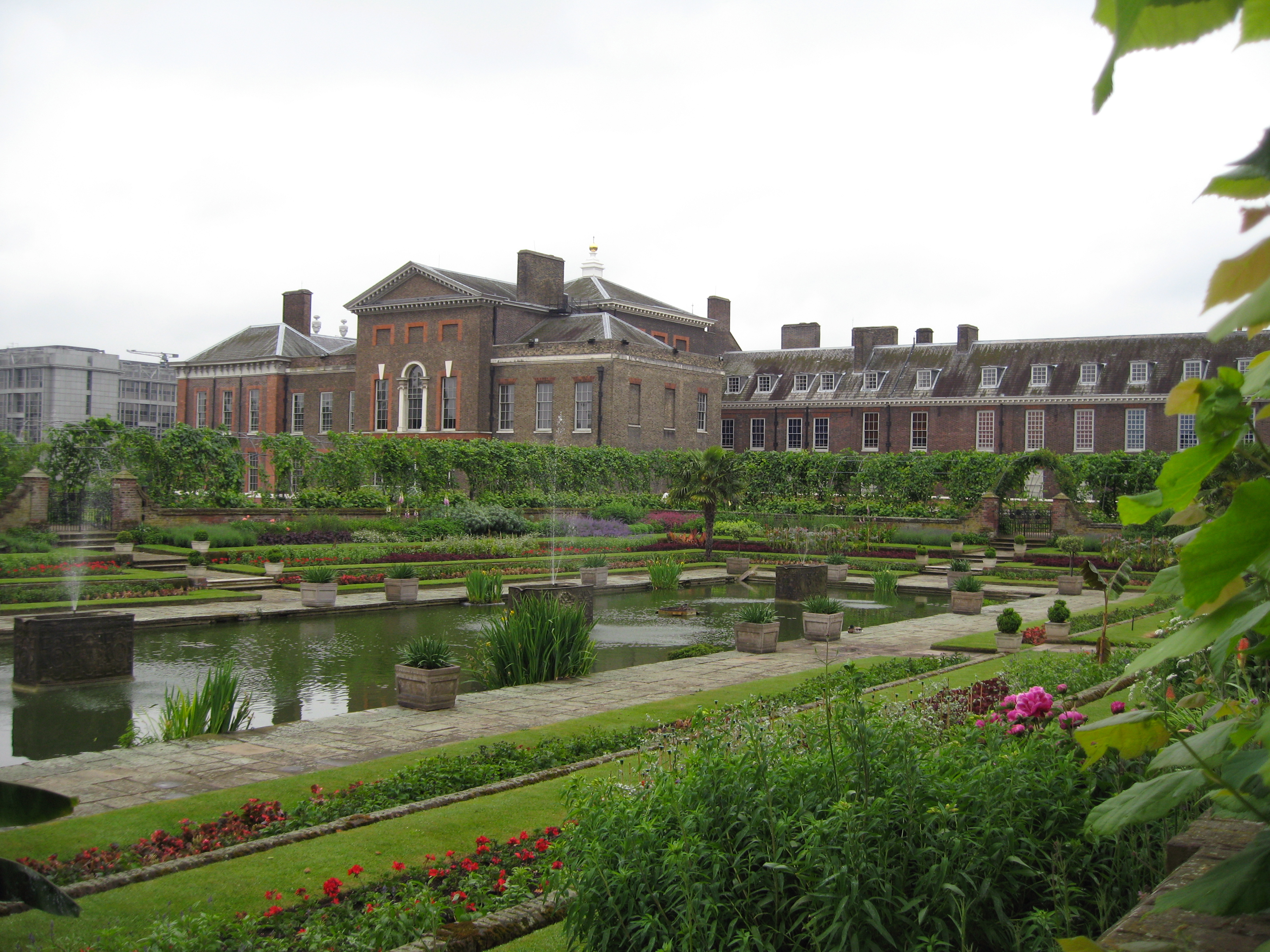
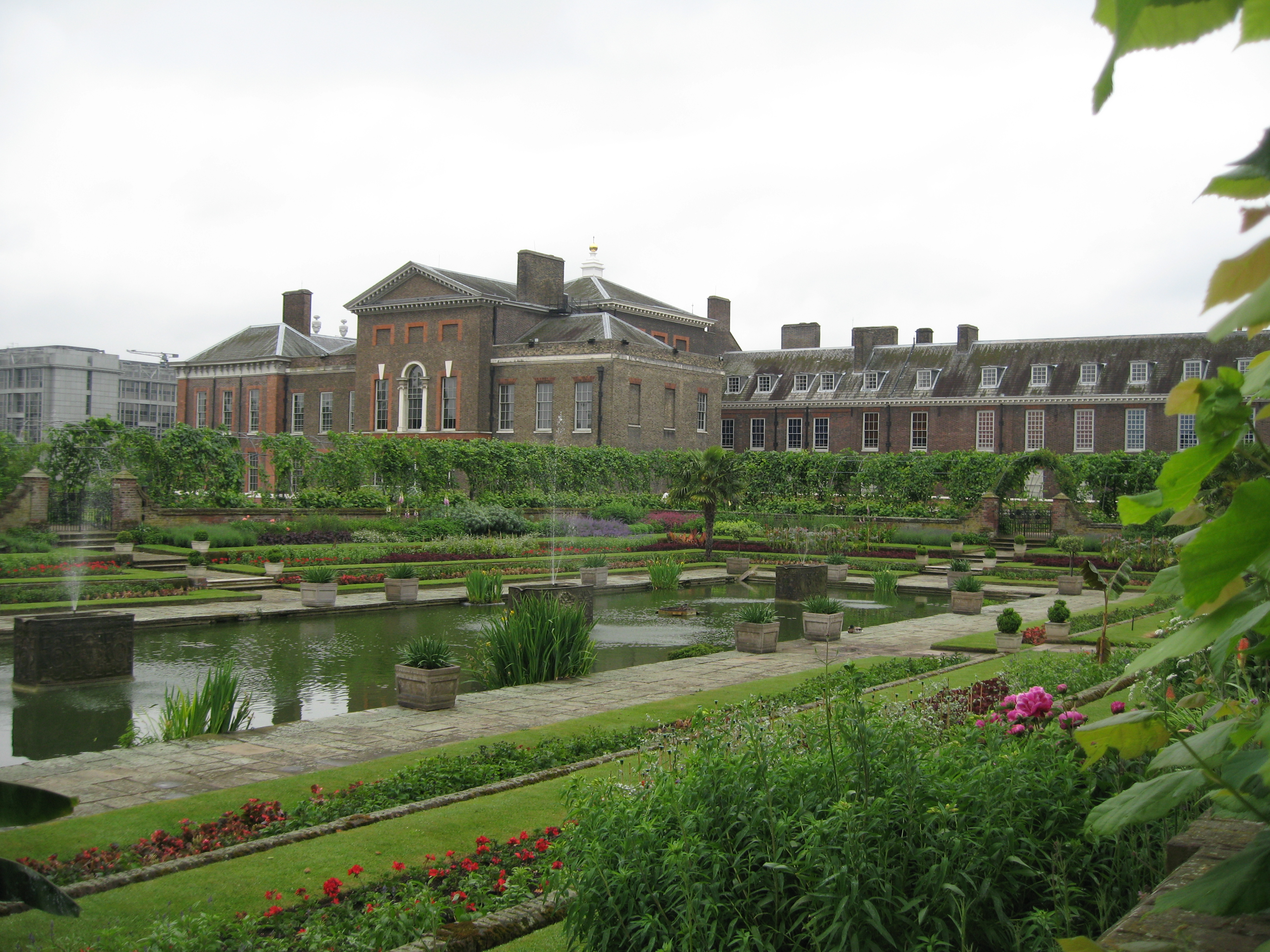
And of course right inside the gardens on the west side of the park is Kensington Palace, the London home of the Duke and Duchess of Cambridge (Will & Kate) and Prince Harry.

Kensington Palace from the Sunken Garden in June. Photo by me.

Kensington Palace from the Sunken Garden in June. Photo by me.

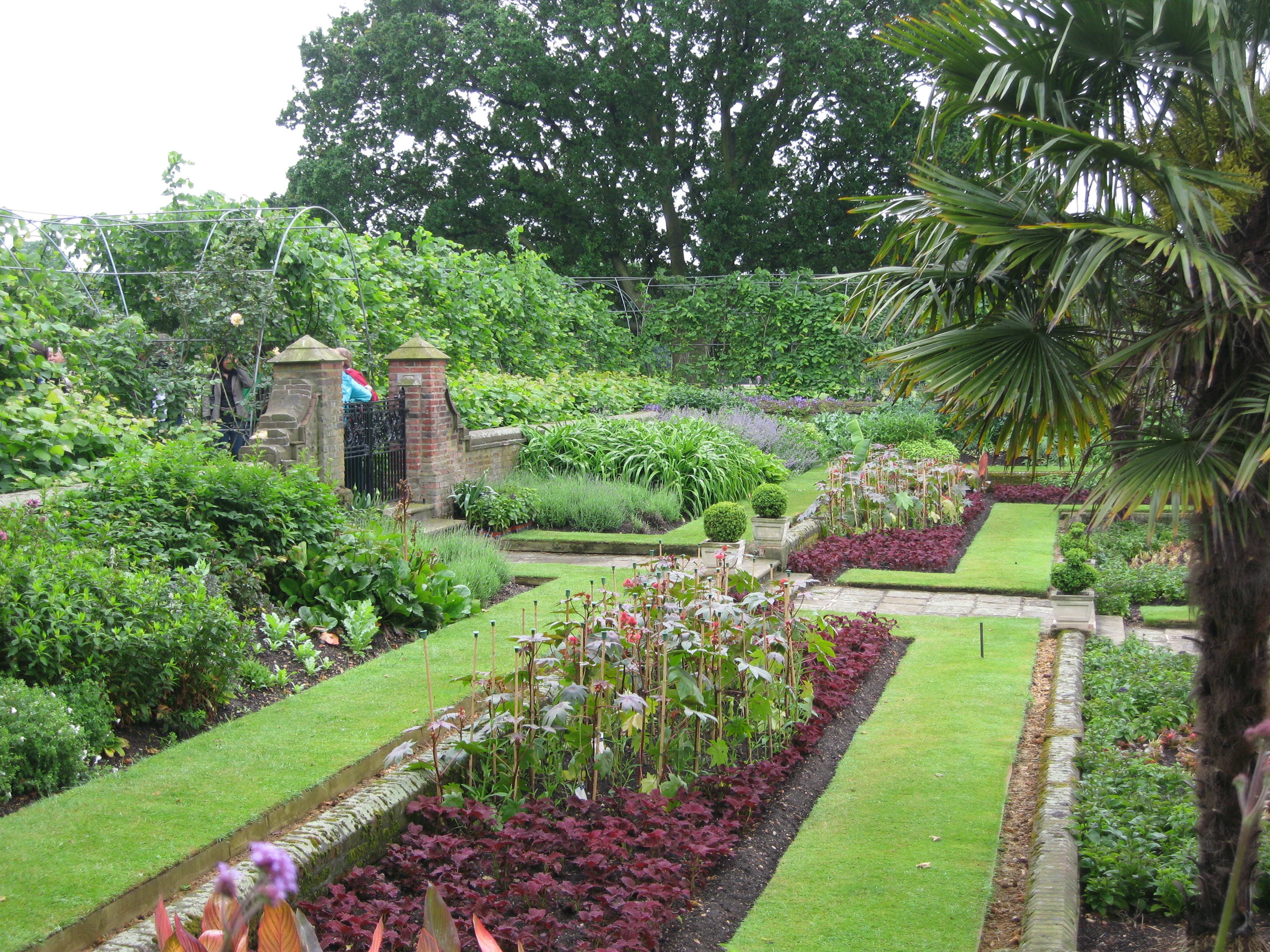
The Sunken Garden outside the palace, on the edge of Kensington Gardens. Photo by me.

The Sunken Garden outside the palace, on the edge of Kensington Gardens. Photo by me.

Kate has been known to walk Lupo in the park with her security guard at her side.

Kate was seen recently walking Lupo around the Italian Gardens in the park.Creative Commons photo

Kate was seen recently walking Lupo around the Italian Gardens in the park.Creative Commons photo

But so far I have not been fortunate enough to run in to them.

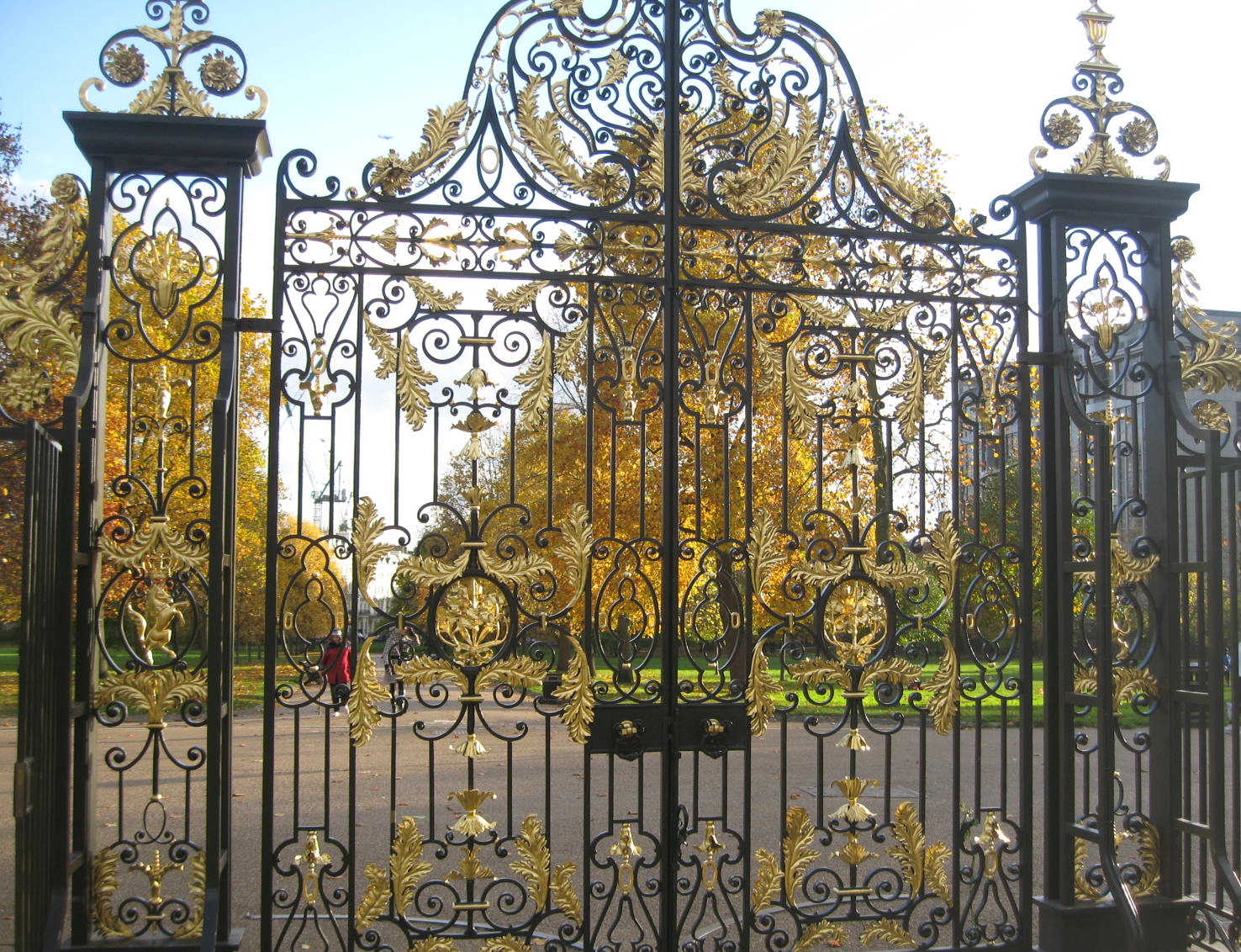
The gates between Kensington Palace and the park. Photo by me.

The gates between Kensington Palace and the park. Photo by me.

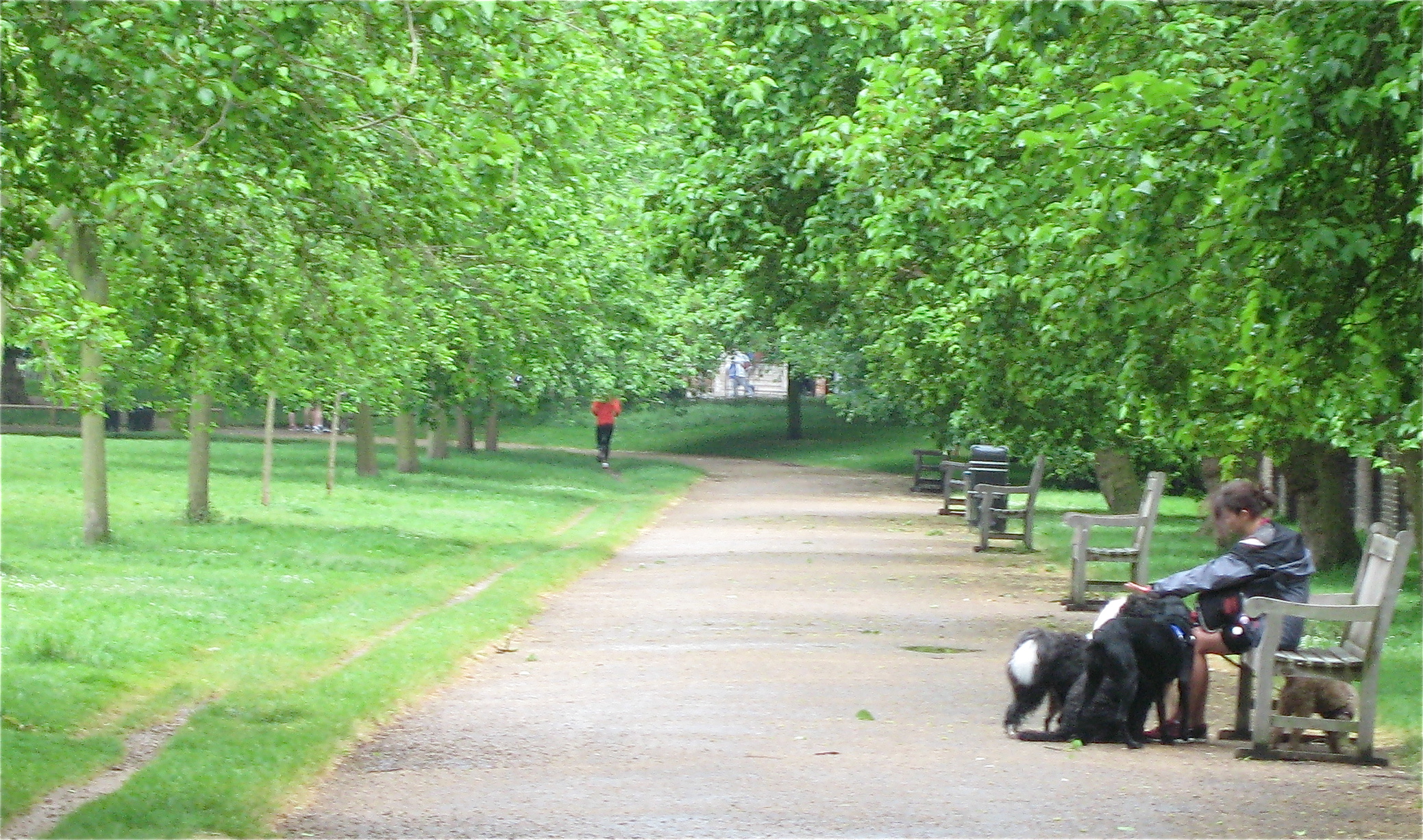
There are lots of dog walkers in the park, and to be a “commercial dog walkers” you do need a license to “operate” in the royal parks.  But these British dogs seem very well-behaved, following all the rules…most of the time.

A dog walker takes a break in KG. Photo by me.

A dog walker takes a break in KG. Photo by me.

You are very aware of the royal residents who used the park as their backyard.  This small cafe is next to The Princess Diana Memorial Playground.

One of several small shelters to stop and sit and enjoy the park. Photo by me.

One of several small shelters to stop and sit and enjoy the park. Photo by me.

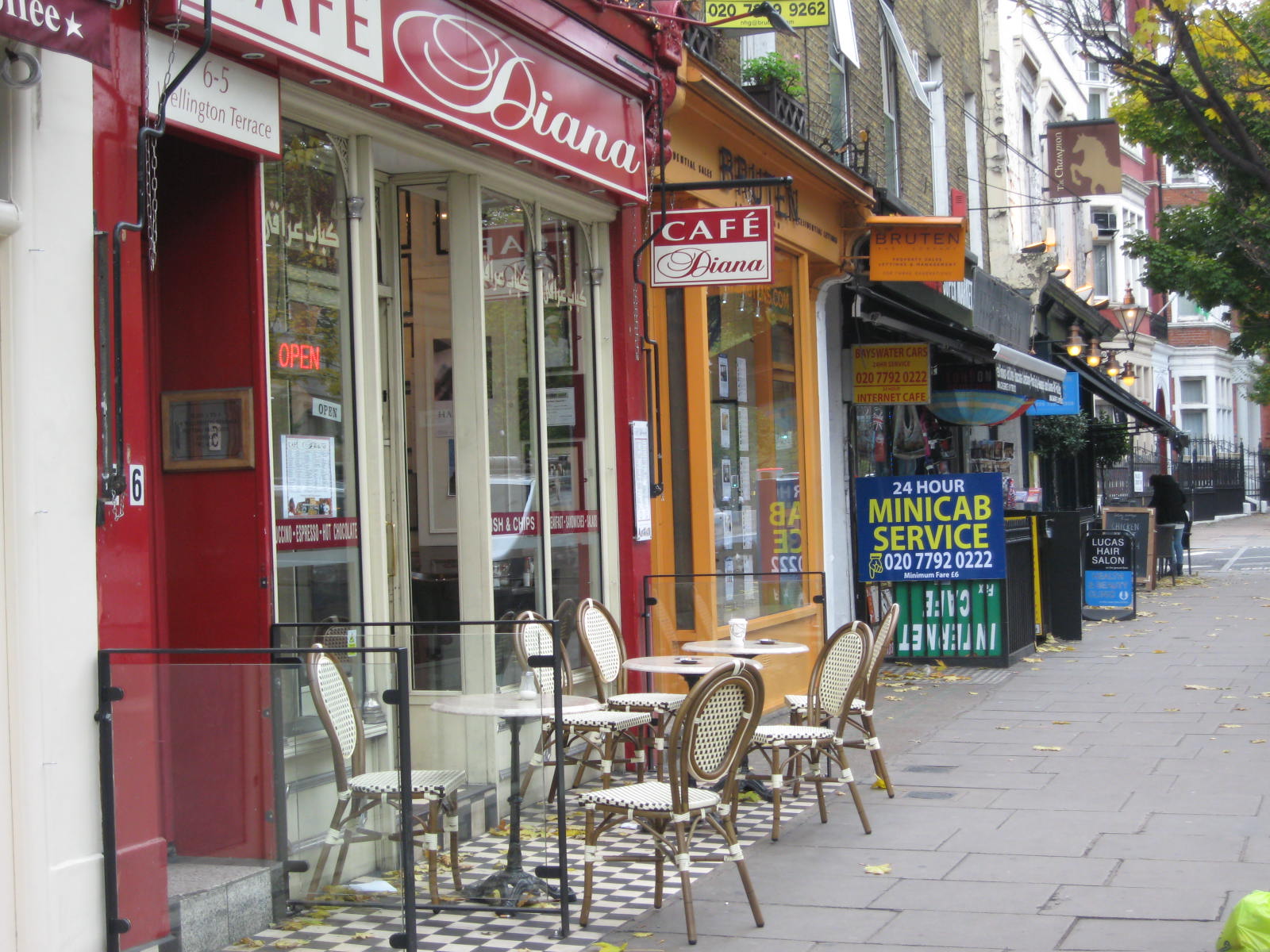
Word has it that the Princess stopped for coffee at the small shop that now bears her name which is right outside the gates that lead to the palace.

The Diana Cafe where I stopped for lunch on my walk around the park back to my hotel. Photo by me.

The Diana Cafe where I stopped for lunch on my walk around the park back to my hotel. Photo by me.

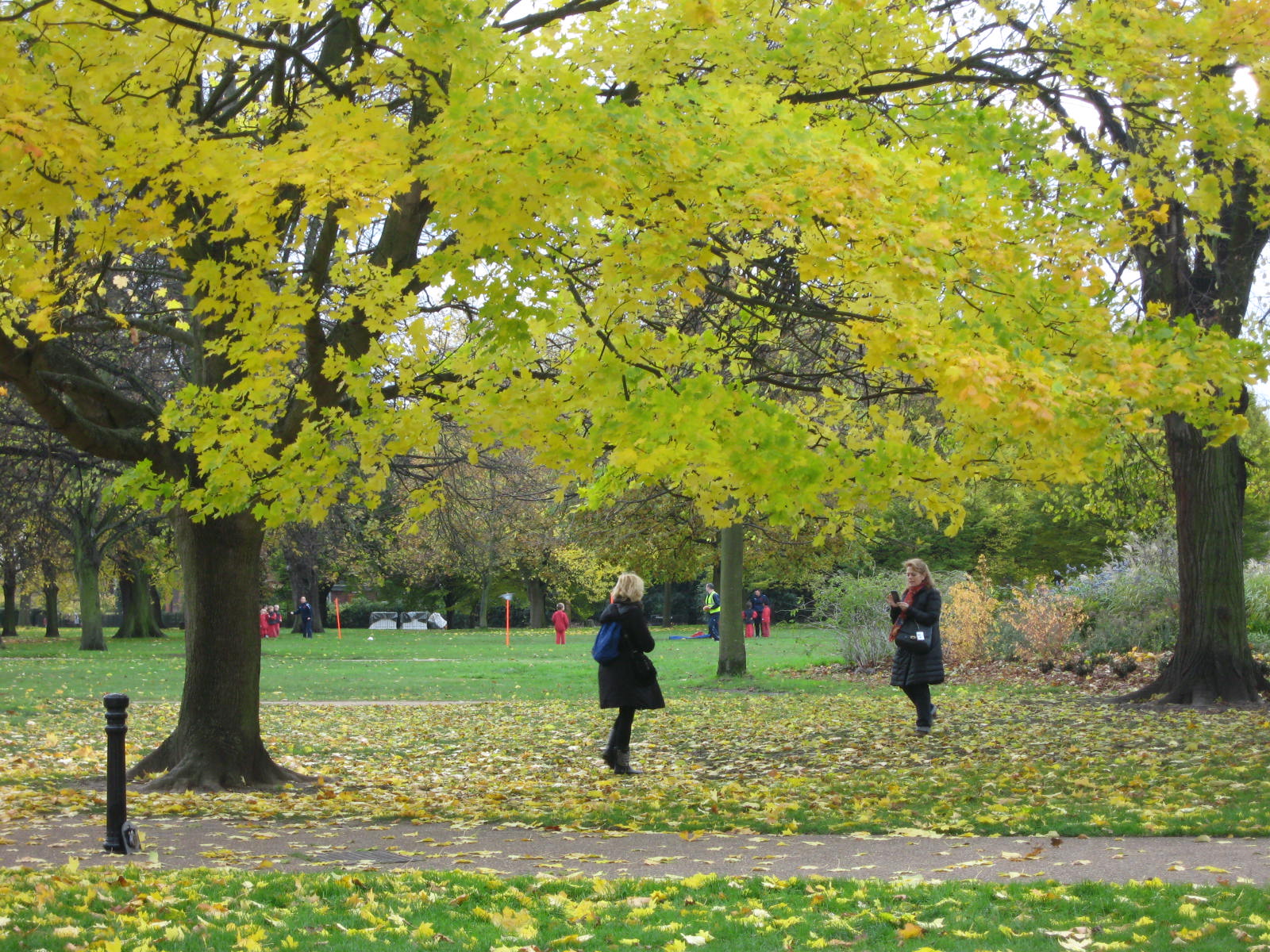
But it is the beauty of the park itself that keeps me coming back.  It is well used by the locals and visitors.  You can feel the friendliness as soon as you enter.

A friend captures the foliage and her friend in a photo, while a group of children practice their "football" (soccer in the US) in the background. Photo by me.

A friend captures the foliage and her friend in a photo, while a group of children practice their “football” (soccer in the US) in the background. Photo by me.

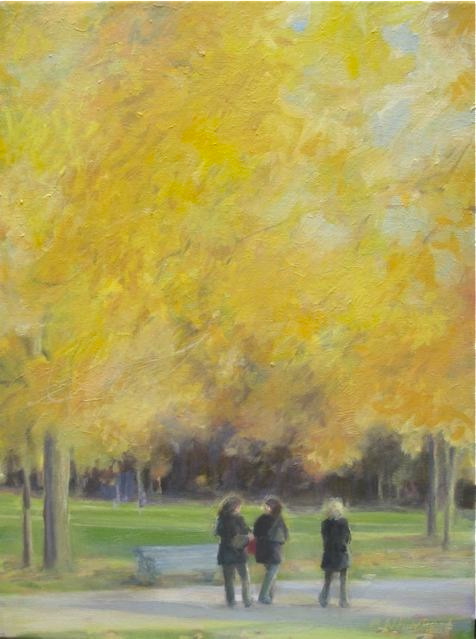
No matter what the season, it just seems like a lovely space to meet a friend and spend an hour or two walking.

A painting of Kensington Gardens by me.

A painting of Kensington Gardens by me.


Museum Day

Tags

, , ,

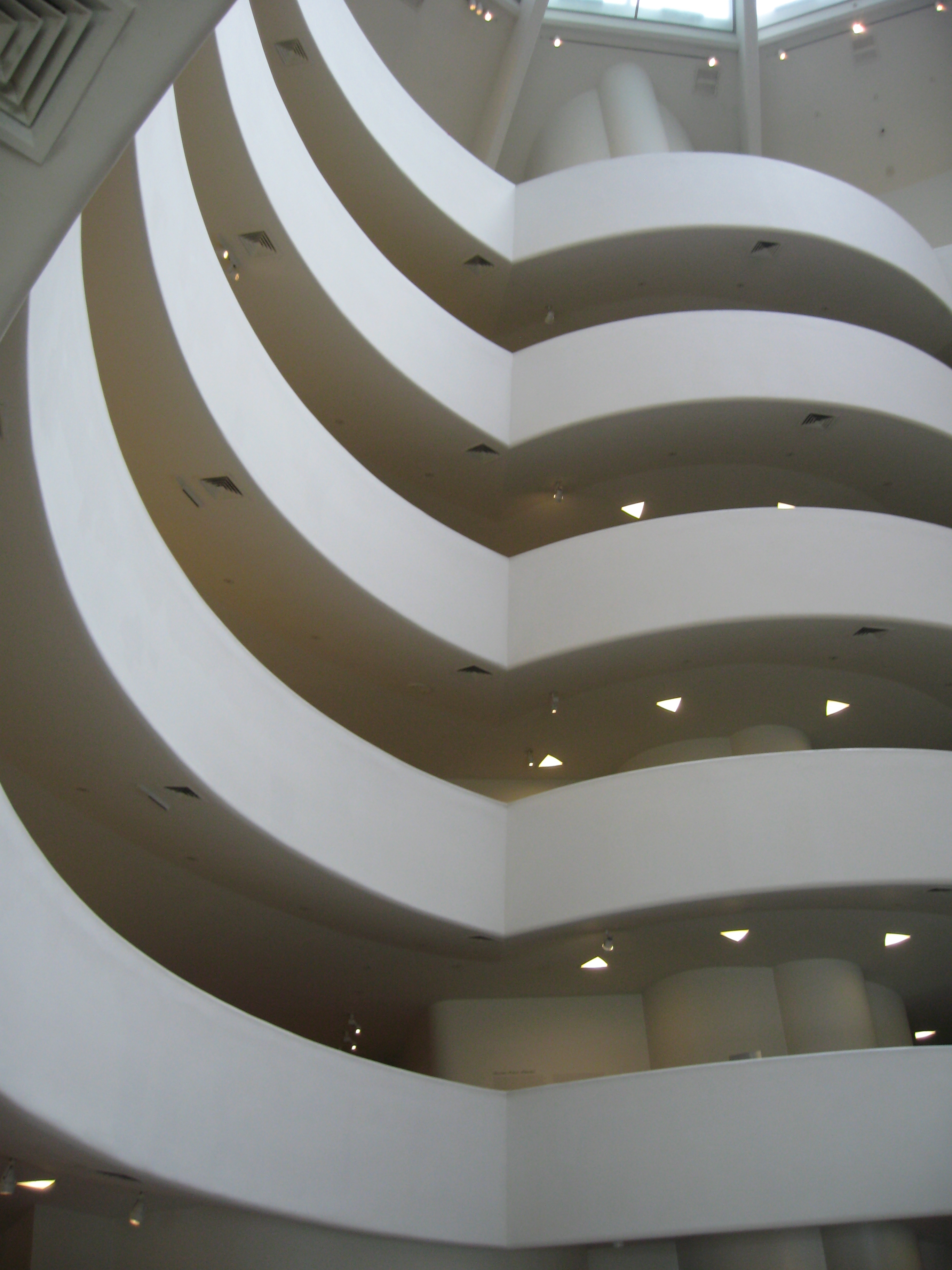
One of my favorite ways to spend a leisurely morning is in an art museum. I miss living near a major metropolitan museum now, so whenever I get near a big city I take the time for a visit.  And because it is rarer these days that I get the opportunity, I appreciate it even more.

The Guggenheim Museum, NYC.  Photo by me

The Guggenheim Museum, NYC. Photo by me

As much as I love the art, it is also the art lovers that I enjoy.  As you may know from following this blog I have been painting gallery scenes again.

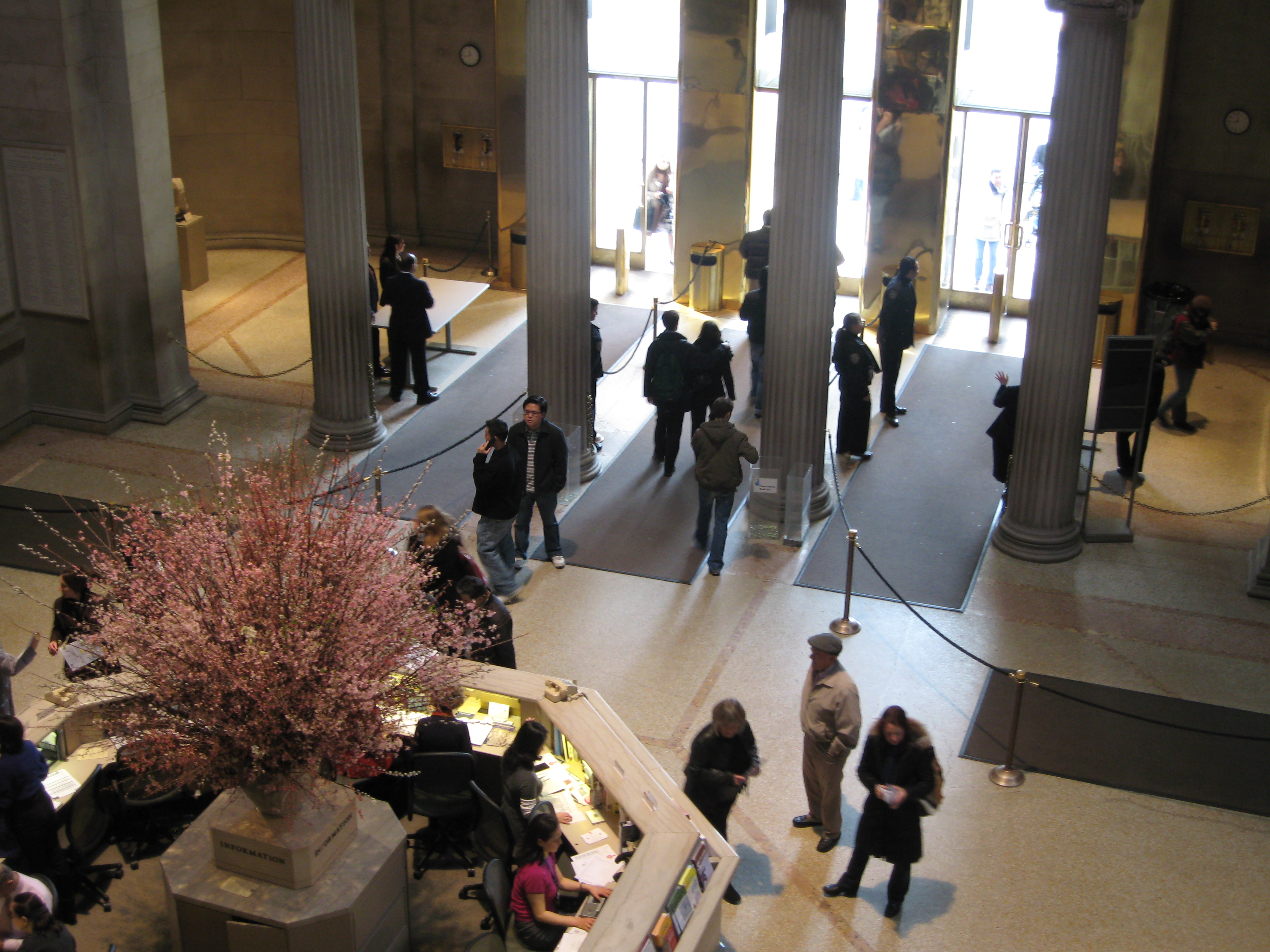
The Metropolitan Museum of Art, NYC. Photo by me

The Metropolitan Museum of Art, NYC. Photo by me

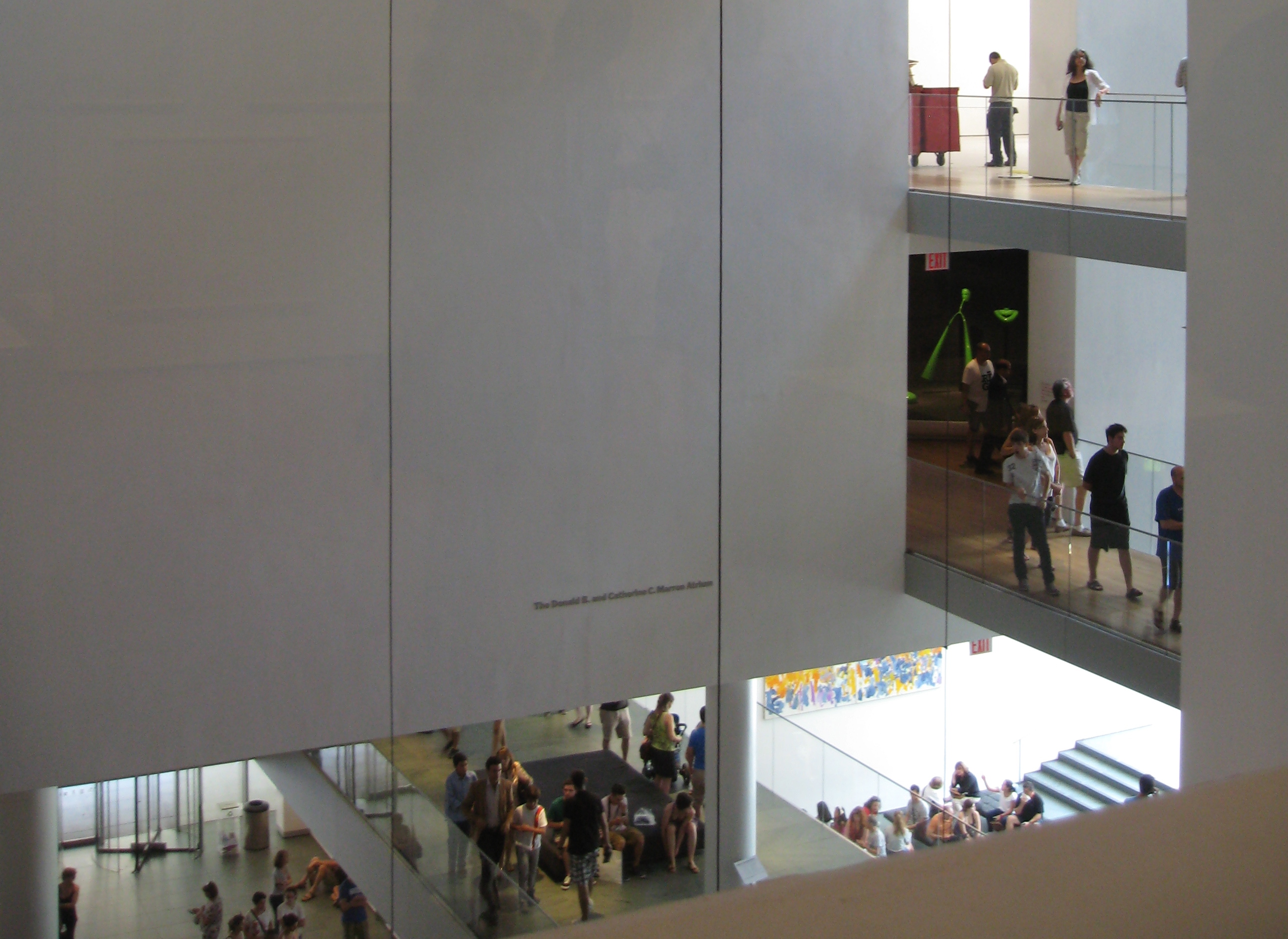
The Museum of Modern Art is one of my favorite places to visit in New York City. I grew up near here on Long Island, and even when I was young I escaped as often as possible to “The City”, and to MOMA.

The Lobby from above, MOMA in NYC. Photo by me

The Lobby from above, MOMA in NYC. Photo by me

It only makes sense that these gallery scenes would show up in my “Cities” series.  to see them all, you can visit my art website at www.patwhitehead.com.

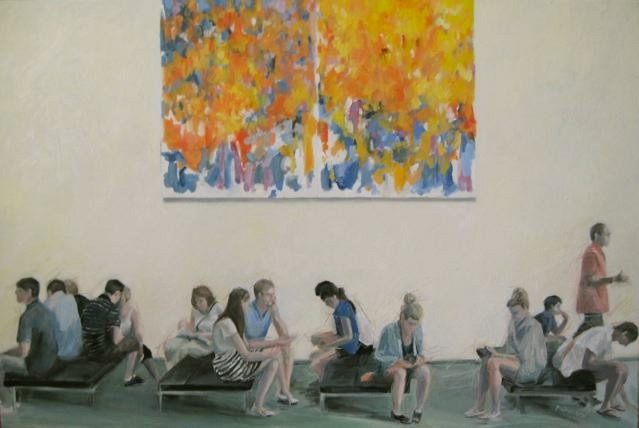
Another painting in my "Cities" series that focuses on MOMA museum visitors.

Another painting in my “Cities” series that focuses on MOMA museum visitors.

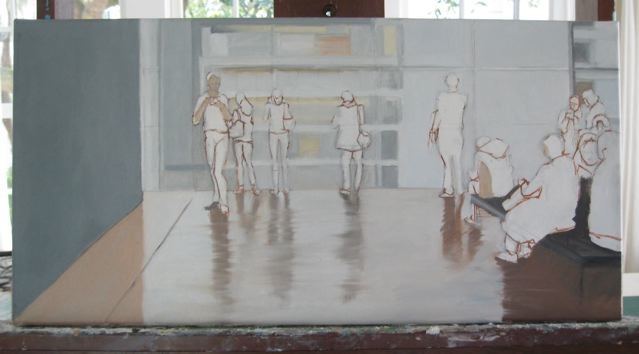
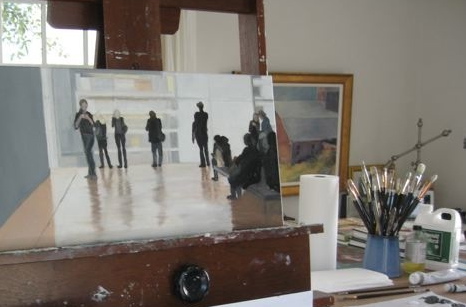
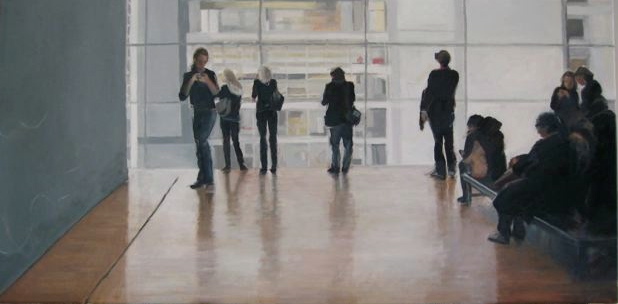
My latest finished painting is a continuation of this theme…Gallery View II.

In the studio. Photo by me

In the studio. Photo by me

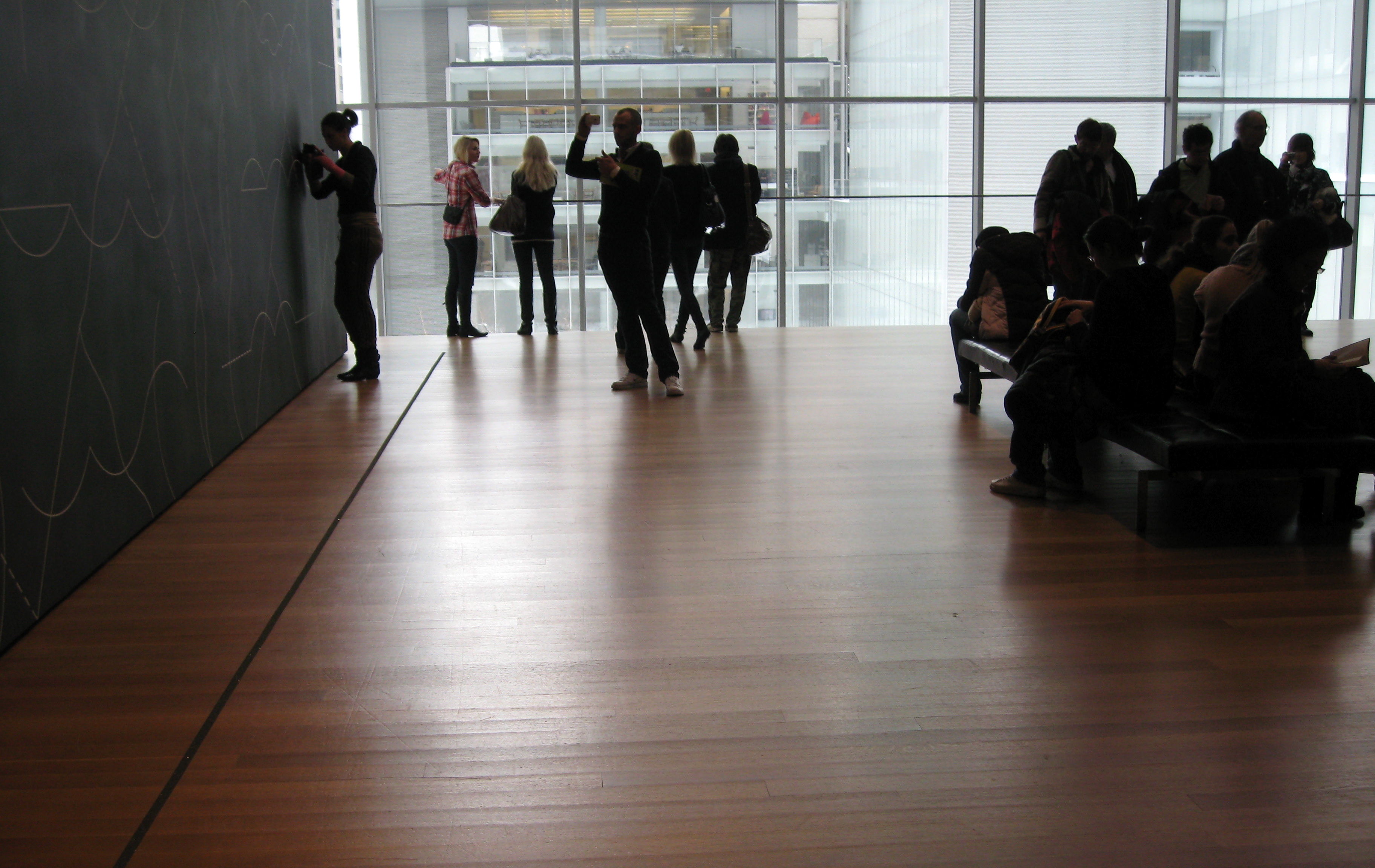
It started as usual with a visit to MOMA

A summer visit to NYC and MOMA. Photo by me

A summer visit to NYC and MOMA. Photo by me

..and a sketch on canvas after the visit.

Gallery View II begins

Gallery View II begins

And just kept building from there.

Image 6

You can’t imagine how long it took to get the shadowing just where I wanted it on the museum floor.  You never know when you start just which area will prove the challenge and what parts will just flow.

Image


One thing I have learned time and time again, though, is to let the “finished” painting sit for a week or so, and then go back in for those final touches.

I love this painting.  It was like spending the day at MOMA all over again. I could be any one of these viewers.

The finished painting

The finished painting